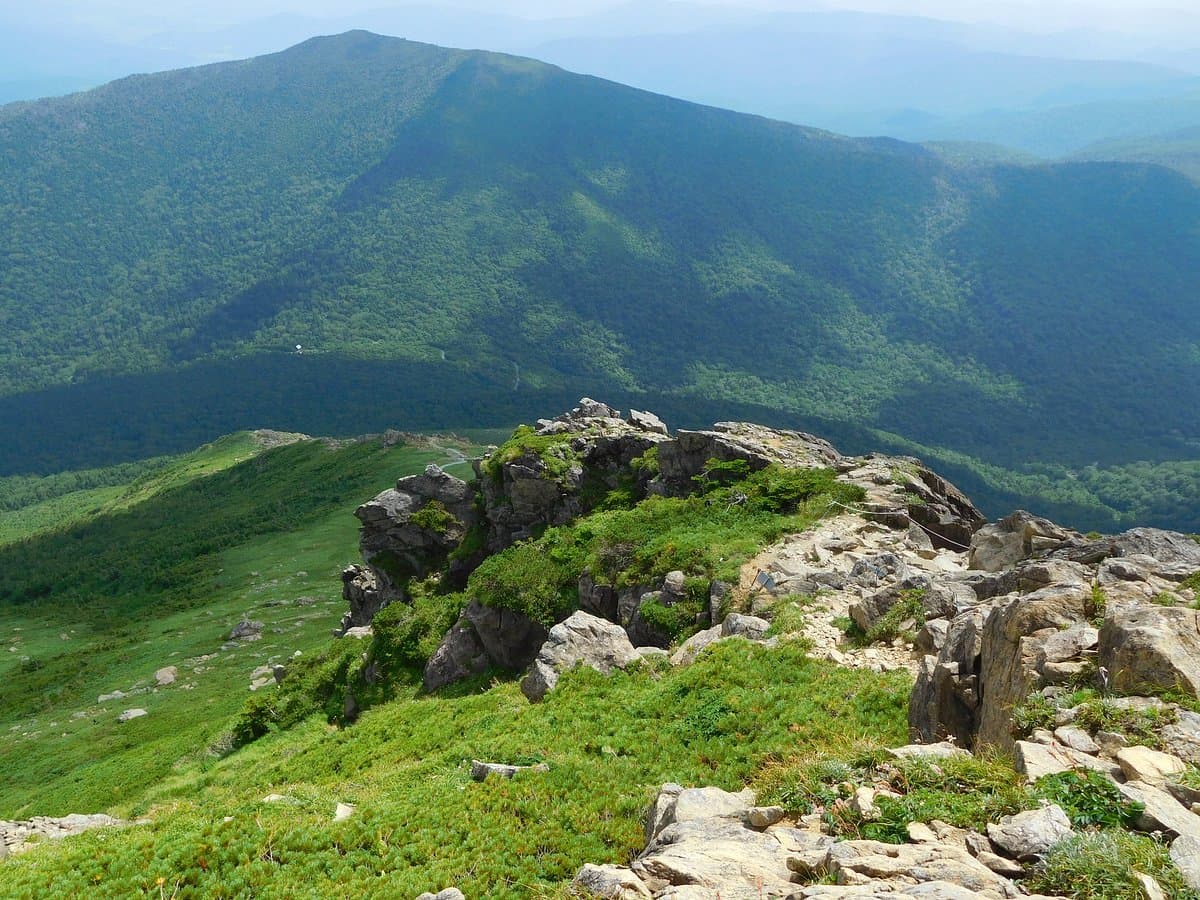
Mt. Hayachine is the highest peak in the Kitakami Mountains, revered as one of Japan's 100 Famous Mountains. It is particularly known for its unique alpine flora, including several species endemic to the Hayachine Quasi-National Park, making it a significant site for botanical study and nature appreciation.
Visitors consistently praise the diverse hiking trails and the natural beauty, especially the wildflowers in bloom during early summer. Reviewers suggest that the trails offer varying levels of difficulty, with some sections being quite rocky or steep. The exposed nature of the trails means it can get very windy, and even in late June, snow can still be present at the summit. Hikers appreciate the option to ascend one path and descend another to experience more variety, though this might involve a walk back along the road.
For a more varied experience, some visitors recommend ascending the Kawaranobo route, described as steeper and rockier, often following a watercourse, and descending via the Odagoe route, which is flatter, more open, and includes a ladder section. The Odagoe trail is generally considered the most popular and easiest. Hikers should allocate approximately 5 hours for the round trip, including breaks, though it can be done faster depending on individual pace. It is advisable to bring appropriate gear for varying weather conditions, including wind protection and sturdy hiking boots for rocky terrain. Given the exposed trails, sun protection is also recommended.
Mt. Hayachine is located in Hanamaki, Iwate Prefecture. The address is Ohasamamachi Uchikawame Takechinai, Hanamaki. Access typically involves driving to the parking areas at the trailheads. Public transport options to the base of the mountain are limited, so a car is highly recommended for convenience. Hikers should confirm road accessibility, especially during off-peak seasons or after heavy weather.
A common complaint is the potential for strong winds and the exposed nature of the trails, which can make the hike challenging. To mitigate this, hikers should check weather forecasts before heading out and dress in layers, including windproof outer shells. The walk back along the road if using different ascent/descent routes can also be a minor inconvenience, so planning for this or arranging transport is advisable.