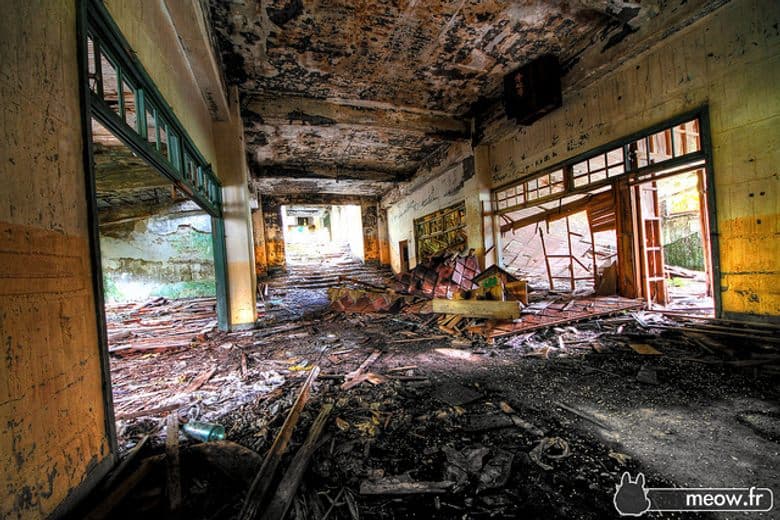
Matsuo Mine was once a significant sulfur mining town, renowned for its large, modern apartment complexes that housed over 15,000 people. Dubbed a 'paradise above the clouds' due to the frequent fog, it boasted amenities like central heating and flushing toilets, which were considered luxurious at the time. After the mine ceased operations in 1969 due to a decline in sulfur demand, the town was abandoned, leaving behind a striking collection of decaying concrete structures that offer a poignant glimpse into Japan's industrial past and the transient nature of human settlements.
Visitors consistently describe the site as having a 'post-apocalyptic' or 'eerie' atmosphere, particularly when the characteristic fog descends, obscuring the buildings and enhancing the sense of isolation. The sheer scale of the abandoned complexes and the quiet desolation are frequently highlighted as the main draws. Reviewers often mention the feeling of stepping back in time, with some noting the remnants of everyday life, such as commonplace objects left behind in the apartments, adding to the haunting realism. However, some visitors warn that the site is primarily for those with a specific interest in 'haikyo' (ruins) or urban exploration, as there are no official facilities or interpretive signs.
For a meaningful visit, it's recommended to allocate at least 1-2 hours to explore the area. The best time to visit for the iconic 'foggy' experience is often in the early morning or late afternoon, though this can also significantly reduce visibility. Wear sturdy shoes suitable for uneven terrain, and bring appropriate clothing for potentially cold and damp conditions, even in warmer months, due to the high altitude and frequent fog. There are no shops or facilities on site, so bring your own water and snacks. Photography is a major activity here, so ensure your camera is charged.
Reaching Matsuo Mine requires some effort due to its isolated location. By car from Tokyo, it's approximately a seven-hour drive via the Tohoku Expressway, exiting at Hachimantai and following signs for Matsuo. For public transport, take the JR Shinkansen Hayate 25 from Tokyo to Morioka (about 2.5 hours), then transfer to the IGR Iwate Ginga Tetsudo line to Kitamori (about 50 minutes). From Kitamori, it's a walk of approximately 15 minutes to Matsuo Hachimantai. Given the remote nature and lack of amenities, driving is often recommended for greater flexibility, but be prepared for potentially challenging driving conditions in foggy weather.
A common complaint among visitors is the lack of information or official access, as the site is largely unmaintained. Some areas may be structurally unsound, and there are no safety railings or warning signs. To mitigate this, exercise extreme caution, do not enter buildings, and respect the historical nature of the site. Be aware that the fog, while atmospheric, can also make navigation difficult and reduce photographic opportunities. It's advisable to check local weather forecasts before your visit.