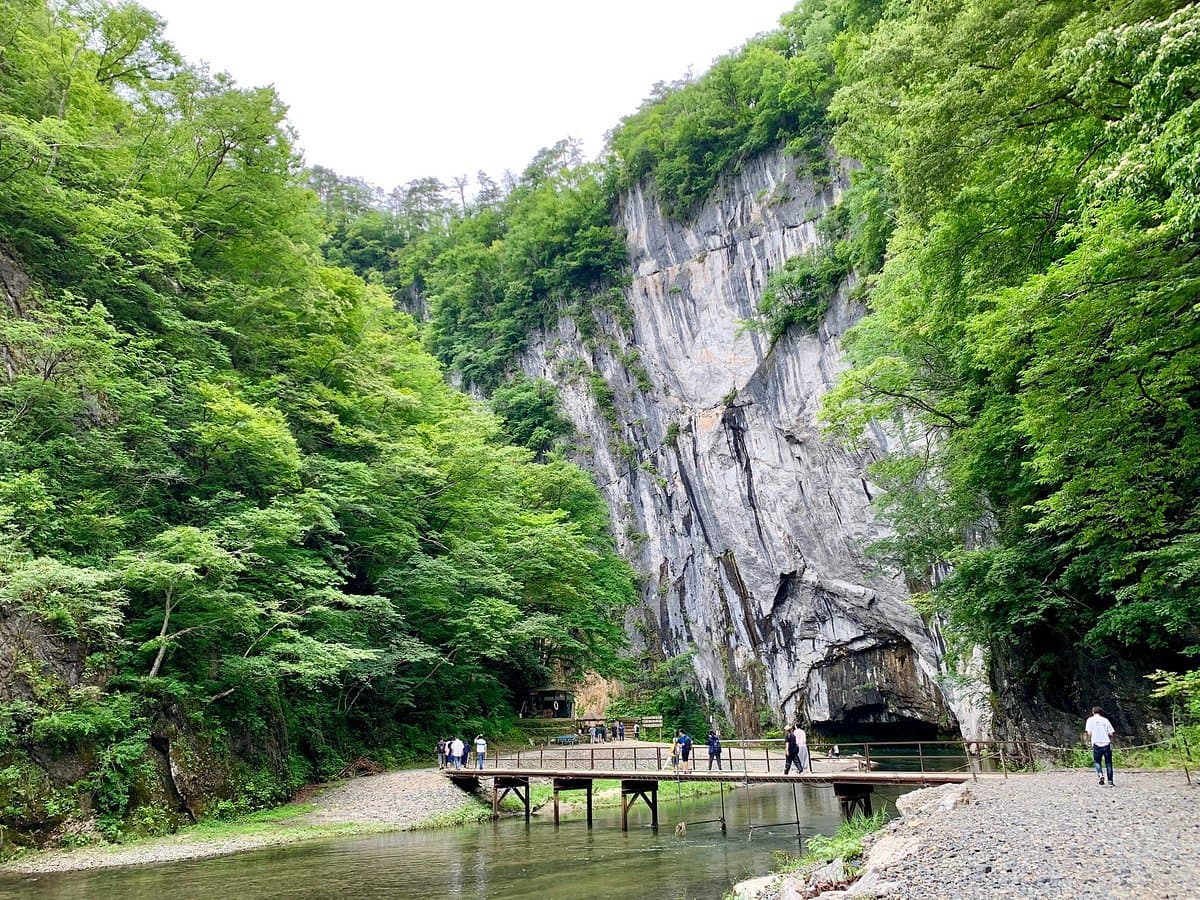
Geibikei is a nationally designated Place of Scenic Beauty, renowned for its dramatic gorge carved by the Satetsu River. The primary attraction is a leisurely boat ride, where visitors are propelled by a boatman using a long pole, offering an intimate perspective of the towering cliffs, unique rock formations, and lush surrounding nature. It's a place that transports you to a tranquil, almost timeless, natural setting.
Visitors consistently highlight the peacefulness of the boat trip, often describing it as a serene and relaxing experience. The changing scenery throughout the seasons, from vibrant new leaves in spring to fiery autumn colors, is frequently praised. A unique aspect that many reviewers enjoy is the boatman's traditional Japanese singing, which, even without understanding the language, adds significantly to the authentic atmosphere. The opportunity to throw small rocks for good luck into a designated hole at the end of the upstream journey is also a popular and fun activity.
To make the most of your visit, allocate approximately 1.5 to 2 hours for the entire experience, including the boat ride and a short walk. While the gorge is beautiful year-round, many suggest visiting in spring for fresh greenery or autumn for spectacular foliage. Summer offers a cool relief from the heat, and even in winter, the baron landscape holds a unique charm. Dress in layers, as the gorge can be cooler than the surrounding areas. Bringing some small change for the 'lucky rocks' is a good idea. Consider an early morning boat trip for a more tranquil experience with fewer crowds.
Geibikei is accessible via public transport. From Ichinoseki Station (a Shinkansen stop), take the JR Ofunato Line to Geibikei Station. The train journey takes about 30 minutes. From Geibikei Station, the boat pier is a short, well-signed walk of approximately 400-500 meters. Some reviewers mention an easy bus ride from Ichinoseki as well, taking about 30 minutes. If driving, parking is available near the boat pier.
A common observation from visitors is that the boat guides primarily speak Japanese. While this adds to the authenticity, those who prefer detailed explanations in English might find themselves relying on visual appreciation. However, many reviewers note that the stunning scenery and the boatman's singing transcend language barriers, making it an enjoyable experience regardless. The river water can appear turbid after heavy rain or typhoons, which might slightly diminish the clarity for viewing fish, but the overall beauty of the gorge remains.