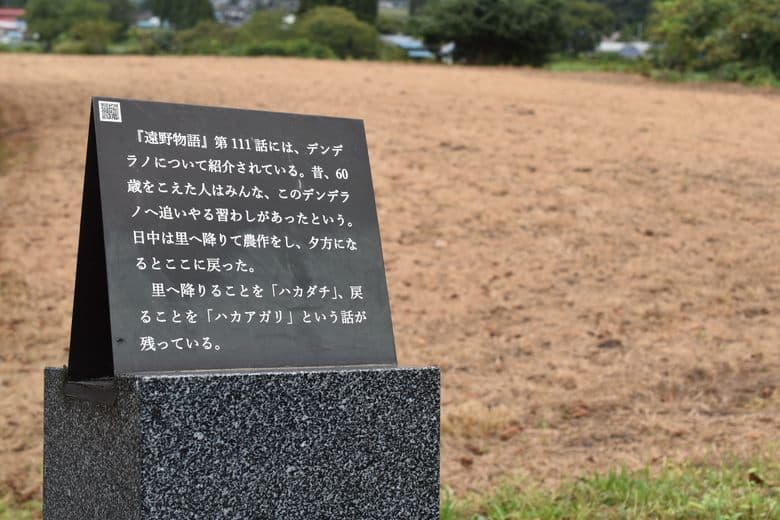
Denderano, also known as Rendaino, is a field located on a hill between villages in Tōno, Iwate Prefecture. It is significant as a purported site of 'ubasute,' a legendary practice where elderly villagers were left to die, and is closely associated with the renowned folklorist Kunio Yanagita, author of The Legends of Tōno. The site offers a tangible connection to a fascinating, albeit dark, aspect of Japanese folklore and the cultural landscape that inspired Yanagita's work.
Visitors to Denderano are primarily drawn by its unique historical and folkloric context. The site itself is relatively simple, featuring reliefs depicting ubasute scenes on a nearby bridge and a rustic hut. Reviewers often highlight the quiet, contemplative atmosphere and the opportunity to reflect on the legends. It's a place for those who appreciate the deeper, often unsettling, narratives embedded in local culture rather than grand architectural marvels.
To fully appreciate Denderano, it is recommended to spend about 1-2 hours exploring the site and its immediate surroundings. The best time to visit is during daylight hours, preferably in spring or autumn for pleasant weather. There are no specific items to bring, but comfortable walking shoes are advisable as the site is on a hill. Given its remote nature, visitors should manage their expectations regarding amenities; it is a place for quiet contemplation rather than extensive facilities.
Denderano is located in the Yamaguchi-Tsuchibuchi village area of Tōno City. While specific public transport details to the exact field are not widely available in reviews, Tōno City is accessible by train. From Tōno Station, visitors would likely need to take a local bus or a taxi to reach the Yamaguchi-Tsuchibuchi area, followed by a walk to the Denderano field. Driving is also an option, offering more flexibility to reach this somewhat remote location. Parking information is not explicitly mentioned, suggesting limited or informal options.
A common point for visitors is the site's simplicity and the lack of extensive historical markers beyond the bridge reliefs and the hut. To mitigate this, it is highly recommended to research the ubasute folklore and Kunio Yanagita's work beforehand. This preparation will enrich the experience, allowing visitors to connect the physical location with its rich, legendary background, rather than arriving with expectations of a highly developed tourist attraction.