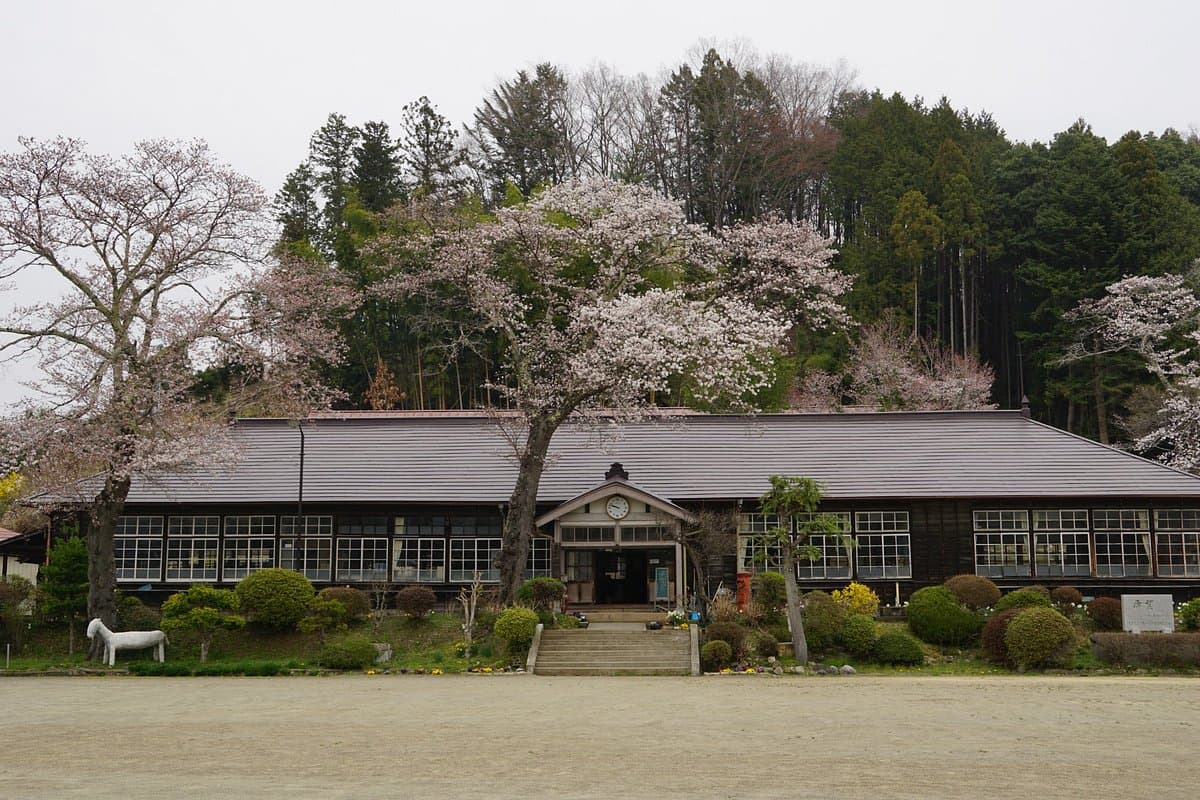
The Old Uwaoka Elementary School, established in 1879 and rebuilt in 1922, stands as a beautifully preserved example of early 20th-century Japanese school architecture. It's not just a building; it's a living museum that offers a tangible connection to the educational practices and daily life of children from a bygone era. Its significance lies in its architectural style, featuring large windows and wooden construction, and its role in local history as a central pillar of the community for decades.
Visitors consistently praise the school's nostalgic atmosphere and the meticulous preservation of its classrooms, which are often set up with period-appropriate desks, chairs, and teaching materials. Many reviewers highlight the unique photo opportunities, especially with the natural light filtering through the large windows and the charming wooden interiors. The quiet and peaceful environment is frequently mentioned, allowing for a reflective experience. Some visitors appreciate the chance to dress up in old school uniforms, adding an interactive element to their visit.
To make the most of your visit, plan to spend about 1 to 2 hours exploring the grounds and classrooms. It's best visited during daylight hours to fully appreciate the natural light within the wooden structure. Bringing a camera is highly recommended for capturing the unique aesthetic. While there are no specific items to bring, comfortable shoes are always advisable for exploring. Consider visiting on a weekday morning for a quieter experience, as weekends might see more local visitors.
The Old Uwaoka Elementary School is located at 957-3 Uwaoka, Daigo-machi, Ibaraki Prefecture. While public transport options in this rural area can be limited, visitors often recommend driving or taking a taxi from Daigo Station on the Suigun Line. From Daigo Station, it's approximately a 10-15 minute drive. Parking is available on-site. For those relying on public transport, checking local bus schedules in advance is advisable, though services may be infrequent.
A common complaint, though minor, is the relatively remote location, which can make access challenging without a car. To mitigate this, consider combining your visit with other attractions in the Daigo-machi area, such as Fukuroda Falls, to make the journey more worthwhile. Some visitors also note that information signage might be primarily in Japanese, so having a translation app or a guide could enhance the experience for non-Japanese speakers.