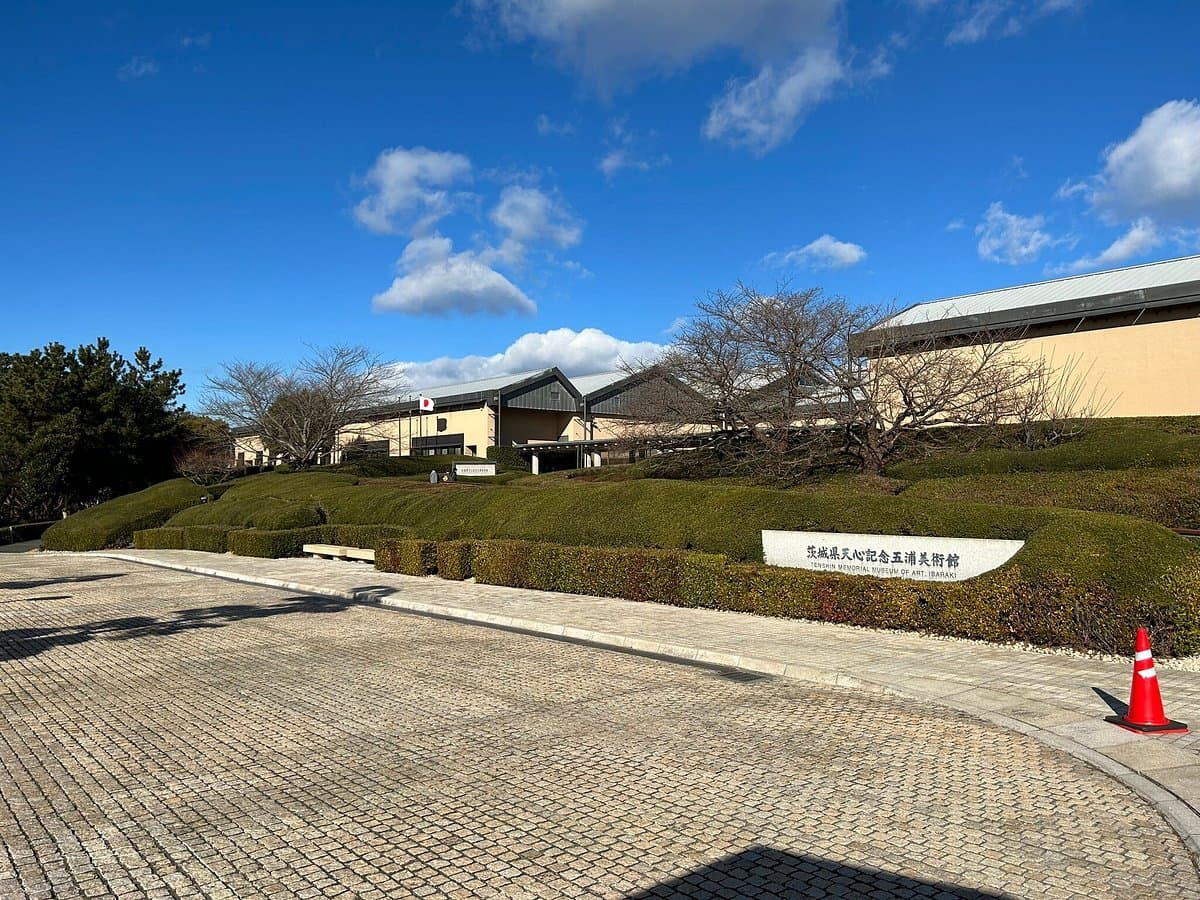
The Tenshin Memorial Museum of Art Ibaraki is a significant cultural institution in the northern Ibaraki Prefecture, dedicated to preserving and exhibiting Japanese-style paintings, known as Nihonga. It holds particular importance as it is located in a memorial place associated with pioneering artists like Tenshin Okakura, Taikan Yokoyama, Shunso Hishida, Kanzan Shimomura, and Buzan Kimura, who established the Nihon Bijutsuin (Japan Visual Arts Academy).
Visitors consistently praise the museum for its well-curated exhibitions, which often feature Ukiyoe and other traditional Japanese art forms. Many reviewers highlight the unique experience of combining art appreciation with the natural beauty of the Pacific Ocean. The museum's observation deck and cafe, with both indoor and terrace seating, are frequently mentioned as excellent spots to relax and enjoy panoramic sea views. The architecture, including the rebuilt hexagon house, also receives positive comments for its aesthetic appeal and integration with the surroundings.
To make the most of your visit, allocate approximately 1.5 to 2 hours to explore the exhibitions and enjoy the views from the observation deck and cafe. Reviewers suggest visiting during daylight hours to fully appreciate the coastal scenery. Consider bringing a camera to capture the ocean vistas. While the museum itself is a calm environment, it's advisable to check for current exhibition schedules in advance, as specific displays can greatly enhance the experience.
The museum is accessible by public transport, though it requires some planning. The nearest station is Otsuko Station, which is a local stop and not served by limited express trains. From major hubs like Mito or Katsuta, you would need to transfer to a local line. Once at Otsuko Station, the museum is approximately a five to six-minute bus ride away. Driving is also an option, and the museum provides parking facilities. Be aware that the area was affected by the 2011 tsunami, and while the museum has been rebuilt, some surrounding areas may still show signs of recovery.
A common point of concern for some visitors is the museum's somewhat remote location, which can make access challenging without a car or careful planning of train connections. Additionally, while the art is highly regarded, those unfamiliar with Nihonga or traditional Japanese painting might find the collection less engaging without prior research. To mitigate this, consider reading up on the featured artists and the Nihonga movement before your visit to enhance your appreciation of the exhibits.