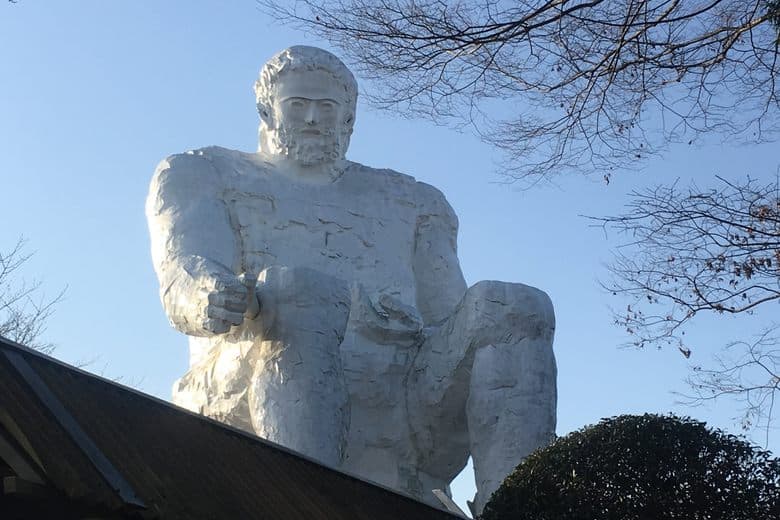
Ogushi Kaizuka Park is a distinctive site in Mito, Ibaraki Prefecture, that beautifully merges archaeological significance with local folklore. It's built around the Ogushi Midden, an ancient shell pile dating back to the early Jōmon period (4000 to 2500 BC), which is notable for being one of the oldest documented prehistoric sites in Japan. The park also celebrates the legend of Daidarabotchi, a mythical giant said to have created the midden, with a prominent 50-foot statue that visitors can interact with.
Visitors consistently praise the park's unique attractions, particularly the giant statue. Many enjoy the experience of climbing the hidden staircase inside the giant and stepping onto its outstretched palm for a novel perspective of the park and surrounding area. The reconstructed ancient dwellings from the Jōmon, Yayoi, and Kofun periods also receive positive remarks for offering an educational glimpse into Japan's early history. Reviewers often highlight the park's peaceful atmosphere, making it a pleasant place for a leisurely stroll and a break from more crowded tourist spots.
For a fulfilling visit, plan to spend about 1-2 hours exploring the park. It's advisable to wear comfortable shoes, especially if you plan to climb the giant statue. The park is generally less crowded, allowing for a relaxed experience. There are no specific warnings about what to skip, as most elements contribute to the park's unique charm. Bringing a camera is recommended to capture the unusual sights.
Reaching Ogushi Kaizuka Park is straightforward. From Mito Train Station, take a bus from bus stop #3 at the north exit, bound for "那珂湊駅" (Nakaminato Eki) or "アクアワールド大洗" (Aqua World Oarai). Get off at the "常澄庁舎前" (Tsunezumi Chosha Mae) stop, which is approximately a 25-minute ride. From the bus stop, the park is about a 10-minute walk. Mito Station itself is well-connected via the JR Joban Line, JR Mito Line, JR Suigun Line, and Kashima Rinkai Railway, and coach services are available from Haneda and Narita Airports for international visitors.
Common complaints are few, but some visitors might find the park's offerings limited if they are not specifically interested in archaeology or folklore. To mitigate this, approach the visit with an open mind, focusing on the unique cultural and historical aspects rather than expecting a large-scale amusement park. The park's charm lies in its niche appeal and the opportunity to engage with a lesser-known facet of Japanese heritage.