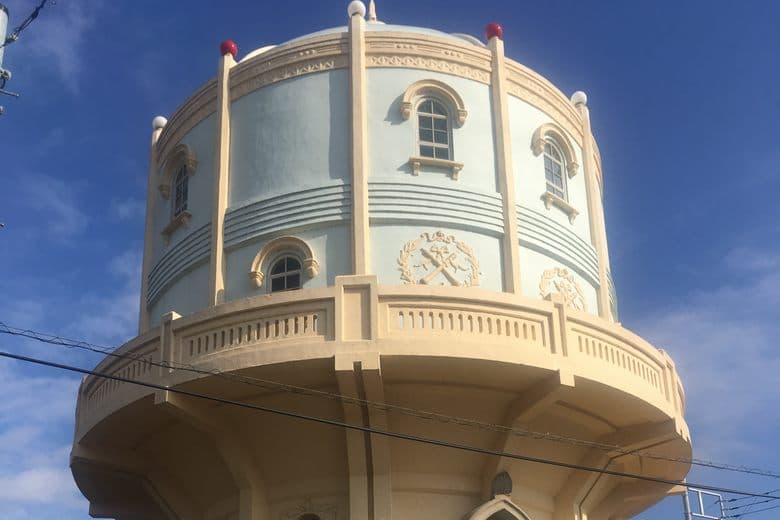
The Mito Low District Water Tower is an unexpected architectural gem in the Sannomaru area of Mito, known for its traditional Edo-period Japanese buildings. Erected in 1932, this Gothic-style structure, over 70 feet tall, was a vital part of Mito's modern water distribution system. Its highly decorative design, featuring triangular windows, plum motifs (the flower of Mito), and the character 水 (water/Mito), makes it a unique blend of Western and local influences. The tower stands as a testament to the engineering ambition of its time and the personal dedication of its designer, Tsurumatsu Goto.
Visitors consistently praise the tower's distinctive appearance and its contrast with the surrounding Japanese landscape. Many find its European flair intriguing and appreciate the historical context it provides regarding Mito's development. The intricate details, such as the reliefs of fire hoses on the third level and the decorative elements around the entrance, are often highlighted as points of interest. The small park surrounding the tower, which includes reconstructed Edo-era rock gutters and a shed also designed by Goto, adds to the historical ambiance, offering a pleasant, quiet spot for reflection.
To fully appreciate the tower's details and the surrounding park, visitors should plan to spend about 30-60 minutes. It's best visited during daylight hours to see the architectural nuances clearly. There are no specific items to bring, but comfortable shoes are always recommended for walking. While the tower itself is defunct and not accessible inside, its exterior and the park offer enough to explore. There are no reported common complaints, but visitors should manage expectations as it is a historical landmark rather than an interactive attraction.
The Mito Low District Water Tower is conveniently located within walking distance from Mito Station. From the north exit of Mito Station (served by JR Joban Line, JR Mito Line, JR Suigun Line, and Kashima Rinkai Railway), it's approximately a 15-minute walk. This makes it easily accessible via public transport for those exploring Mito without a car. The walk itself offers a chance to see parts of the Sannomaru area.
As the tower is primarily an exterior landmark, there are few common complaints beyond the lack of interior access, which is typical for such historical structures. Visitors should be aware that it is not an interactive museum but rather a photographic and historical point of interest. There are no known scams or significant issues reported by past visitors.