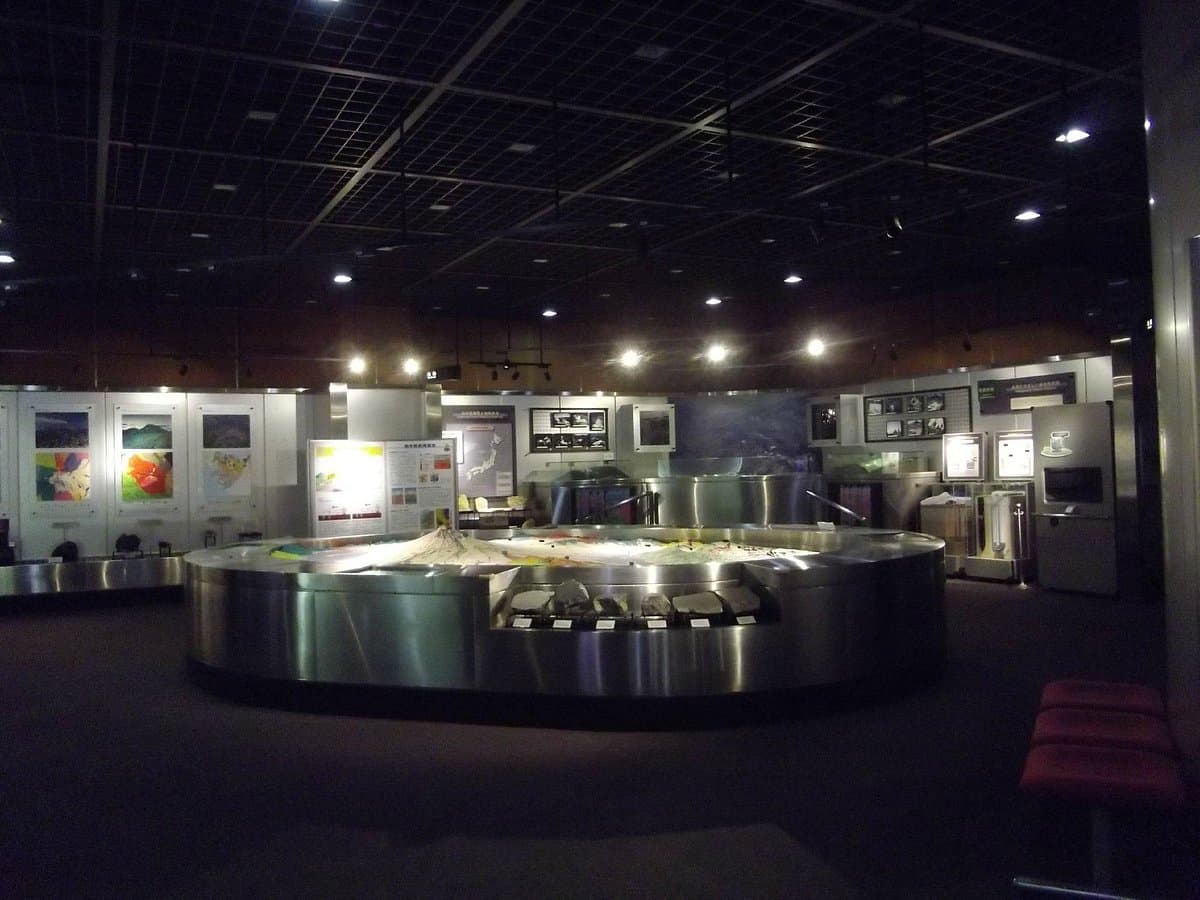
The Geological Museum, located within the AIST (National Institute of Advanced Industrial Science and Technology) campus in Tsukuba, serves as Japan's national geological museum. It showcases the geological history of Japan and the Pacific region, alongside a vast collection of minerals and fossils from around the world. The museum is significant for its focus on tectonic plates and fault lines, providing insights into the dynamic geological processes shaping the Japanese islands.
Visitors consistently praise the museum for its extensive and beautiful collection of minerals and fossils, with many noting the sheer variety on display. The interactive exhibits, including dynamic relief models of tectonic plates, are frequently highlighted as engaging and informative. Reviewers often mention the friendly and helpful staff, contributing to a positive visitor experience. While some English information is available, visitors note that not all exhibits have translations, which might be a minor drawback for non-Japanese speakers.
To make the most of your visit, allocate at least 2-3 hours to explore both floors thoroughly. The museum is free to enter, and parking is also free, making it a budget-friendly option. It's particularly recommended for those with a genuine interest in geology, earth sciences, or simply an appreciation for natural beauty. Consider visiting during weekdays to avoid potential crowds, although the museum is generally spacious enough to accommodate visitors comfortably.
The museum is situated at 1-1-1 Higashi, Tsukuba. While its location is described by some as not ideal for those without a car, it is accessible. Tsukuba is known as a science city, and the museum is part of a larger research institute. Public transport options to the AIST campus should be researched in advance, as direct access might require a bus connection from the nearest train station. Driving is a convenient option given the free parking available on-site.
A common complaint is the limited English information for some exhibits. To mitigate this, consider using a translation app on your smartphone for Japanese descriptions or focusing on the visual aspects of the displays. Despite this, many English-speaking visitors still find the museum highly enjoyable and informative due to the sheer volume and quality of the exhibits.