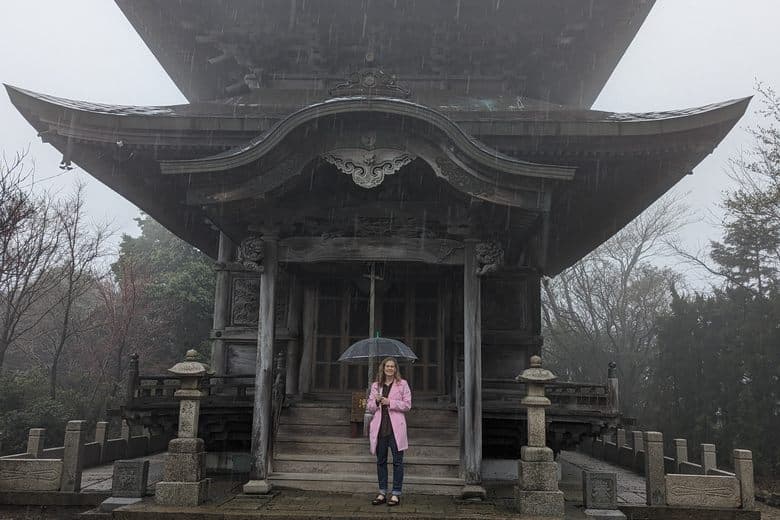
Myoken-ji is a Buddhist temple established in 1906 on the site of a former castle, dedicated to a statue of the Myōken bodhisattva, a deified personification of the North Star. This statue has a rich history, originally enshrined on Mount Atago in Kyoto before being relocated to Arima Onsen. The temple offers a quiet, contemplative experience away from the bustling hot spring town.
Visitors consistently praise the pleasant walk up to the temple, describing it as a refreshing experience with good signage. The path is well-marked and starts conveniently across from the bus station, making it easily accessible. Reviewers often highlight the peaceful atmosphere and the sense of tranquility found at the temple, especially for those seeking a moment of calm amidst their travels. While the temple itself is not grand in scale, its historical significance and the journey to reach it are often cited as rewarding.
To make the most of your visit, allocate about 1-2 hours, including the walk up and down. The best time to visit is during daylight hours, particularly in the morning or late afternoon, to enjoy the natural surroundings and avoid potential crowds at the hot springs. Wear comfortable walking shoes as the path involves ascending trails and steps. There are no specific items to bring beyond what you would normally carry for a walk, such as water. Visitors suggest combining this visit with other attractions in Arima Onsen, such as the hot springs, to create a full day's itinerary.
Myoken-ji is easily accessible by public transport. The well-marked path to the temple begins directly across from and slightly uphill from the Arima Onsen bus station. This makes it convenient for those arriving by bus. For those driving, parking options in Arima Onsen can be limited, so using public transport or walking from your accommodation is often recommended.
Common complaints are rare, but some visitors might find the temple less impressive if they are expecting a large, ornate complex. It is a smaller, more intimate temple. To mitigate this, approach the visit as an opportunity for a scenic walk and a moment of quiet reflection rather than a major architectural marvel.