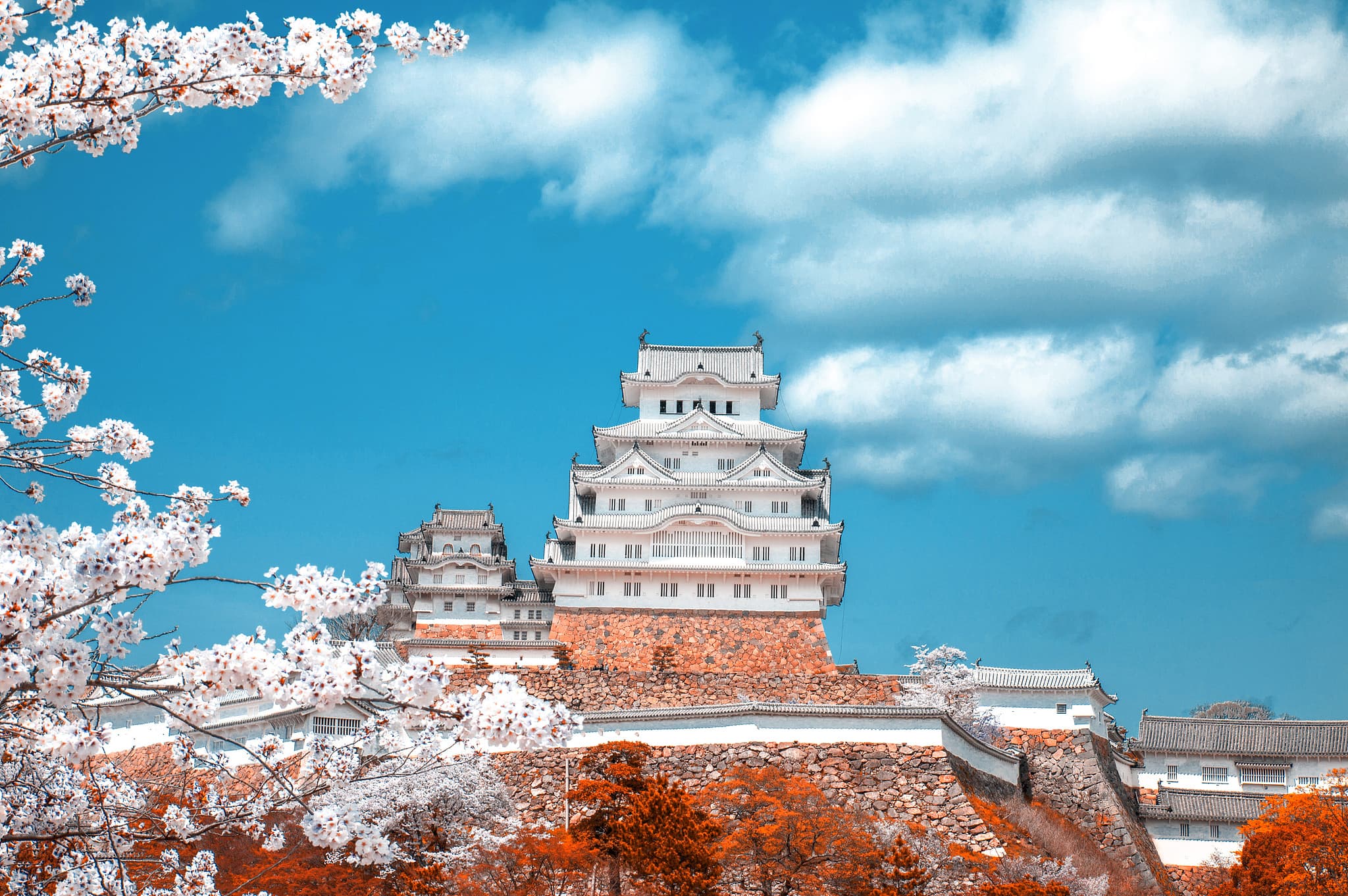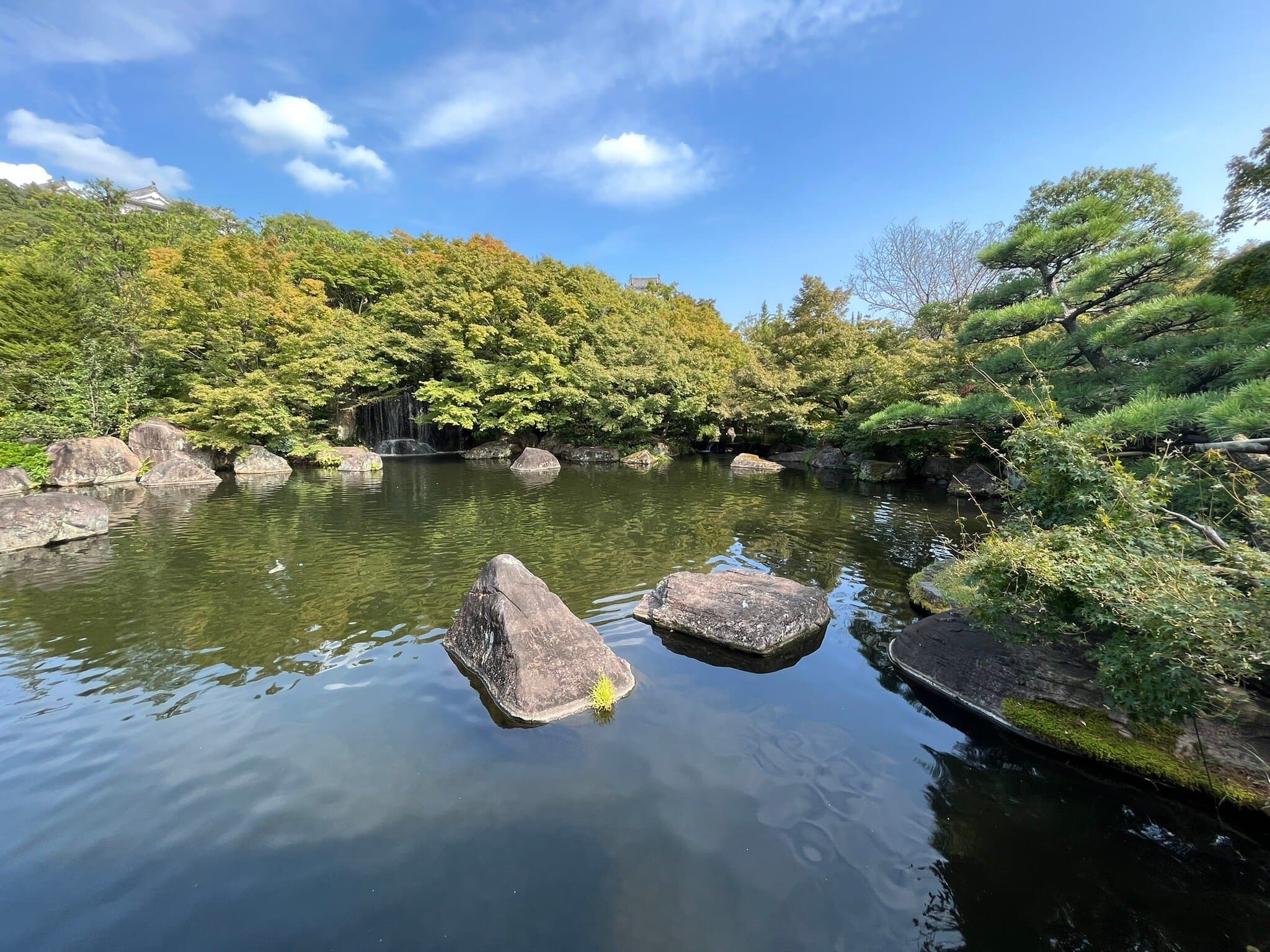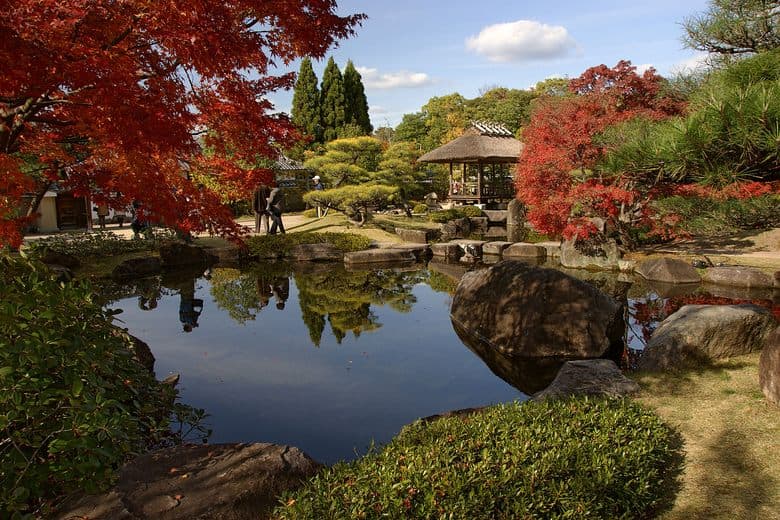
Kokoen Garden, often referred to as Himeji Kokoen, is a relatively modern Japanese garden complex established in 1992 to commemorate the 100th anniversary of Himeji City. Built on the former site of samurai residences, it features nine distinct Edo-period style gardens, each designed to offer a unique perspective and atmosphere. It serves as a perfect complement to the imposing Himeji Castle, providing a peaceful contrast to the castle's historical significance.
Visitors frequently highlight the garden's immaculate condition and the variety of its themed sections, such as the Lord's Residence Garden with its waterfall and koi pond, the Bamboo Garden, and the Tea Garden. Many appreciate the opportunity to experience a traditional tea ceremony, noting it as a peaceful and authentic cultural experience. The presence of numerous koi fish in the ponds is a consistent source of delight, with many enjoying feeding them. Reviewers often recommend visiting during autumn for the vibrant fall foliage or during cherry blossom season for the delicate blooms, though its beauty is appreciated year-round.
To make the most of your visit, allocate at least 1.5 to 2 hours to leisurely explore all nine gardens. Many suggest purchasing the combined ticket with Himeji Castle, as it offers a discount. Consider visiting in the late afternoon, especially after touring the castle, as the light can be beautiful and the crowds might be thinner. Bringing a small amount of cash for the tea ceremony (an additional fee) and for purchasing koi food is advisable. Wear comfortable shoes as there is a fair amount of walking involved on paved paths.
Kokoen Garden is conveniently located just a five-minute walk from Himeji Castle. From Himeji Station, the garden is easily accessible by walking directly towards the castle. Follow the signs for Himeji Castle, and the garden entrance will be clearly marked nearby. Public buses also serve the area around the castle, but walking is generally the most straightforward option given its proximity.
While overwhelmingly positive, some visitors mention that the garden can feel a bit crowded during peak tourist seasons, especially around the tea house. To mitigate this, consider visiting earlier in the morning or later in the afternoon. A few also note that while beautiful, the garden is relatively new compared to older, more historically significant gardens in Japan; however, its design faithfully adheres to Edo-period aesthetics, offering an authentic experience regardless of its age.