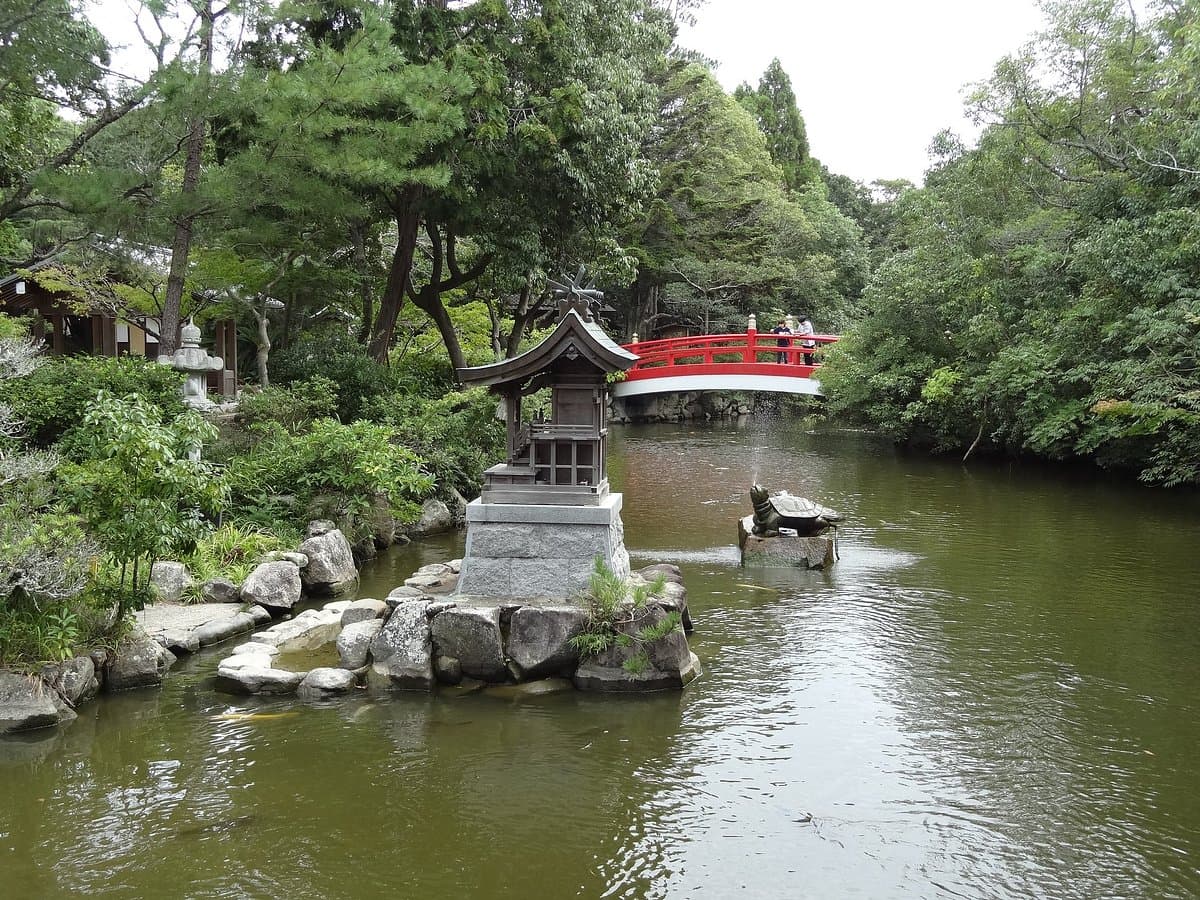
Izanagi Shrine holds a unique place in Japanese history and mythology as the oldest shrine in Japan, dedicated to Izanagi no Mikoto and Izanami no Mikoto, the deities credited with creating the Japanese islands. Mentioned in ancient texts like the Kojiki and Nihonshoki, it serves as a profound link to the nation's spiritual origins and is particularly significant for those interested in Shintoism and ancient Japanese culture.
Visitors frequently praise the shrine for its tranquil and uncrowded atmosphere, making it an ideal spot for quiet contemplation and relaxation. Many highlight the impressive 'Kusunoki of the couple,' a sacred camphor tree symbolizing marital harmony, which is a popular spot for blessings related to relationships and family. The shrine's historical significance, coupled with its peaceful ambiance, creates a memorable experience for those seeking a deeper connection to Japan's spiritual heritage.
To make the most of your visit, consider spending 1 to 2 hours exploring the grounds. Reviewers suggest that the shrine is rarely crowded, allowing for a leisurely pace. While there are shops selling marriage-themed products, visitors recommend focusing on the spiritual aspects and the natural beauty of the grounds. Early mornings are often cited as the best time to visit for maximum tranquility. Parking is generally easy and plentiful, even on weekends, which is a significant advantage for those traveling by car.
The shrine is located at 740 Taga, Awaji, Hyogo Prefecture. Many visitors arrive by car, noting the availability of two parking lots. For those relying on public transport, information is less explicit in reviews, but Awaji Island is generally accessible by bus from major cities. It is advisable to check local bus schedules to Taga or a nearby stop and then walk to the shrine.
While most experiences are positive, some visitors note that the area immediately around the torii and sando (main approach) might not appear as ancient as expected, as parts were rebuilt after the Great Hanshin Awaji Earthquake. However, this does not detract from the overall historical and spiritual significance of the inner precincts and the main shrine buildings. Focusing on the ancient trees and the main sanctuary helps to appreciate the shrine's deep roots.