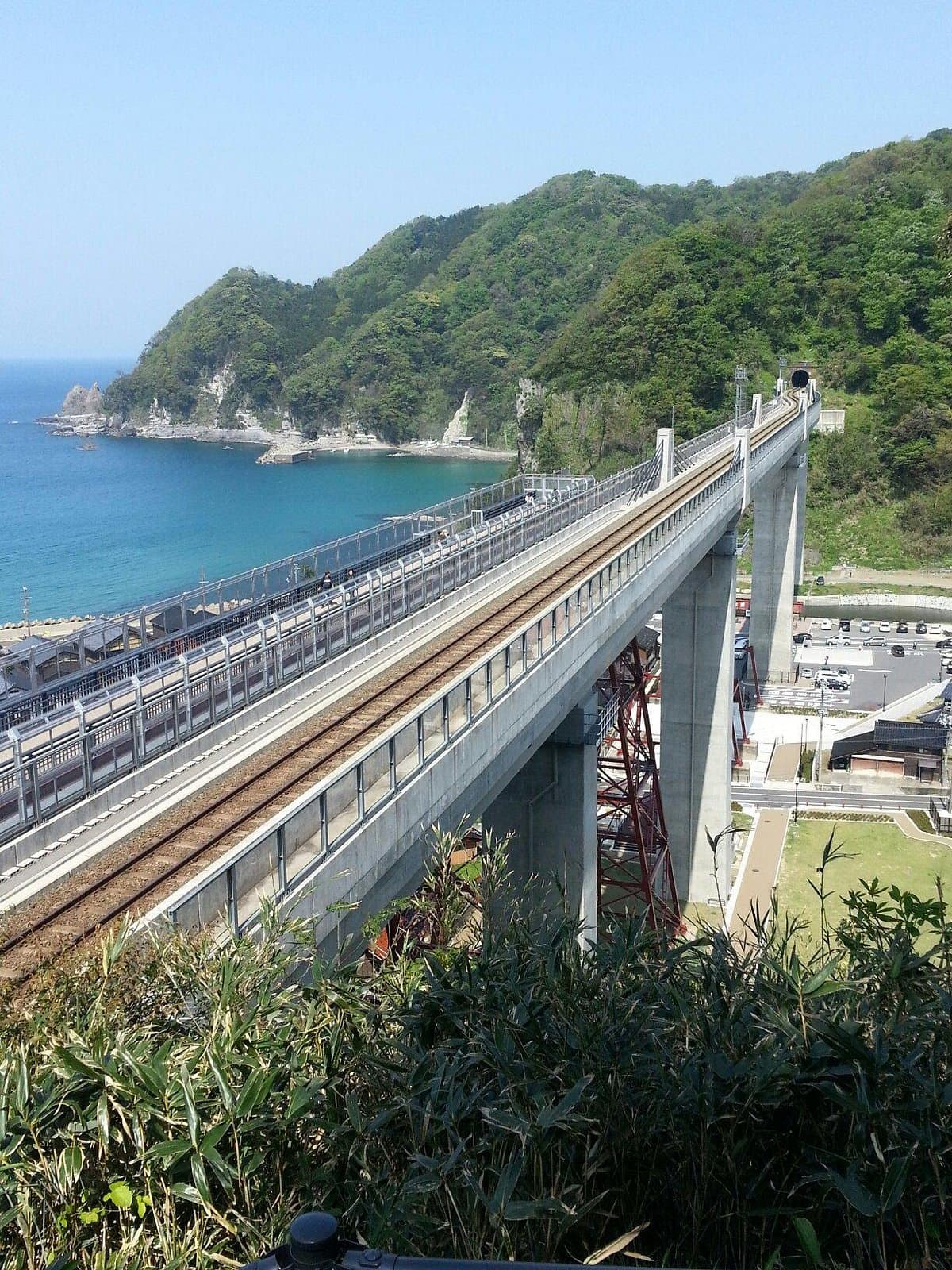
The Amarube Railroad Bridge, Sorano Eki, is a significant historical site in Japan, representing a preserved section of the original Amarube Railway Bridge. This iconic steel trestle bridge, originally opened in 1912, holds a poignant history, including a notable accident in 1986. While the main structure was replaced with a modern reinforced concrete bridge, a portion of the old bridge has been thoughtfully maintained as an observation area, offering visitors a unique vantage point and a connection to the past.
Visitors consistently praise the breathtaking views of the Sea of Japan and the tranquil village below. Many reviewers highlight the opportunity to see Sanin Line trains passing on the new bridge up close, which adds to the experience. The area is particularly popular among photographers for its rugged coastline and scenic beauty. The historical context, including the monument at the base of the bridge commemorating its past, is also frequently mentioned as a compelling aspect of the visit.
To make the most of your visit, plan to spend about 1-2 hours exploring the observation deck and the surrounding area. The best time to visit is during clear weather to fully appreciate the coastal views. Reviewers suggest bringing a camera to capture the picturesque scenery. There are facilities like a roadside station nearby where you can find warm food, such as udon, which can be a welcome comfort, especially on colder days. An elevator is available for convenient access to the observation deck, making it accessible for most visitors.
The Amarube Railroad Bridge, Sorano Eki, is directly connected to the platform of Amarube Station on the Sanin Main Line. This makes it highly accessible by train. Visitors frequently mention using the elevator from the station to reach the observation area comfortably. For those driving, there is a roadside station nearby, which likely offers parking, though specific details on parking availability are not extensively covered in reviews. The location is in Kami-cho, Hyogo Prefecture, and is a notable landmark on the Sea of Japan side of the prefecture.
While generally positive, some visitors note that the experience might be brief if not combined with other activities in the area. To mitigate this, consider exploring the local area, perhaps enjoying a meal at the roadside station or taking photographs of the coastline, as suggested by other visitors. The historical context of the bridge, including the accident, can be somber for some, but the preservation efforts aim to honor its legacy while offering a beautiful viewpoint.