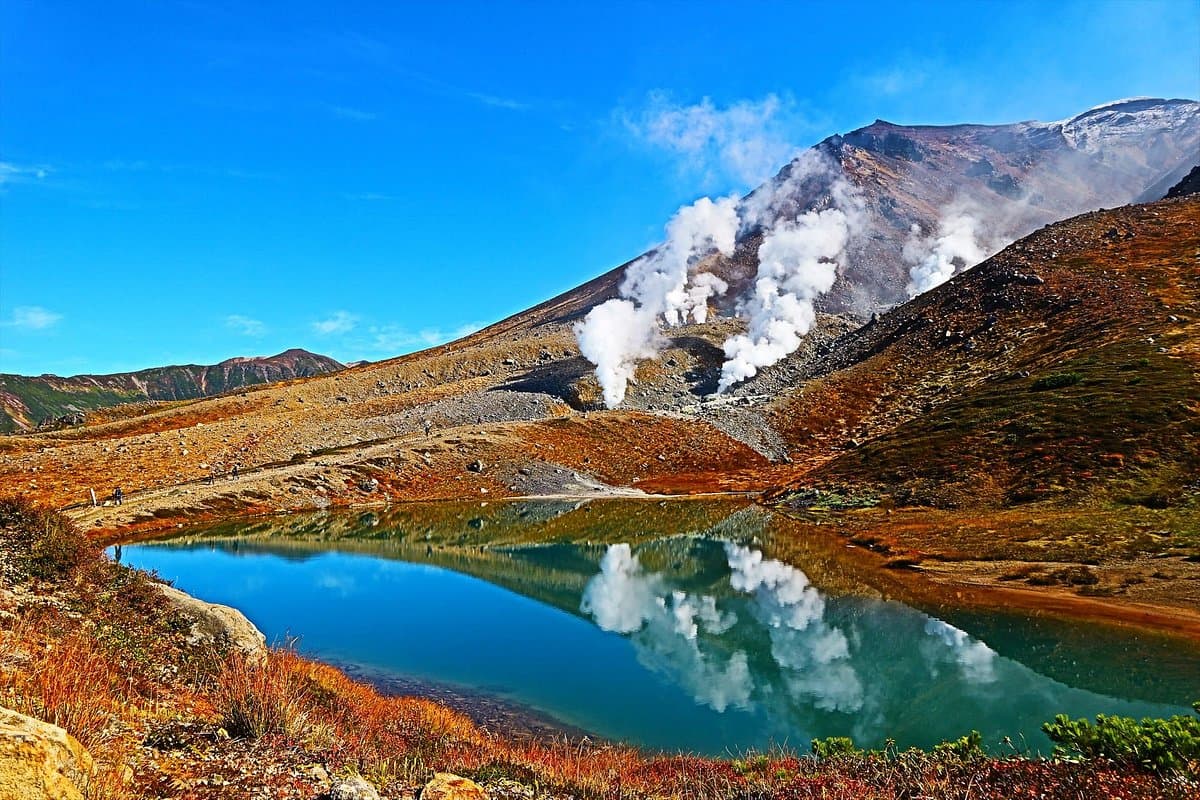
Mt. Asahidake is the highest peak in Hokkaido, Japan, and a prominent feature of Daisetsuzan National Park, often referred to as the "playground of the gods" by the indigenous Ainu people. It is an active volcano, and its unique landscape features fumaroles, alpine flora, and pristine ponds, making it a significant destination for nature enthusiasts and hikers.
Visitors consistently praise the breathtaking 360-degree views from the mountain, with many describing the scenery as magnificent and surreal. The presence of volcanic fumaroles and steam vents is a particular highlight, offering a unique geological experience. Reviewers frequently mention the dramatic seasonal changes, from vibrant summer flowers and lush greenery to early autumn foliage and snow-capped landscapes, sometimes even in June or early October. The option for both easy, short walks around the Sugatami Station and challenging, steep climbs to the summit caters to a wide range of physical abilities.
For a comfortable visit, bring appropriate clothing layers, as temperatures can drop significantly at higher altitudes, even in summer. Many recommend hiking poles, especially for the steeper sections, and proper hiking boots are essential due to rocky and gravelly paths. Even for the shorter loop, sturdy footwear is advisable. Reviewers suggest bringing water and snacks, as options on the mountain are limited. The best time to visit depends on your preference: late September to mid-October for autumn foliage (though snow can appear early), or summer for flowers and warmer hiking conditions. For those not aiming for the summit, the 1-hour loop around Sugatami Pond is highly recommended and offers excellent views of the fumaroles and reflective ponds.
To reach Mt. Asahidake, take a bus from Asahikawa JR Station. The bus ride takes approximately 1 hour and 45 minutes to 2 hours. Tickets can be purchased at the bus terminal or from Lawson convenience stores near Bus Stand 9, with automated machines offering English menus. If driving, parking is available at the ropeway station for ¥500, or free at the visitor center further down. The Daisetsuzan Asahidake Ropeway takes you from Asahidake Onsen to Sugatami Station at 1,600 meters. The ropeway costs ¥3500 per person and accepts cash only. From Sugatami Station, various trails are available, from a 30-minute loop to a multi-hour summit climb.
Common complaints revolve around unpredictable weather, which can change rapidly, leading to poor visibility, rain, or early snow. To mitigate this, check the weather forecast before heading up and be prepared for all conditions, even if the forecast seems clear. Some visitors found the summit climb challenging due to steepness and loose gravel; those with limited mobility or less hiking experience should stick to the easier loops around Sugatami Station. The fumes from the volcanic vents can also be strong for some, so be mindful if you are sensitive.