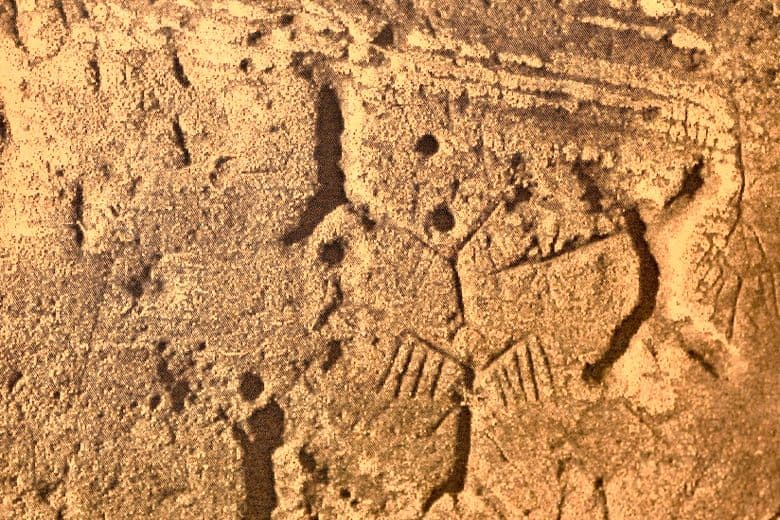
The Fugoppe Cave Petroglyphs represent a rare and significant archaeological site in Japan, being one of only two locations in the entire country to feature ancient rock carvings. Attributed to the late Epi-Jōmon culture (5th to 7th centuries), these petroglyphs include esoteric depictions of horned and winged figures, alongside boats, marine animals, and fish. The site offers a unique window into the spiritual and daily life of ancient Hokkaido inhabitants, with some theories even suggesting the carvings represent a lost writing system.
Visitors consistently find the preservation method, a large reinforced glass capsule that doubles as a museum, effective for viewing the delicate carvings. The sheer number and variety of engravings are often highlighted as impressive, providing ample material for contemplation. While the site is relatively small, the historical significance and the mystery surrounding the petroglyphs make it a compelling stop for those interested in ancient history and unique cultural artifacts.
To make the most of your visit, plan for about 1-2 hours. The museum is open daily from 9 AM to 4:30 PM, except on Mondays. An adult ticket costs 300 yen. Photography is strictly forbidden inside the capsule, so visitors should be prepared to observe and absorb without capturing images. Consider combining your visit with nearby archaeological sites like the Nishizakiyama Stone Circle or the Kingoryu Shrine if you have extra time in the area.
The Fugoppe Cave is located in the seaside town of Yoichi. The nearest train station is Ranshima, which is about a 20-minute walk from the cave. You can reach Ranshima by taking a Hakodate Line train from Otaru (approximately 20 minutes) or Sapporo (approximately 75 minutes). It's important to note that train services to Ranshima are infrequent, with typically only one train per hour. A few buses also run daily from Sapporo to Ranshima, offering an alternative public transport option. If driving, parking is available, and the site is well-signposted.
A common point for visitors to be aware of is the limited public transport frequency, especially for trains to Ranshima. Planning your train schedule in advance is highly recommended to avoid long waits. Additionally, while the site is historically rich, it is not a large, interactive museum, so manage expectations regarding the scale of the exhibition.