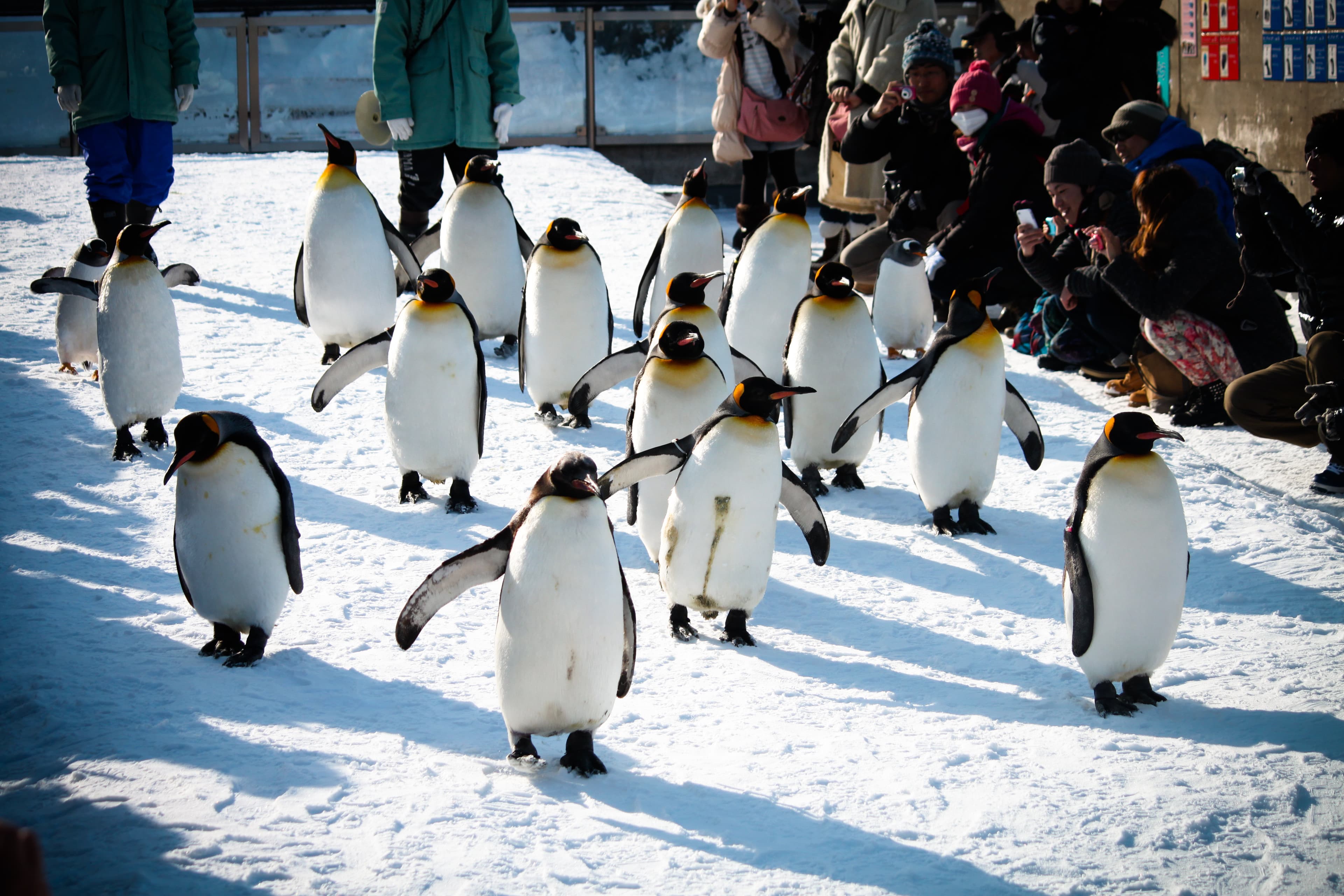
Asahiyama Zoo, located in Asahikawa, Hokkaido, is Japan's northernmost zoo and has gained international recognition for its unique approach to animal exhibition. Unlike traditional zoos, it focuses on 'action demonstrations' and 'behavioral exhibits,' allowing animals to display their natural instincts in environments designed for close-up viewing. This innovative design aims to provide a more enriching experience for both animals and visitors.
Visitors consistently praise the zoo's ability to offer intimate encounters with animals. The highlight for many is the penguin walk, where penguins parade along a designated route, often just feet away from onlookers. The underwater tunnels in the penguin and seal exhibits, and the 'Mog Mog Time' (feeding sessions) for various animals, are also frequently mentioned as captivating experiences. Reviewers appreciate the clean and well-maintained facilities, noting that the animals generally appear healthy and active. The zoo's compact size is often cited as a positive, making it manageable for families and ensuring a comprehensive visit without excessive walking.
For a fulfilling visit, plan to spend 3-4 hours, especially if you want to catch feeding times or the penguin walk. Arriving early, particularly for the penguin walk, is crucial as popular viewing spots fill up quickly. Many visitors recommend coming in winter for the unique experience of seeing animals in the snow and the full penguin parade. Dress warmly in winter, as much of the zoo is outdoors and temperatures can be very low. Non-slip footwear is also advised due to icy paths. Consider purchasing tickets in advance online or as part of a package deal from Sapporo to save time queuing.
Getting to Asahiyama Zoo requires a bit of planning. From Asahikawa Station, take bus number 41, 42, or 47 from bus stop #6. The bus ride takes approximately 40-45 minutes and costs around 440 yen one way. Be aware that buses can be very crowded, especially during peak season or around penguin walk times, so allow extra time. Some visitors opt for a taxi from Asahikawa Station for convenience, though it is more expensive. If driving, free parking is available, but some paid lots near the entrance may try to attract drivers; look for the zoo's designated free parking. For those traveling from Sapporo, a JR train to Asahikawa Station followed by the local bus is a common route, and package deals including train, bus, and zoo entry are often available at Sapporo JR Station.
While many reviews are positive, some visitors express concern about the size of certain enclosures, particularly for larger animals like polar bears and big cats, noting repetitive pacing behavior. Others mention that during summer, some animals appear less active due to heat. To mitigate these concerns, consider visiting during cooler months when animals are more energetic. Also, be prepared for crowds, especially during feeding times and the penguin walk; patience is key to enjoying these popular events.