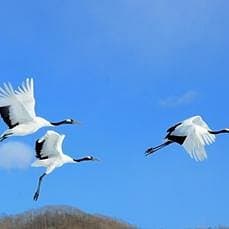
The Akan International Crane Centre, also known as GRUS, plays a crucial role in the conservation and study of the endangered red-crowned crane (Tancho), native to Japan. It serves as a vital feeding station, particularly in winter, attracting large numbers of wild cranes, and provides educational exhibits on their biology and the center's preservation efforts. This makes it a significant site for understanding and appreciating these iconic birds.
Visitors consistently praise the opportunity to see numerous wild cranes up close, especially during the winter months when feeding occurs. Many describe the experience as 'fabulous' and 'impressive,' highlighting the cranes' elegant movements, dancing, and interactions. Photographers, from serious amateurs to professionals, find it an ideal location due to the proximity of the birds and the scenic snowy backdrop. The informative video and exhibits inside the center are also frequently mentioned as valuable for understanding the cranes' history and conservation.
However, several reviewers note that the experience varies significantly with the season. During summer or late spring, crane sightings are minimal, often limited to a few captive birds, leading to disappointment for some. The center can also feel less engaging if you've already visited other free crane sanctuaries in the area, as some visitors found. To maximize your visit, aim for the winter months (December to March) and plan to arrive for the feeding times, typically in the morning and early afternoon (around 2 PM), when the most birds gather. Dress warmly in layers, as it can be 'bitterly cold,' and bring a zoom lens if you're interested in photography. Batteries drain quickly in the cold, so consider bringing spares.
The center is located at 23-40 Kamiakan Akancho, Kushiro, Hokkaido. While accessible by car, many visitors rely on public transport. From Kushiro JR Station, take Bus #30 from bus stop #15 towards Kushiro Airport. The earliest bus is around 10:15 AM. Be aware that bus schedules can be infrequent, with limited options for return, especially to Lake Akan. Some visitors mention a package deal from Lake Akan that includes bus fare, entry, and lunch. The center is conveniently located across the street from the 'Akantancho no Sato' roadside station, which offers parking for those driving.
A common complaint is the limited number of cranes outside of peak winter feeding season, with some visitors feeling the entrance fee is not justified for seeing only a few captive birds. To mitigate this, always check the best time to visit for wild crane sightings, which is generally winter. If visiting off-season, manage expectations and focus on the educational aspects inside the center.