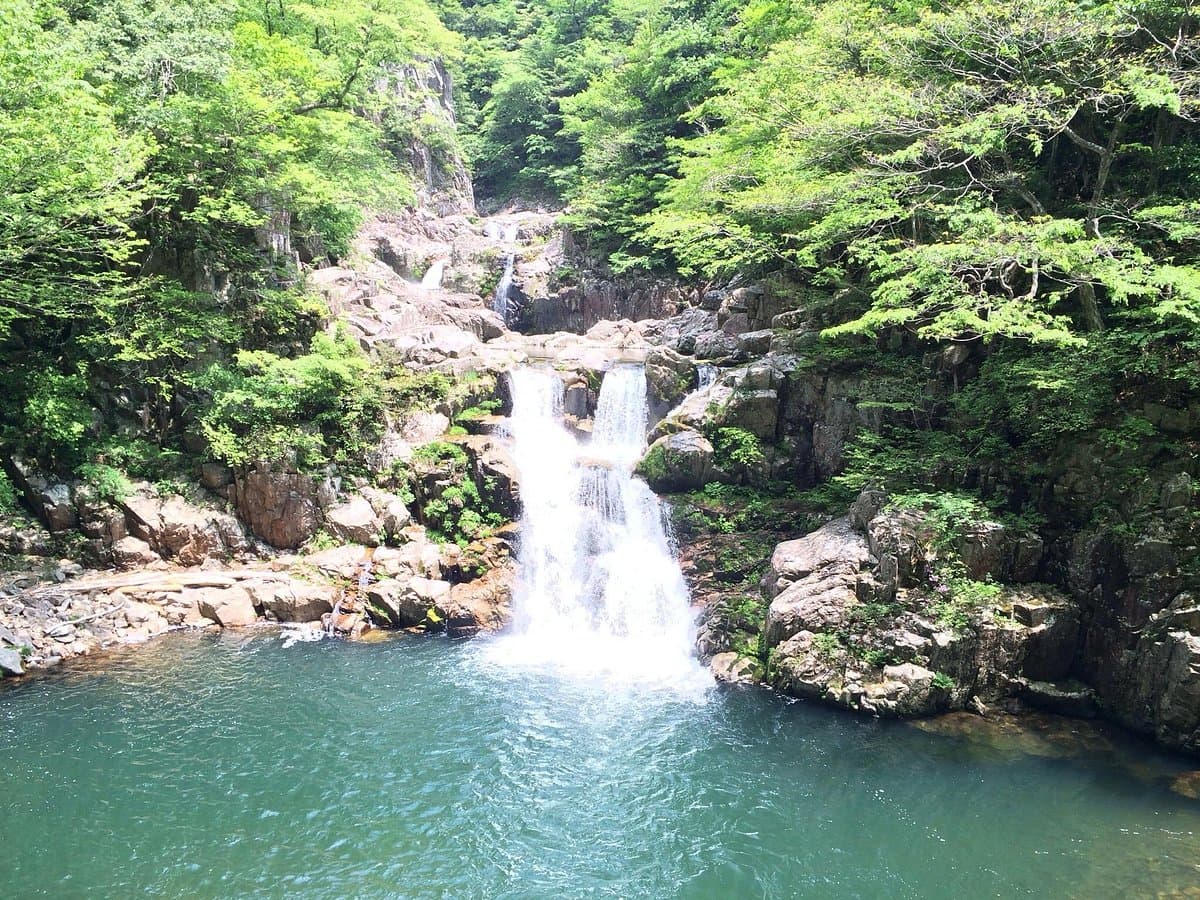
Sandankyo is a magnificent gorge located about 60-70 km northwest of Hiroshima, renowned for its pristine natural beauty, dramatic river landscapes, and lush forests. It serves as a stark and refreshing contrast to the urban environment of Hiroshima, offering visitors a chance to immerse themselves in tranquility and stunning scenery. The gorge is particularly famous for its autumn colors, but its beauty is appreciated across all seasons.
Visitors consistently praise the breathtaking scenery, describing it as "stunning," "gorgeous," and "magnificent." Many highlight the well-maintained, often paved paths that make the hike accessible even for those in sneakers, though some sections can be steep or narrow. The tranquility and sparse crowds (outside of peak autumn season) are frequently mentioned as major draws, providing a peaceful experience. The option for a short boat ride across the Kurofuchi pool is a unique and enjoyable feature for many. Reviewers also appreciate the clean air and refreshing atmosphere.
For a fulfilling visit, allocate at least 3-4 hours, or even a full day if you plan to explore the entire gorge. Many recommend starting early to make the most of the day. While the paths are generally easy, comfortable walking shoes are essential, and some sections involve inclines. Bringing water and snacks is advisable, as amenities can be limited, especially further into the gorge. A small cafe or noodle house is mentioned by some as a good mid-hike stop. The best time to visit for vibrant colors is autumn, but the gorge offers beauty year-round. Checking trail conditions beforehand, especially after heavy rain or during winter, is crucial.
Sandankyo is accessible by express bus from Hiroshima Bus Center. Reviewers strongly recommend taking the 8:18 AM direct bus from Hiroshima Bus Center (not Hiroshima Station) and returning on the 3:00 PM direct bus to avoid transfers and maximize time. The bus journey takes approximately 1 hour and 20 minutes and costs around ¥1400 each way. For those driving, a car offers more flexibility, and parking is available. Be aware that mountain roads can be narrow, and winter tires might be necessary if visiting in snowy conditions. Information centers at the entrance often provide maps in multiple languages, which are helpful for navigating the trails.
A common complaint among visitors is the lack of up-to-date information regarding trail closures or shuttle bus operations, especially on English-language websites. Several reviewers reported arriving only to find sections of the trail or the shuttle bus closed, leading to disappointment and wasted travel time. To mitigate this, it is highly recommended to check the official Japanese website for the most current information (using translation tools if necessary) or inquire at the Hiroshima Bus Center before departing. Some suggest that if parts of the main trail are closed, driving to the Mizunashi parking lot might offer access to other sections, though this requires a car.