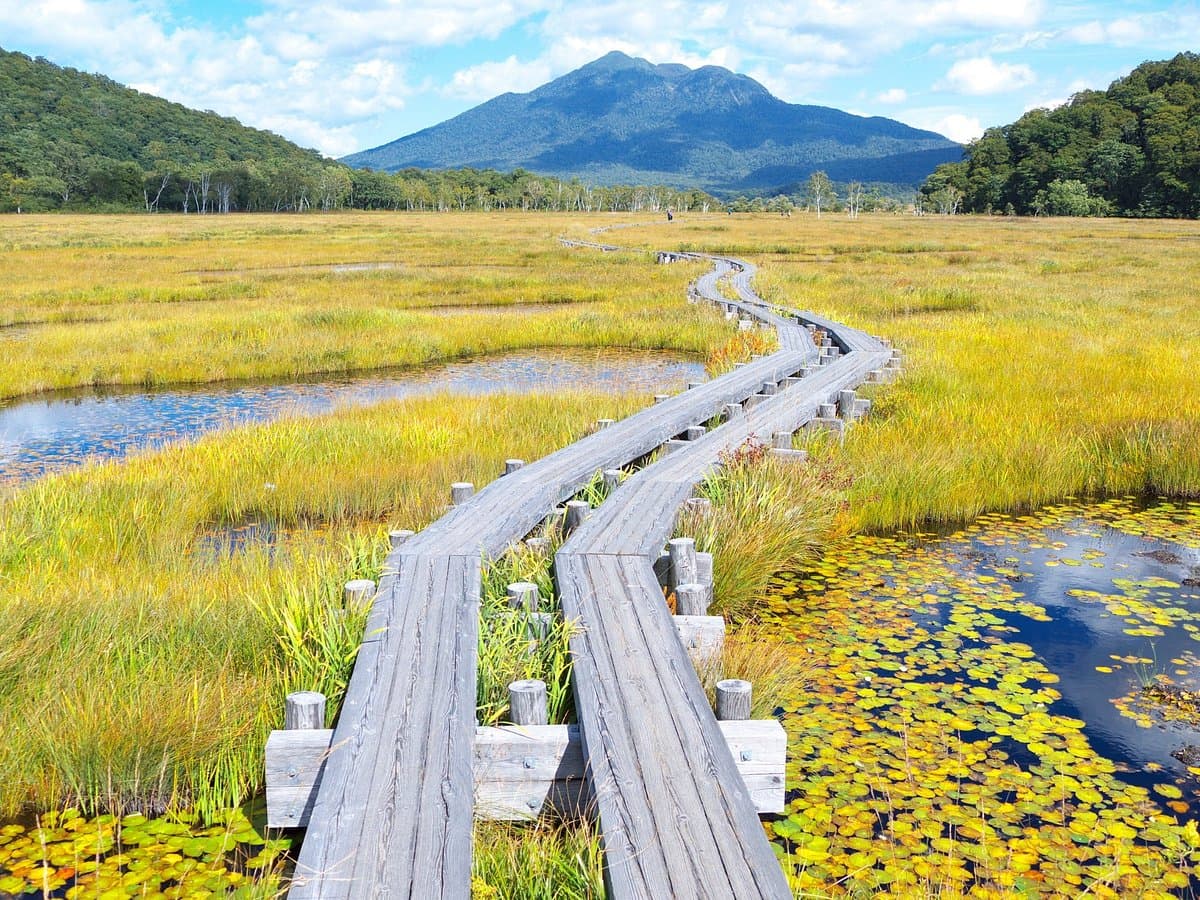
Ozegahara is Japan's largest high-altitude marshland, a designated Special Natural Monument and part of the Oze National Park. It is renowned for its pristine natural environment, unique alpine flora, and stunning seasonal transformations, making it a significant ecological and scenic destination.
Visitors consistently praise the ease of walking, even for beginners, thanks to the extensive network of cedar plank boardwalks that protect the delicate ecosystem. Many highlight the opportunity to see specific flowers like Nikko-kisuge (daylilies) in yellow, and the panoramic views of surrounding mountains like Mt. Hiuchi and Mt. Shibutsu. The presence of numerous, well-maintained toilets along the trails is frequently mentioned as a practical convenience, enhancing the overall experience of being immersed in nature without artificial distractions.
To make the most of a visit, it is advisable to wear sturdy shoes with good grip, especially as some slopes leading to the boardwalks can be slippery after rain. Sun protection, including sunscreen and hats, is recommended as the sun can be strong, even on overcast days. Reviewers suggest spending a full day to explore the park adequately, with some recommending an overnight stay nearby to start early. While the main marshland trails are generally flat and easy, the initial approach to the park can involve some uphill sections. Bringing your own water and snacks is wise, though there are huts available for refreshments.
Access to Ozegahara requires careful planning due to restrictions on private vehicles. Visitors typically park at the Oze Daiichi Parking Lot and then take a shuttle bus or shared taxi for a 15-30 minute ride to Hatomachi Pass, which serves as a trailhead. This shuttle service costs approximately 1000 yen each way. It is crucial to leave ample time for this transfer, as it adds to the overall travel duration. Public transport options to the parking lot are available but less frequently mentioned in reviews, suggesting most visitors arrive by car to the initial parking area.
A common point of concern is the indirect park fee, which, combined with parking and shuttle costs, can amount to around 2000 yen per adult. Visitors should factor these costs into their budget. Additionally, the park can get crowded during peak seasons, especially when specific flowers are in bloom. To mitigate this, arriving early in the morning is recommended for a more tranquil experience.