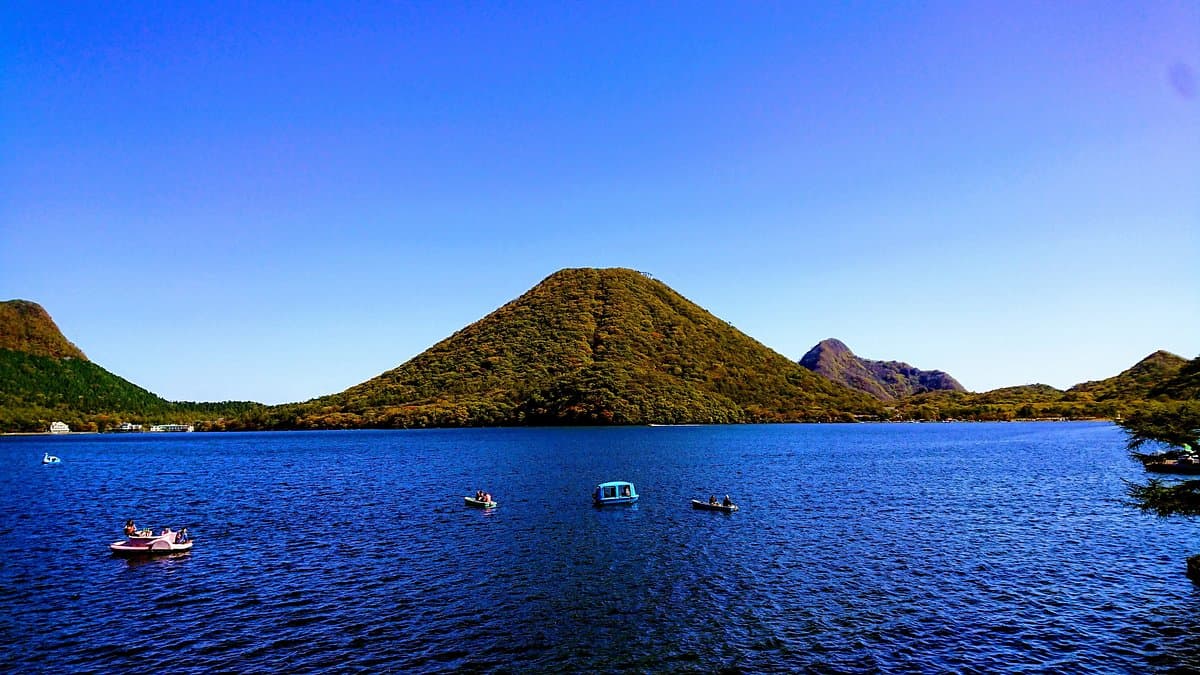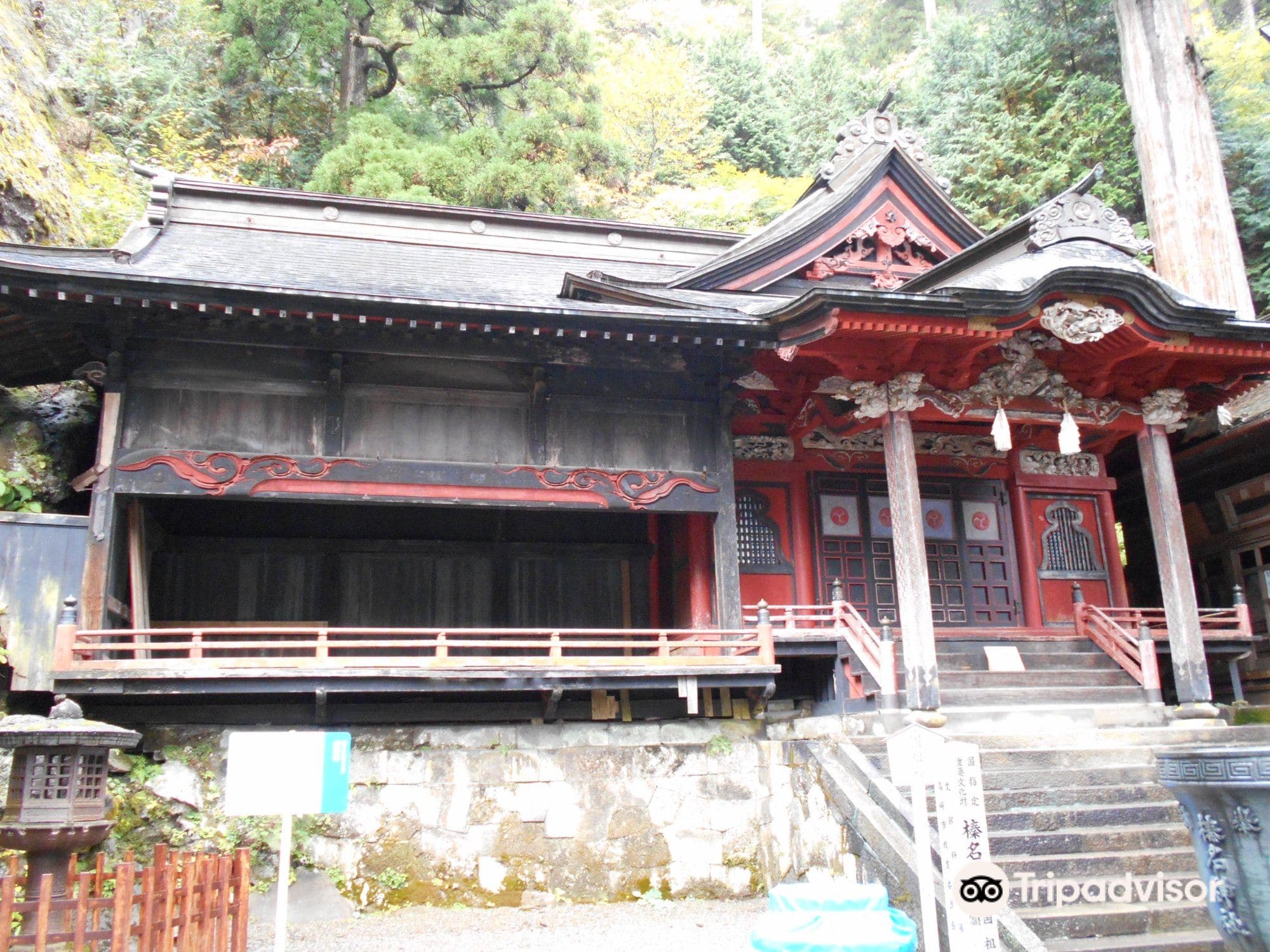
Haruna Shrine is a historic Shinto shrine believed to have been established during the reign of Japan's 31st Emperor. It is dedicated to deities associated with world peace, bountiful harvests, and good fortune. The shrine's main hall, rebuilt 200 years ago, is uniquely situated within a cave, and the surrounding mountainous landscape, featuring ancient cedar trees and striking rock formations, contributes significantly to its spiritual ambiance and status as a 'power spot' in the Kanto region.
Visitors frequently highlight the shrine's natural beauty and the peaceful, refreshing atmosphere of the approach. The walk along the river, past waterfalls and through a forest of tall cedar trees, is often described as a highlight, making the uphill climb enjoyable rather than tiring. Many appreciate the sense of history and the unique integration of the shrine with its natural surroundings. The autumn foliage is particularly praised for its stunning colors, making it a popular time to visit. However, several reviewers note that the main shrine building has been undergoing renovations for an extended period, which can detract slightly from the experience as parts may be obscured.
For a comfortable visit, wear sturdy shoes suitable for an uphill walk, as the path from the parking lot or bus stop to the main shrine can take 15-20 minutes. Bringing water is advisable, especially during warmer months. While the shrine itself is open, be aware that the main hall may still be under renovation; check local advisories if seeing the complete structure is a priority. Many visitors recommend allocating 1-2 hours to fully explore the grounds, including the walk and time for contemplation. Early morning visits are suggested to avoid crowds, especially on weekends or during peak seasons like autumn, and to secure parking.
Haruna Shrine is accessible by public transport. From JR Takasaki Station, take a bus towards Haruna Shrine; the journey typically takes about an hour to an hour and fifteen minutes. Reviewers advise checking the bus timetable in advance, as English assistance at the station may be limited. For those driving, free parking is available, but spaces can be limited, so arriving early is recommended. The shrine is also about a 10-minute drive from Lake Haruna, making it a convenient stop if you are exploring the area by car. Some visitors mention that GPS might require searching for "HARUNAJINJA SHRINE" specifically to get direct bus routes.
The primary complaint among visitors is the ongoing renovation of the main hall, which has been noted to continue for several years. While the premises remain open and the natural surroundings are still impressive, those hoping to see the main structure in its entirety might be disappointed. To mitigate this, focus on enjoying the scenic walk, the ancient trees, and the overall spiritual atmosphere rather than solely the main building. Some visitors also mention that the area can get very crowded on weekends and holidays, leading to parking difficulties and long lines; visiting on a weekday or early in the morning can help avoid this.