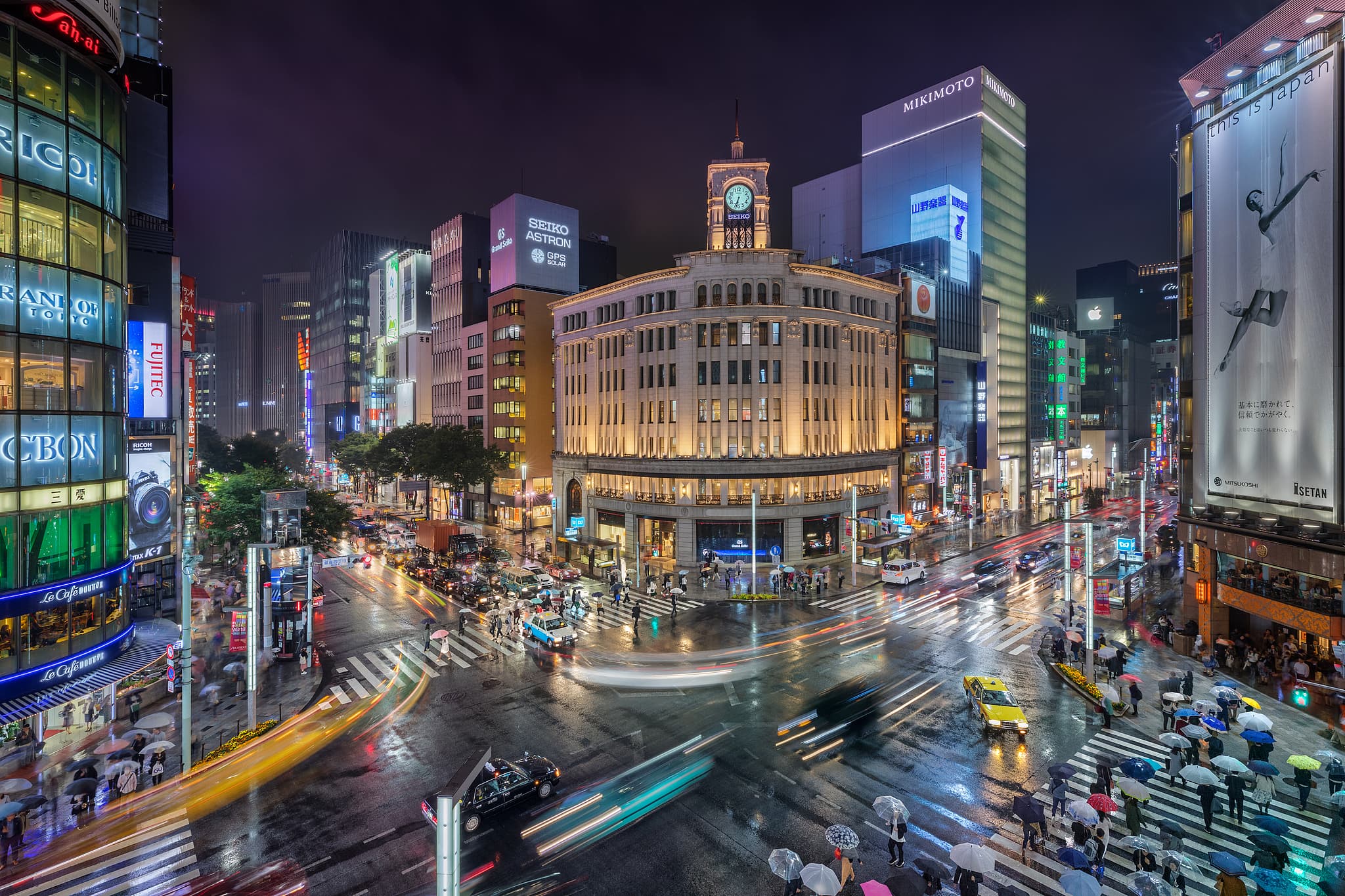
Ginza is Tokyo's most celebrated commercial district and one of the world's most expensive shopping areas. Spanning eight chomes (blocks) from Ginza 1 to Ginza 8, it represents the pinnacle of modern Japanese urban development and has been a symbol of prosperity since the Meiji Restoration. The district is home to flagship stores of virtually every major international luxury brand—Chanel, Dior, Gucci, Louis Vuitton, Hermès, Cartier, and countless others—alongside historic Japanese department stores like Mitsukoshi and Takashimaya. Beyond shopping, Ginza offers world-class dining, galleries, theaters (including the famous Kabuki-za), and architectural landmarks that make it a cultural destination in its own right.
Visitors consistently praise Ginza's cleanliness, orderliness, and safe atmosphere compared to other Tokyo districts. The streets are immaculate, staff are exceptionally polite and helpful, and the overall environment feels refined without being unwelcoming. Many reviewers note that even window shopping and people-watching are rewarding experiences here. The district's appeal extends beyond luxury shoppers: visitors mention finding affordable options like Uniqlo, GU, and Don Quijote, as well as excellent restaurants and cafes tucked away on side streets. The main street (Chuo-dori) is particularly stunning at night, with illuminated storefronts creating a dazzling atmosphere. On weekends (typically Saturday and Sunday until 6 PM), the main road is closed to vehicular traffic, transforming it into a pedestrian thoroughfare that many reviewers describe as the best time to visit.
Plan to spend 2–4 hours in Ginza, depending on your interests. If you're a serious shopper, budget more time; if you're primarily interested in atmosphere and people-watching, 2–3 hours suffices. Visit on a weekend afternoon (especially Saturday or Sunday before 6 PM) to experience the car-free main street and enjoy the most vibrant crowds. Alternatively, visit at dusk or after dark (stores typically close by 8–9 PM) to see the spectacular neon lighting. Bring comfortable walking shoes, as you'll cover considerable ground. If shopping, bring your passport for tax-free purchases (minimum spend typically 5,000 yen). Many reviewers recommend exploring the side streets and alleys beyond the main thoroughfare, where you'll find hidden gems, smaller boutiques, and more affordable dining options. The basement levels of department stores are worth exploring for food courts and specialty items. Avoid visiting during peak hours (midday on weekdays, early afternoon on weekends) if you prefer a less crowded experience; early morning or late afternoon tends to be quieter.
Getting to Ginza is straightforward thanks to excellent public transport connections. Multiple train lines serve the area: take the Ginza Line, Marunouchi Line, or Hibiya Line directly to Ginza Station (the most central option). Alternatively, use the Yurakucho Line to Niko-itchome Station or the Toei Asakusa Line to Higashi-Ginza Station. If arriving from Tokyo Station, take the JR lines to Yurakucho Station, which is approximately a 5-minute walk to the heart of Ginza. All stations have clear signage and multiple exits; ask staff which exit is best for your destination. Driving is not recommended due to limited parking and heavy traffic, though taxis are readily available if needed. The area is highly walkable once you arrive, with wide, well-maintained streets and clear directional signage.
Common complaints center on high prices and the perception that Ginza caters exclusively to luxury shoppers. However, reviewers note this is partly a misconception: while flagship stores are pricey, the district includes affordable chains and excellent value dining if you venture beyond the main street. Some visitors find the area feels somewhat sterile or lifeless compared to more chaotic districts like Shibuya or Shinjuku, though others appreciate this as a strength. A few reviewers mention that certain high-end establishments can feel exclusionary to casual visitors, but this is rare. To mitigate disappointment, approach Ginza as an experience and cultural landmark rather than purely a shopping destination, and allow time to explore beyond the main thoroughfare where character and variety emerge.