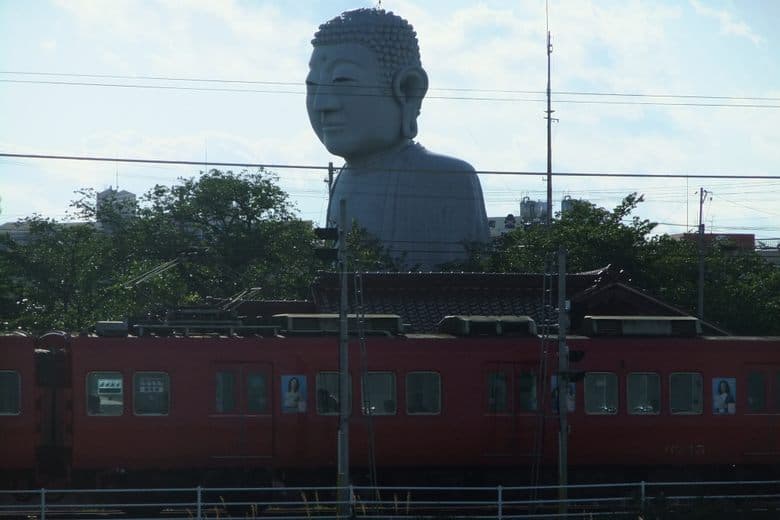
The Hotei Buddha is a remarkable 60-foot-tall reinforced concrete statue of Yakushi-nyorai, the Buddha of Healing, located in Konan, Aichi Prefecture. Conceived and built by Hidenobu Maeda, an acupuncturist with no prior sculpting experience, it stands as the largest privately owned Buddha statue in Japan. Its creation in the post-WWII era was driven by a desire to bring comfort to the local community, and its somewhat disproportionate, yet endearing, appearance makes it a unique cultural landmark.
Visitors consistently describe the experience as one of curiosity rather than traditional worship. Many are struck by the statue's unexpected placement within a quiet residential area, often noting the juxtaposition of the massive Buddha with everyday homes and cherry blossom trees. Reviewers frequently highlight its unusual aesthetic, finding it both humorous and impressive. The fact that it can be glimpsed from passing trains adds to its mystique, making it a memorable, if unconventional, sight.
For those planning a visit, a short stop of 15-30 minutes is usually sufficient to appreciate the statue and take photographs. There are no facilities or extensive grounds, so visitors should come prepared with any necessities. The best time to visit is during daylight hours, especially in spring when the surrounding cherry blossoms are in bloom, adding a picturesque element to the scene. Since it's a residential area, maintaining respect for local residents is paramount.
The Hotei Buddha is easily accessible via public transport. It is approximately a 15-minute walk from Hotei Station. Hotei Station is on the Meitetsu Inuyama Line, making it convenient for those traveling from Nagoya or other parts of Aichi Prefecture. There is no dedicated parking mentioned, so public transport is the recommended option.
Common complaints are minimal, primarily revolving around the lack of additional attractions or amenities at the site, as it is essentially just the statue in a neighborhood. To mitigate this, visitors should manage their expectations, viewing it as a brief, interesting stop rather than a full-day excursion. There are no entry fees, making it an accessible and free point of interest.