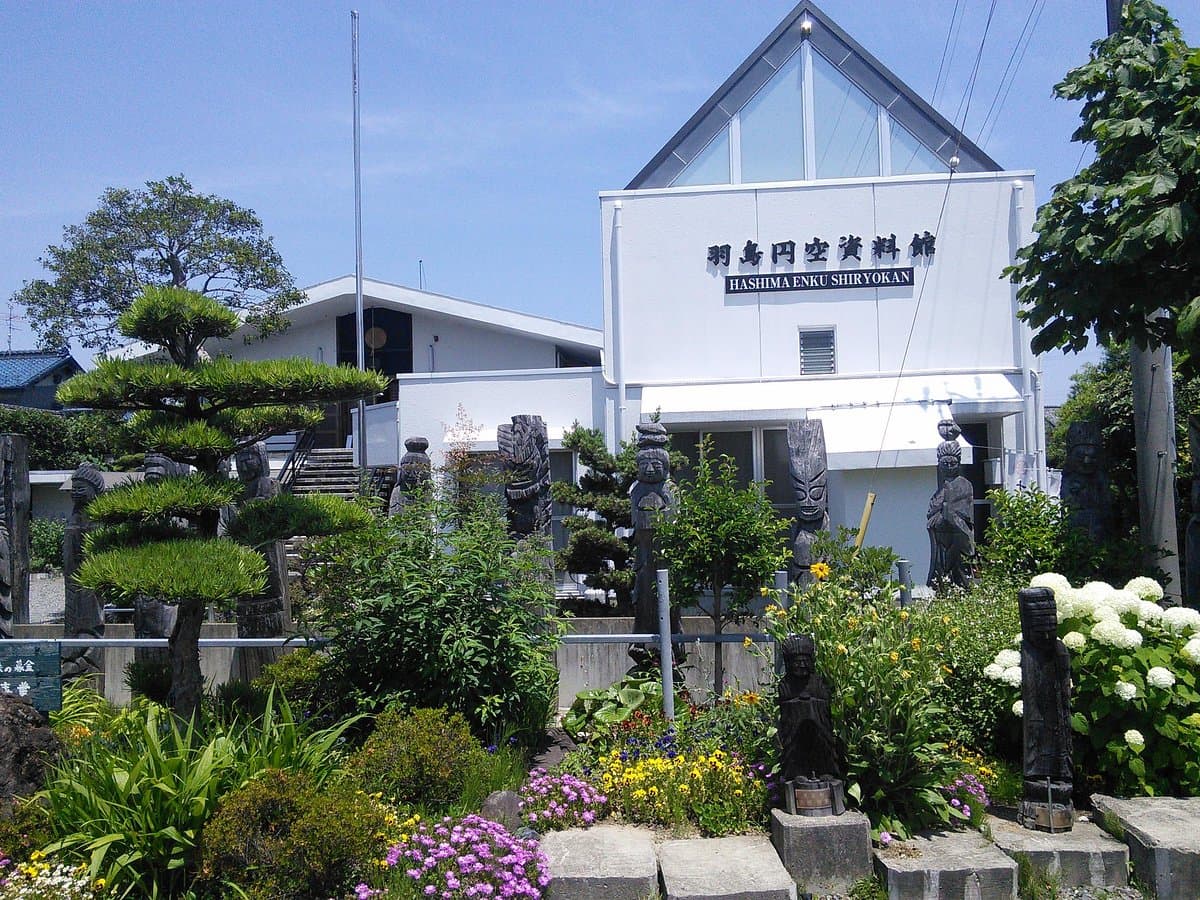
The Nakakannondo Hashima Enku Museum is dedicated to the works of Enku (1632-1695), an itinerant Buddhist monk and sculptor known for creating tens of thousands of wooden statues across Japan. The museum houses a significant collection of his distinctive carvings, characterized by their raw, powerful, and often unfinished appearance, reflecting his unique artistic and spiritual approach.
Visitors consistently praise the opportunity to see a concentrated collection of Enku's work, which can be rare to find in one location. Reviewers note the statues' expressive faces and the raw energy they convey, appreciating the chance to delve into a specific, less-known aspect of Japanese art history. However, some visitors find the museum to be quite small and the information provided to be primarily in Japanese, which can limit the experience for non-Japanese speakers. The quiet atmosphere is often highlighted as a positive, allowing for contemplative viewing.
For an optimal visit, it is recommended to allocate about 1 to 2 hours. Bringing a translation app or a guide familiar with Japanese art history could significantly enhance the experience, especially given the limited English explanations. The museum is best visited during off-peak hours to fully appreciate the quiet ambiance. There are no specific items to bring, but comfortable shoes are always advisable for exploring the surrounding area.
The museum is located in Kaminakacho Naka, Hashima, Gifu Prefecture. While specific public transport details are not widely available in reviews, Hashima is accessible by train. Visitors often recommend checking local bus schedules or considering a taxi from the nearest train station, as the museum is not in the immediate vicinity of major transport hubs. Driving is also an option, and parking availability should be confirmed beforehand.
A common complaint among international visitors is the lack of English information, which can make it challenging to fully understand the context and significance of the exhibits. To mitigate this, consider researching Enku's life and work beforehand, or using a real-time translation app on your smartphone to interpret the Japanese descriptions.