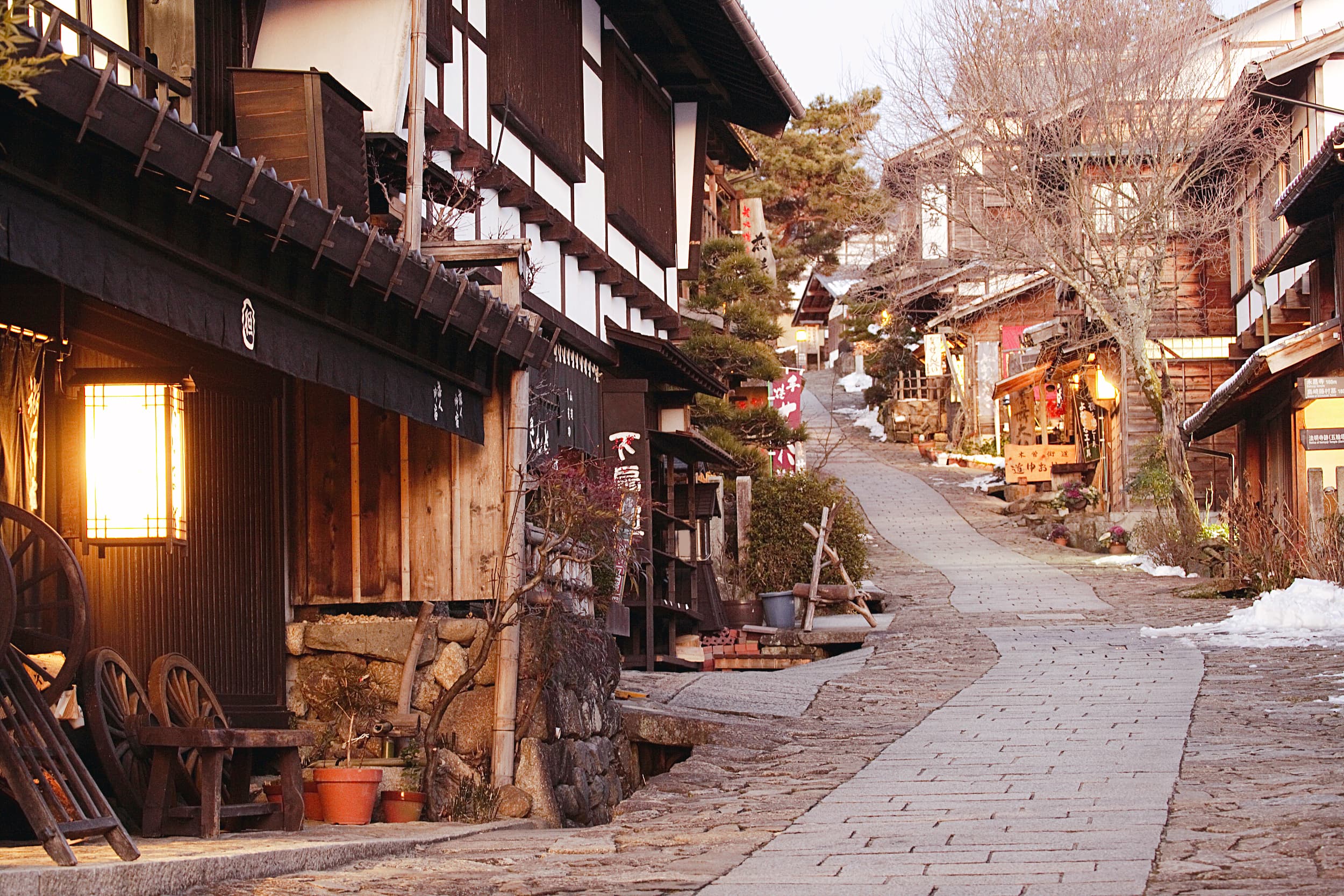
Magome-juku is a meticulously restored post town on the ancient Nakasendo trail, one of the five major routes connecting Edo (Tokyo) and Kyoto during the Edo period. It stands as a living museum, showcasing the architecture and atmosphere of a bygone era. The town's significance lies in its role as a vital resting point for travelers, merchants, and samurai, and today it offers a unique glimpse into Japan's historical infrastructure and cultural heritage.
Visitors consistently praise Magome-juku for its authentic Edo-period charm, with many describing it as stepping back in time. The stone-paved main street, lined with traditional wooden houses, shops, and cafes, creates a highly photogenic environment. A major highlight for most is the scenic 8-kilometer hike along the Nakasendo trail to the neighboring post town of Tsumago-juku. Reviewers frequently mention the beautiful forest paths, waterfalls, and the unique experience of visiting the traditional tea house along the way, where volunteers often offer free tea. The walk is generally considered moderately easy, suitable for various fitness levels, though comfortable walking shoes are essential due to slopes and varied terrain.
To make the most of your visit, arrive early in the morning, especially if you plan to hike, to avoid crowds and enjoy the tranquility. Many recommend walking from Magome to Tsumago, as the initial section from Magome is uphill, followed by a more gradual downhill path, making it less strenuous overall. Bring cash, as many shops, accommodations, and even some bus services in the area are cash-only. Don't miss trying local delicacies like gohei mochi and soba. Allow 2-3 hours to explore Magome-juku itself, and an additional 2-4 hours for the hike to Tsumago, depending on your pace and stops. For those with luggage, a convenient baggage forwarding service (Ta-Q-BIN) is available between Magome and Tsumago, allowing you to hike unencumbered.
Magome-juku is accessible by public transport. From Nagoya, take the JR Chuo Line to Nakatsugawa Station. From there, local buses run directly to Magome-juku. The bus ride takes approximately 30 minutes. If coming from Matsumoto, take the JR Shinano Line to Kiso-Fukushima, then a local train or bus towards Magome. Driving is also an option, with parking available, though many prefer the bus connection for the hike. The main street of Magome is pedestrian-friendly, but be aware of the steep, stone-paved slopes.
While generally highly rated, some visitors find Magome-juku to be quite touristy, especially during peak hours, which can detract from the historical ambiance. To mitigate this, visiting early in the morning or late afternoon is advisable. A few reviewers also note that the walk, while beautiful, might not be challenging enough for experienced hikers, or that some sections follow paved roads rather than pristine forest paths. However, the overall consensus remains overwhelmingly positive, with the charm of the post towns and the natural beauty of the trail making it a worthwhile experience.