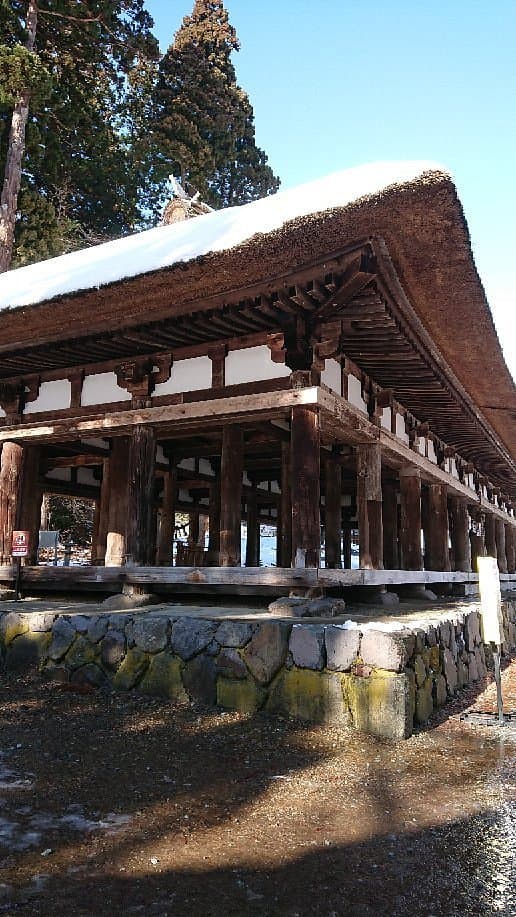
The Shingu Kumano Shrine Nagatoko is a significant historical and architectural site, tracing its origins back to the 12th century when the local feudal lord invited the three sacred shrines of Kumano to this location. It stands out for its unique worship hall, known as Nagatoko, which features an open-air design with only pillars and no walls, offering an unobstructed connection with nature. This architectural style provides a distinct spiritual experience, setting it apart from many other shrines in Japan.
Visitors consistently praise the shrine for its tranquil and uncrowded atmosphere, often describing it as a peaceful retreat. Many highlight the impressive size of the ancient ginkgo biloba tree on the grounds, which becomes a spectacular golden sight in autumn. The unique, wall-less worship hall is frequently mentioned as a key draw, providing a cool and relaxing space even on hot days. Reviewers appreciate that it remains relatively unknown to mass tourism, preserving its serene ambiance.
To make the most of your visit, plan to spend approximately 1-2 hours exploring the grounds and the unique worship hall. The best time to visit is undoubtedly in autumn when the ginkgo tree's leaves turn a vibrant golden, creating a breathtaking scene. However, the shrine offers a calm experience throughout the year due to its generally low visitor numbers. Bring comfortable shoes for walking around the grounds. While there's an entry fee, visitors generally find it well worth the cost for the unique experience and peaceful environment.
The shrine is located at 2258 Keitokumachishingu, Kitakata, Fukushima Prefecture. Reviewers note that it is "a bit out of the way," suggesting that driving is the most convenient way to reach it. Public transport options are not explicitly mentioned in reviews, implying that direct access might be limited. If traveling by car, ensure you have navigation and consider the rural location. Parking is likely available on-site given its remote nature and the mention of driving.
A common observation is that the shrine can be difficult to access without a car due to its somewhat remote location. To mitigate this, consider combining your visit with other attractions in the Kitakata area if you are driving, or research local taxi services if relying on public transport to reach the vicinity. While generally uncrowded, expect more visitors during the peak autumn foliage season, though it rarely becomes truly busy.