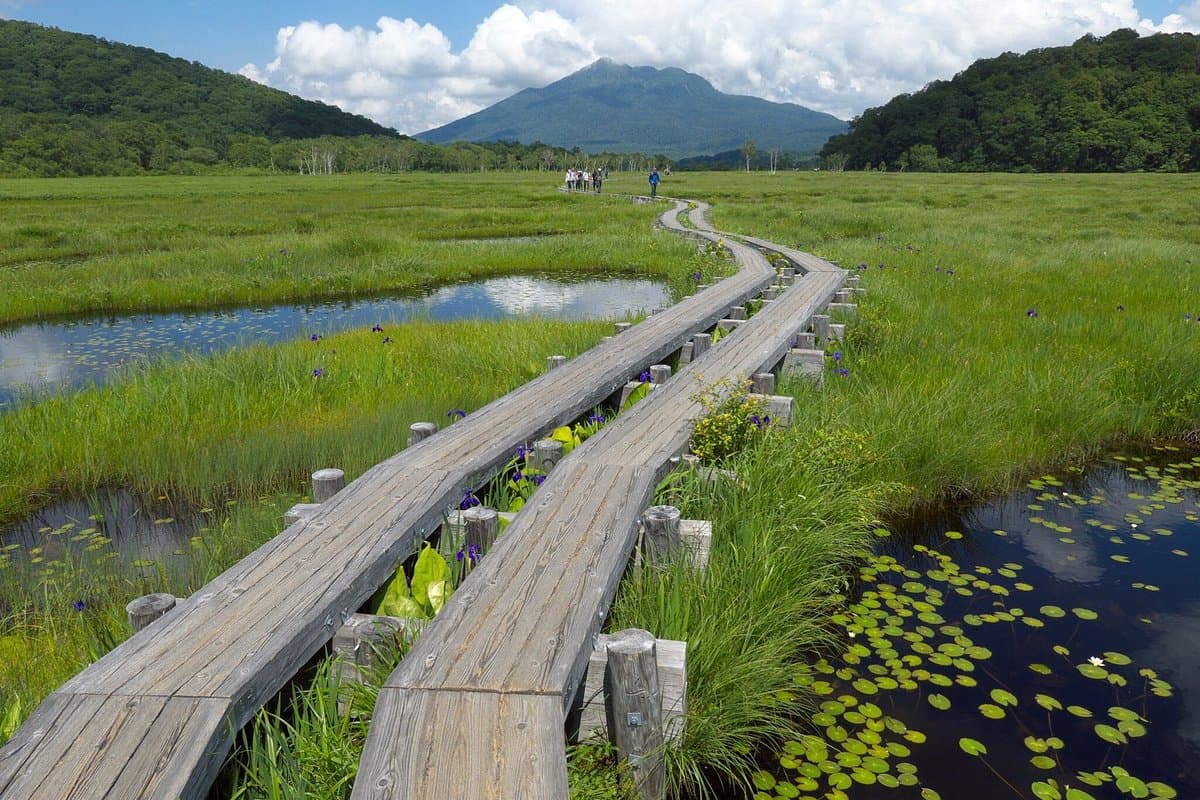
Oze National Park is one of Japan's largest and most pristine natural reserves, spanning four prefectures: Gunma, Niigata, Tochigi, and Fukushima. It is renowned for its vast wetlands, particularly Ozegahara marsh and Ozenuma pond, which are traversed by extensive wooden boardwalks. The park is a vital ecosystem and a popular destination for hikers seeking to immerse themselves in Japan's untouched natural beauty, offering stunning seasonal transformations from spring flowers to vibrant autumn foliage.
Visitors frequently highlight the park's exceptional natural beauty and the well-maintained boardwalks that make hiking accessible. Many describe it as an "earthly paradise" and praise the serene, memorable vistas. The opportunity for diverse hiking experiences, from easy strolls to more challenging mountain treks, is a recurring positive theme. Reviewers often mention the unique experience of seeing specific flora, such as skunk cabbage (mizubasho) in early summer or the striking fall grasses in mid-October. The option to stay overnight in lodges within the park is also frequently cited as enhancing the experience, allowing for multi-day exploration.
For a rewarding visit, prepare for extensive walking; even short routes can take several hours. Trekking shoes are essential, and a coat is recommended, especially in early summer when snow can still be present. Bringing rain gear is advisable, as even on rainy days, the park's beauty is appreciated. To avoid crowds, particularly on weekends, consider visiting on a weekday. Many visitors suggest spending at least two days and one night to fully appreciate the park and its various trails, often staying at lodges like those in Miharashi. Don't skip the extra walk to the Sanjonotaki waterfall, as it's considered worthwhile.
Accessing Oze National Park requires planning due to its remote nature and restricted car access within certain areas. Many visitors opt for express bus services from major cities like Shinjuku in Tokyo, which can take around 4 hours to reach key entry points like Tokura bus stop. From Tokura, shuttle vans or further walking may be necessary to reach trailheads like Hatomachi Toge. Reviewers note that entering via Hatomachi Toge is generally less steep than Sanpei Toge. Public transport details can be challenging to navigate, especially for international visitors, so thorough research on bus schedules and connections is recommended. Be prepared for long walks from bus stops to the main marsh areas.
A common complaint is the sheer distance and time required to reach the main attractions within the park, as driving is restricted. This means significant walking is unavoidable, which can be challenging for those unprepared or with mobility issues. To mitigate this, plan your route carefully, choose an entry point that suits your fitness level, and consider an overnight stay to break up the journey. Weekends can also be extremely crowded, diminishing the sense of peace; visiting on a weekday or during off-peak seasons can provide a more tranquil experience.