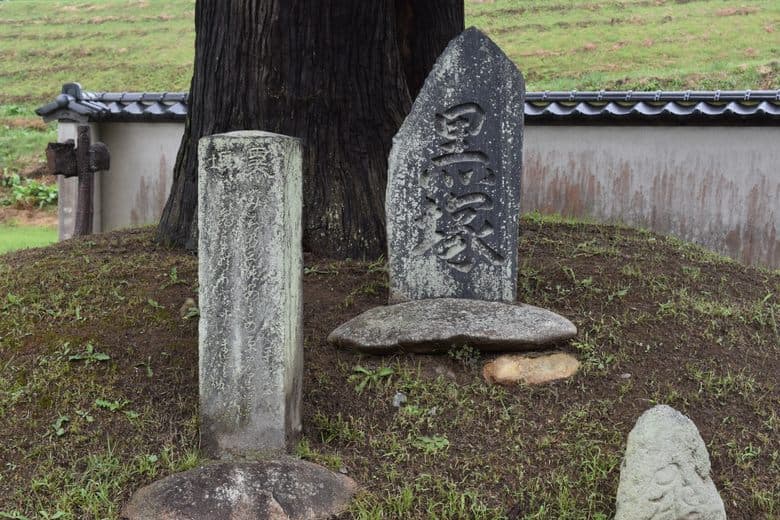
Kurozuka, also known as the Black Tomb, is a historical mound located in Nihonmatsu, Fukushima Prefecture. It holds a significant place in Japanese folklore as the purported final resting place of a legendary cannibal hag, a tale that has inspired numerous works of art and literature, including the famous 15th-century Noh play Kurozuka and a sci-fi manga by Osamu Tezuka. Situated near the Kanze-ji Temple, which is said to have been founded by the monk Yūkei after his encounter with the hag, the site offers a tangible link to a chilling and enduring piece of Japanese cultural heritage.
Visitors to Kurozuka primarily come for its historical and legendary significance rather than for grand visual spectacle. The site itself is a simple mound topped with funerary stelae and a tall tree, standing by the Abukuma River. Reviewers often describe it as a quiet and somewhat eerie place, reflecting its dark legend. It is a destination for those who appreciate the deeper layers of Japanese culture and are interested in exploring the origins of well-known stories. There are no specific visitor reviews available that detail common praises or warnings, but the nature of the site suggests it appeals to those seeking a contemplative and historically rich experience.
To make the most of a visit, it is recommended to spend about 30 minutes to an hour exploring the mound and the adjacent Kanze-ji Temple. There are no specific items to bring, but comfortable walking shoes are always advisable. Given its quiet nature, visiting during daylight hours is best to fully appreciate the surroundings and the historical markers. There are no entry fees, making it an accessible historical stop.
Kurozuka is located in Nihonmatsu, Fukushima Prefecture. While specific public transport details from visitor reviews are not available, Nihonmatsu is accessible by train. From Nihonmatsu Station, local buses or taxis would likely be the most convenient options to reach the site, which is situated near the Abukuma River and Kanze-ji Temple. Driving is also an option, and local parking may be available near the temple or the tomb itself.
Common complaints are not explicitly mentioned in available data, but visitors should manage expectations regarding the visual grandeur of the site. It is a historical and legendary landmark, not a large-scale tourist attraction. Those expecting elaborate structures or interactive exhibits might find it underwhelming. Its value lies in its cultural and historical context, so approaching it with an appreciation for its legendary significance will enhance the experience.