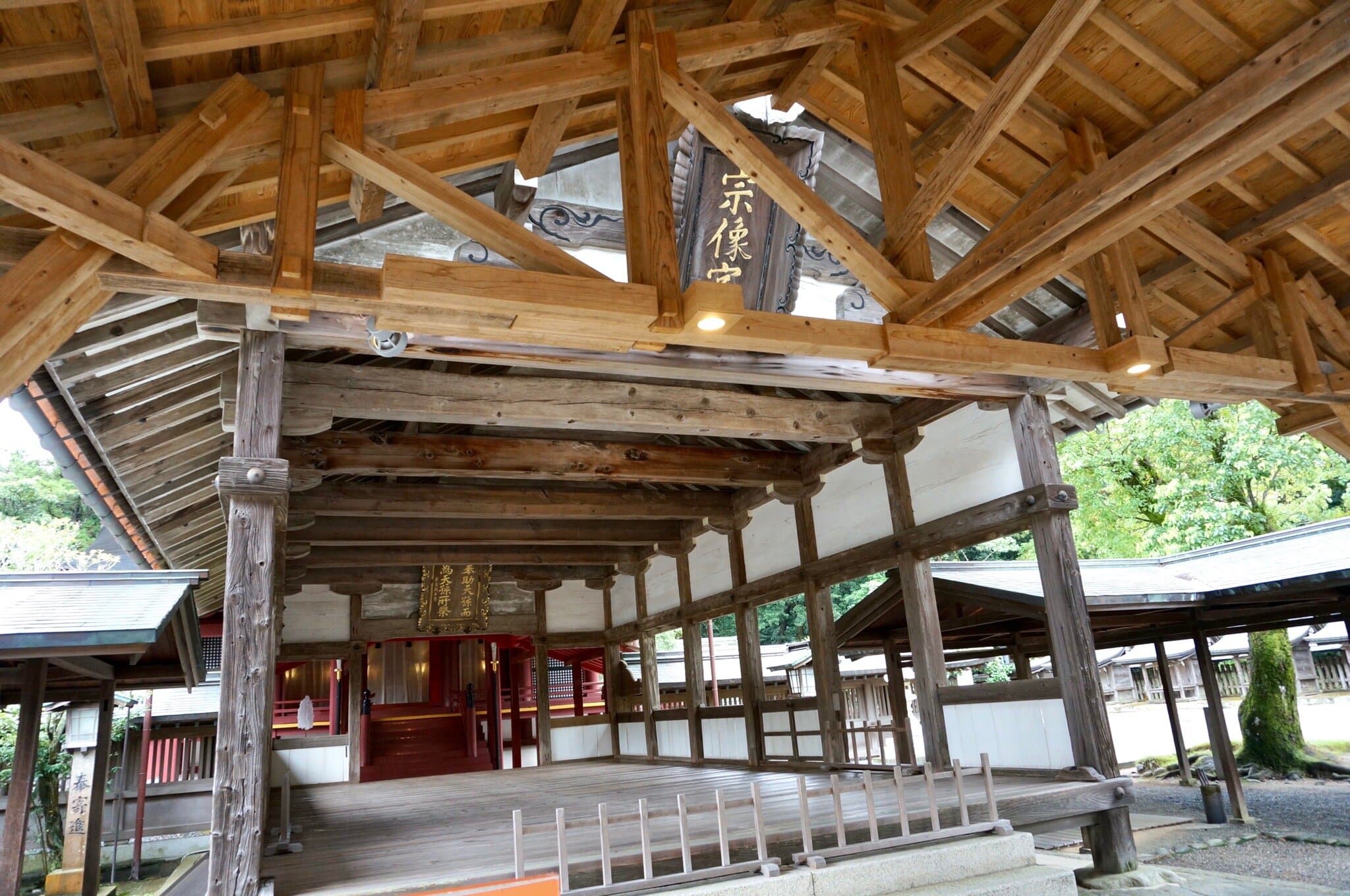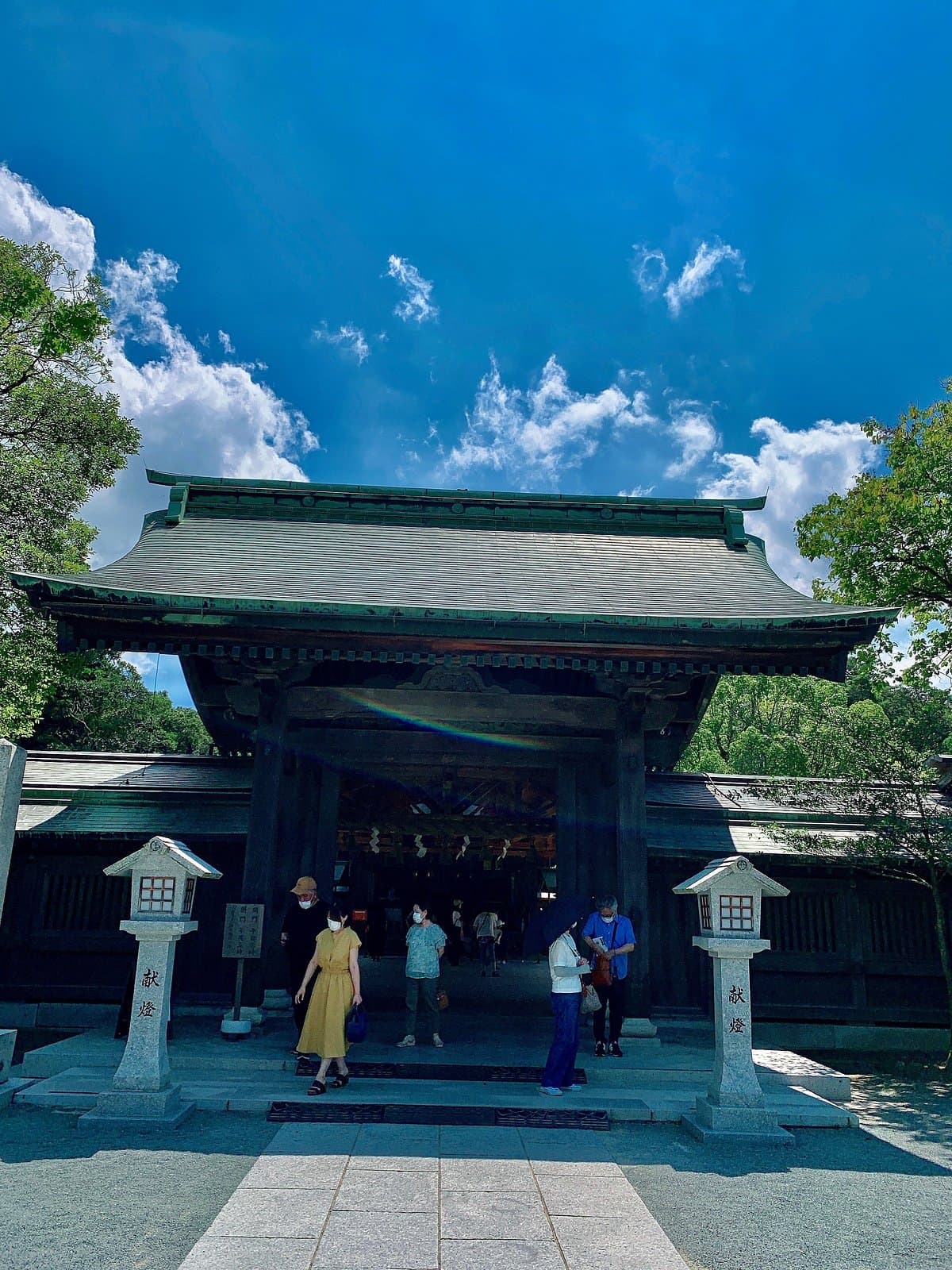
Munakata Taisha Hetsugu Shrine is one of the three shrines that collectively form the Munakata Taisha, a UNESCO World Heritage site known as "Sacred Island of Okinoshima and Associated Sites in the Munakata Region." It is the main shrine on the mainland, dedicated to one of the three Munakata goddesses, and serves as the head shrine for numerous Munakata and Itsukushima shrines across Japan. Its significance lies in its ancient origins and its role in maritime safety and trade routes between Japan and the Asian continent.
Visitors consistently praise the shrine's serene atmosphere and its historical depth. Many reviewers express a strong sense of Japanese identity and connection to ancient mythology upon visiting. The presence of a large shimenawa (sacred rope) and the traditional architecture, including the Taiko Bridge over a pond, contribute to a visually impressive and spiritually resonant experience. The Shinpokan, a treasure hall, is frequently mentioned for its valuable artifacts, with one visitor noting a signboard displaying "80,000 national treasures" on its outer wall, though this might be an exaggeration, it highlights the perceived richness of the collection.
To fully appreciate the shrine, visitors should allocate approximately 1.5 hours, especially if planning to visit the Shinpokan. The best time to visit is during daylight hours to enjoy the architectural details and the surrounding nature. Reviewers suggest bringing comfortable walking shoes as there is some walking involved from the parking lot through the torii gates. Consider visiting on a weekday to avoid larger crowds, as the site can become busy, particularly after gaining World Heritage status. The Shinpokan has an entry fee, but discounts may be available, such as for JAF members.
The shrine is accessible by car, with free parking available on-site. Visitors note that it is a straightforward walk from the parking lot through the main torii gate to the shrine complex. While specific public transport details are not extensively mentioned in reviews, its location in Munakata, Fukuoka Prefecture, suggests that local bus services would likely connect to the nearest train stations. For those traveling from further afield, driving is a convenient option.
Common complaints are not widely reported, but some visitors might find the experience less engaging if they are not interested in Japanese history or mythology. To mitigate this, it is recommended to read up on the shrine's background and the Munakata goddesses before visiting to enhance appreciation of its cultural significance.