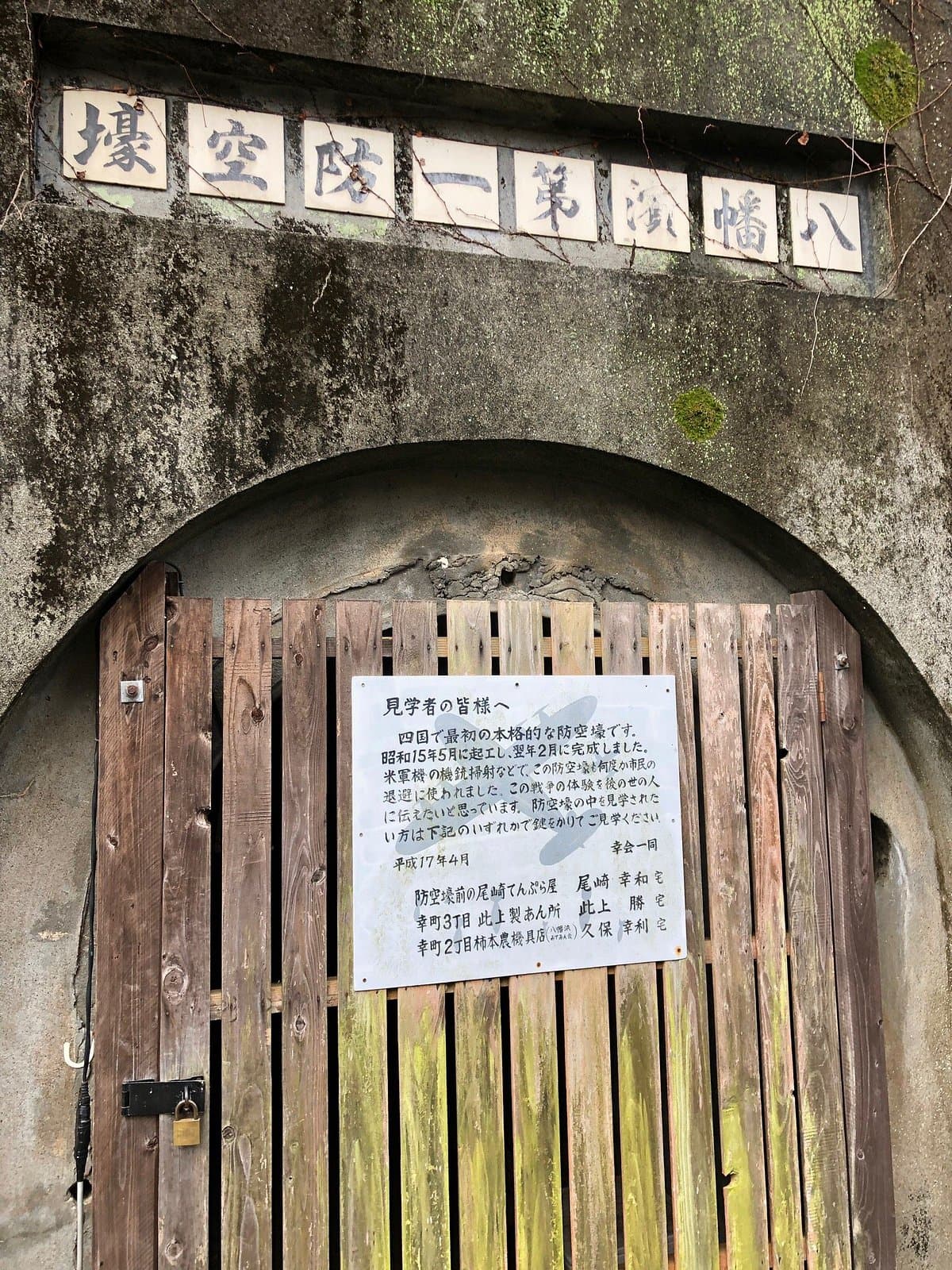
The Yawatahama First Air-raid Shelter Trace is a historical site commemorating one of the air-raid shelters used by the local population during World War II. It serves as a tangible link to a period of conflict and offers a unique perspective on the impact of war on civilian life in Japan, distinct from more commonly visited war memorials.
Visitors consistently note that finding the shelter and gaining access can be a significant part of the experience. The shelter itself is not always open, and a key is required for entry. Reviewers mention that this key can be obtained from specific local businesses, such as an agriculture shop. However, these businesses may have limited operating hours, especially on weekends, which can complicate access. The experience is largely self-directed, with limited on-site information, so it is beneficial to research the site beforehand.
To make the most of your visit, it is highly recommended to research the current key-holding locations and their operating hours before you go. Searching for the air-raid shelter in Japanese online might yield more up-to-date information. Consider visiting on a weekday morning to increase your chances of finding an open key-holder. Allow about 30-60 minutes for the visit, assuming you gain access. Bring comfortable walking shoes, as the area might involve some walking to locate the shelter and key-holders. There are no facilities or shops directly at the shelter, so bring any water or snacks you might need.
The shelter is located in Saiwaimachi, Yawatahama. While specific public transport details are not widely available in reviews, Yawatahama is accessible by train. From Yawatahama Station, the shelter would likely require a local bus, taxi, or a walk, depending on its exact distance. Given the need to locate key-holders, having a map or GPS on your phone is advisable. Parking information is not readily available, suggesting public transport or walking might be the primary modes of access for tourists.
The primary complaint from visitors revolves around the difficulty of accessing the shelter due to the key system and the limited hours of key-holding establishments. To mitigate this, thorough pre-planning is essential. If you are unable to obtain the key, the exterior of the shelter still offers a historical point of interest, though the full experience of entering the shelter will be missed.