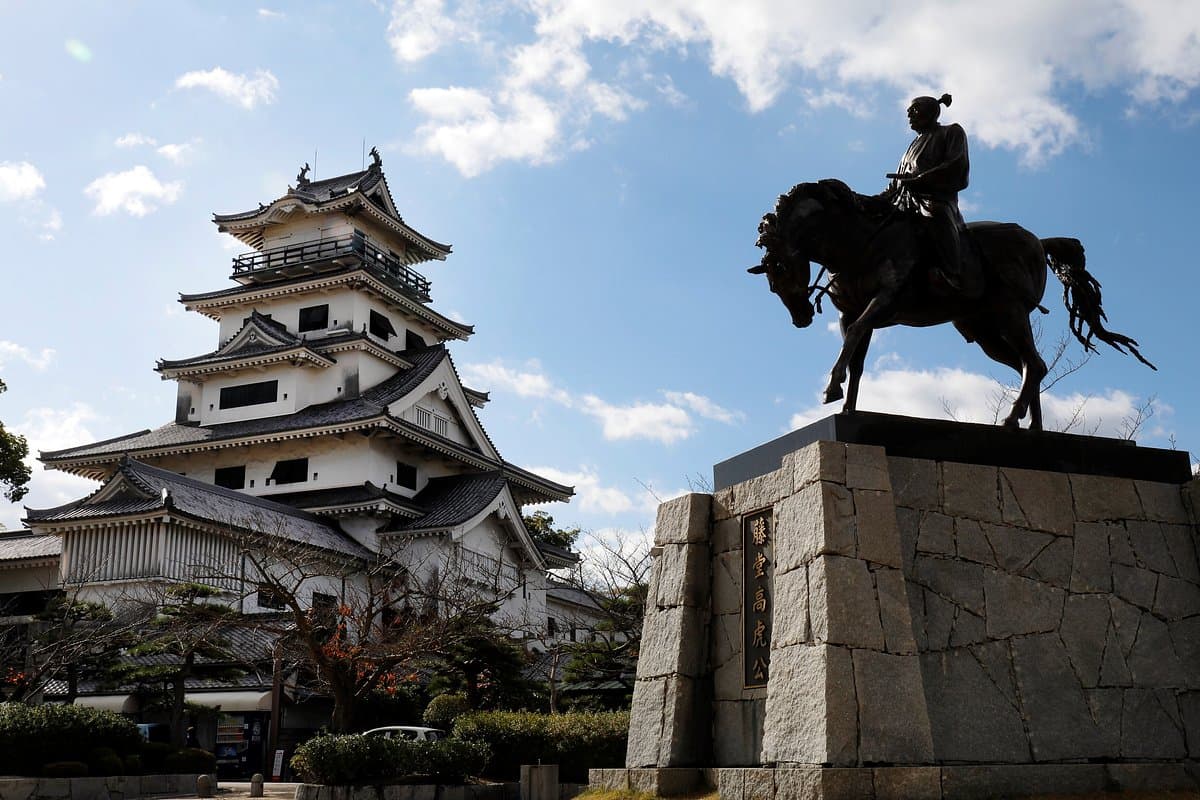
Imabari Castle stands as one of Japan's three great 'mizushiro' (water castles), notable for its extensive moat filled with seawater directly from the harbor, which rises and falls with the tide. Built by the renowned castle architect Todo Takatora in the early Edo Period, it represents a significant piece of Japanese architectural history, even though the current structure is a concrete reconstruction.
Visitors consistently praise the castle's picturesque exterior, particularly the grand scale of its walls and the unique tidal moat, which offers excellent photo opportunities, especially at dusk when the castle is lit up. Many find the views from the top floor of the keep to be a highlight, offering refreshing panoramas of the city and the Shimanami Sea. While some reviewers acknowledge the modern interior, they still appreciate the well-maintained exhibitions, including displays of armor and weapons, and insights into castle construction. The surrounding grounds, featuring temples and statues, also contribute to a pleasant atmosphere for relaxation.
To make the most of your visit, allocate about 1-2 hours to explore the castle and its grounds. Reviewers suggest wearing comfortable shoes as there are many stairs inside the keep, and using handrails is recommended. While the interior exhibitions might lack extensive English explanations, the visual experience and the views are still highly valued. Consider visiting during Golden Week or cherry blossom season for an even more impressive experience, as noted by several visitors. Entry costs 520 Yen for adults, with discounts for seniors (400 Yen for 65+).
Imabari Castle is conveniently accessible. For those driving, parking is available, making it an easy stop. If arriving by train, visitors suggest taking a taxi from Imabari Station (around 700 Yen) or using the local bus. A bus stop is located on the main road just outside the castle, slightly to the left when exiting. The castle's location on ground level means there are no steep climbs to reach the main compound, unlike many mountain castles.
A common point of contention among some visitors is that the castle is a modern concrete reconstruction, rather than an original historical structure. This can be disappointing for those seeking genuine historical authenticity. However, many others find the reconstruction to be impressively done, appreciating it for its architectural beauty and the historical context it represents. To mitigate potential disappointment, approach the visit with the understanding that it is a meticulously rebuilt castle that showcases the design principles of its era, rather than an untouched relic.