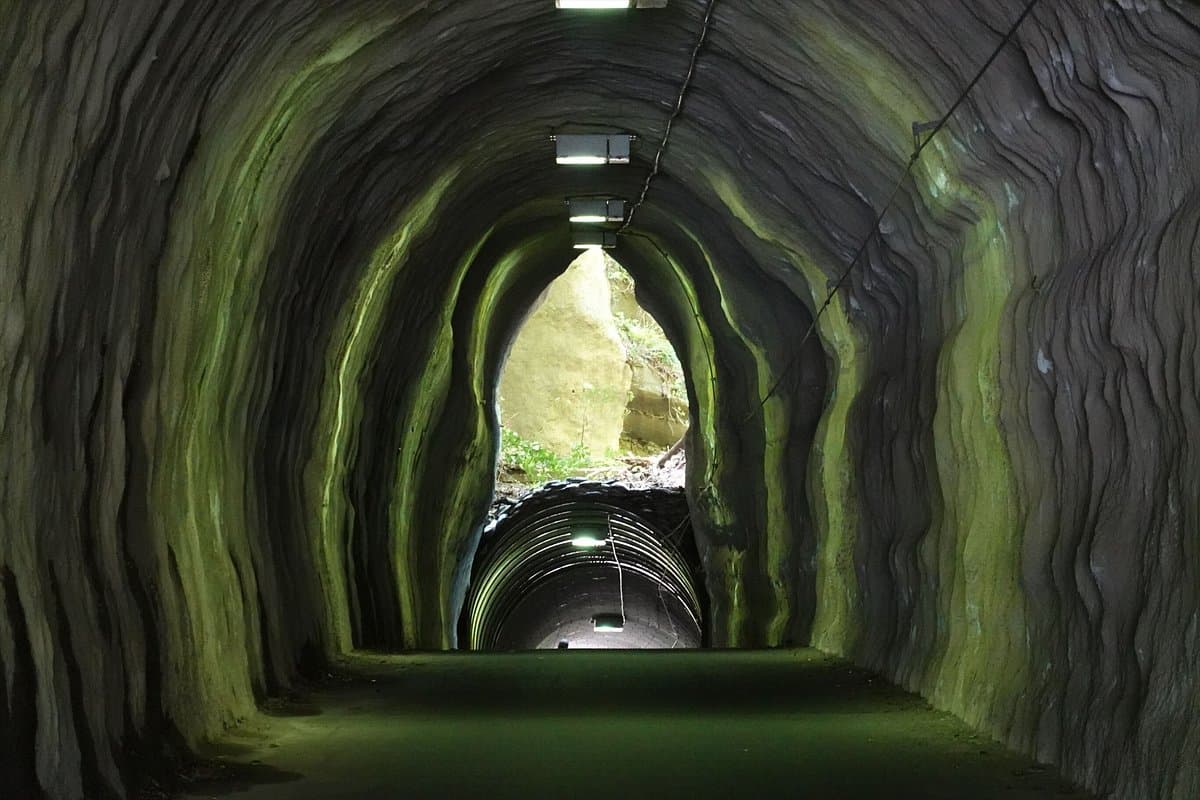
The Remains of Kobundo Tunnel are a fascinating natural landmark in Otaki-machi, Chiba Prefecture. What was once a large tunnel, used by tourists for fishing and camping, dramatically collapsed about 40 years ago, resulting in two distinct cliffs. This site now serves as a testament to geological forces and a reminder of the area's recreational past.
Visitors consistently note the unique visual impact of the collapsed tunnel, which has transformed into an impressive natural formation. While the area once allowed direct access for recreational activities, current regulations restrict visitors to observing from a designated promenade for safety. Reviewers suggest that the site offers a tranquil experience, allowing for contemplation of nature's power and the passage of time.
For a comfortable visit, it is highly recommended to wear sneakers or other appropriate walking shoes, as reaching the viewing area involves a trek. The duration of a visit is typically short, around 30 minutes to an hour, as the main activity is observation. There are no specific facilities or shops directly at the site, so it's advisable to bring any water or snacks you might need. The best time to visit would likely be during daylight hours to fully appreciate the geological features.
The Remains of Kobundo Tunnel are located in Kotadai, Otaki-machi, Chiba Prefecture. Specific public transport options are not widely detailed in reviews, suggesting that driving or taking a taxi might be the most convenient way to reach this somewhat remote location. If using public transport, it would be prudent to research local bus routes from the nearest train station to Otaki-machi and then plan for a final leg of the journey, potentially on foot or by local taxi, to the site itself. Given the rural setting, a personal vehicle offers the most flexibility.
A common point to be aware of is the limited accessibility to the immediate area of the cliffs. While in the past visitors could explore more freely, safety concerns have led to restricted access. This means the experience is primarily visual from a distance. To mitigate any disappointment, visitors should arrive with the expectation of observing the site from the promenade rather than exploring the collapsed tunnel directly.