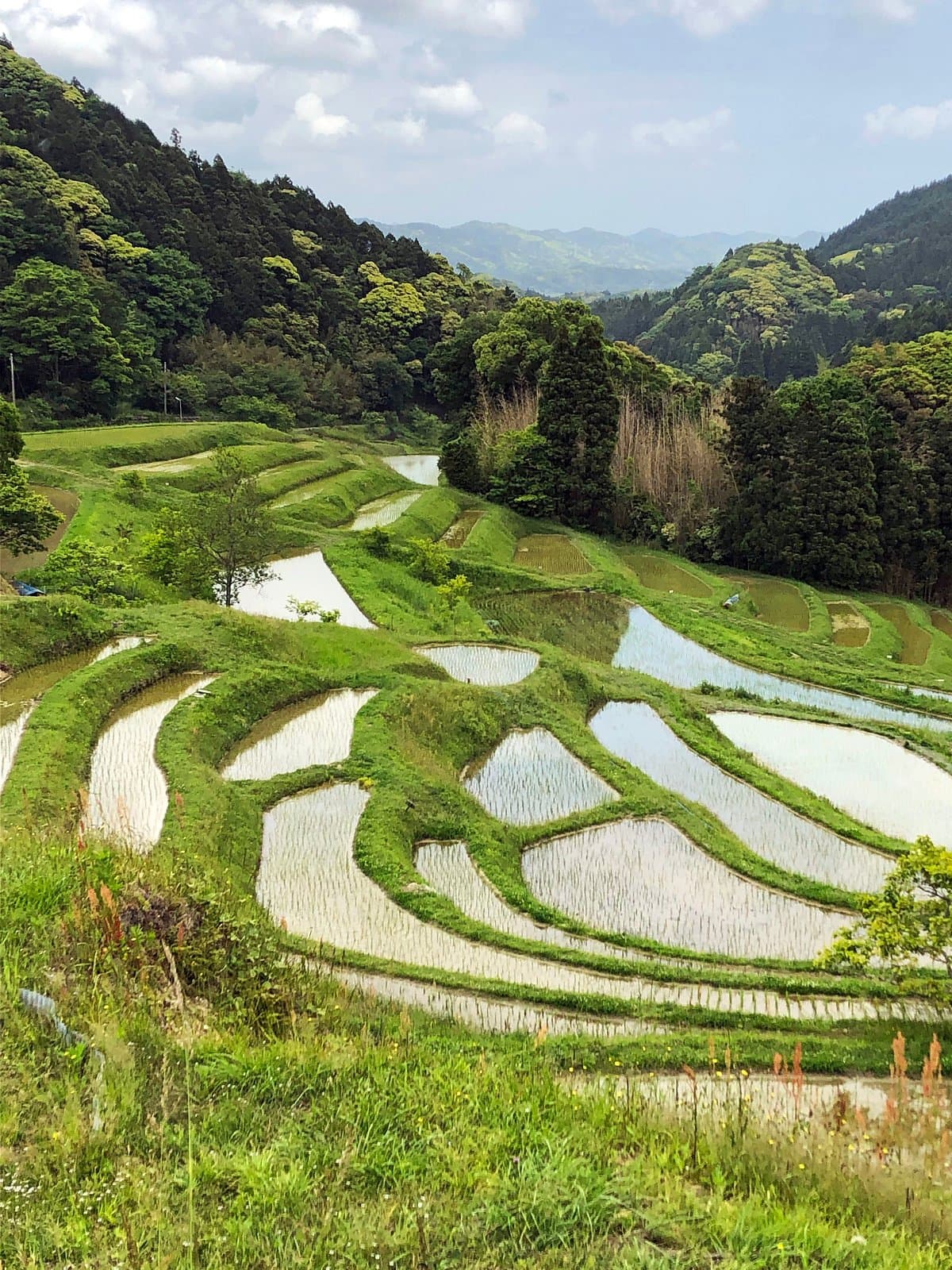
The Oyama Rice Terraces, or Oyama Senmaida, are a significant cultural landscape located on the Boso Peninsula, renowned as one of Japan's 100 best rice terraces and the only one in the country that relies solely on rainwater. Spanning 32,000 square meters, these 375 terraced fields create a stunning, intricate pattern on the steep mountainside, offering a glimpse into traditional Japanese agricultural practices.
Visitors frequently highlight the spectacular and unique beauty of the terraces, particularly during sunrise or sunset when the light enhances the landscape. Many find it to be an excellent photo opportunity, with the changing seasons bringing different visual appeals—from lush green paddies to golden fields. The tranquility and the distinct Japanese rural scenery are often cited as major draws, providing a peaceful escape from urban environments.
For the best experience, plan your visit during the planting season (late spring/early summer) when the fields are filled with water, reflecting the sky, or during harvest season (autumn) when the rice turns golden. Several visitors recommend arriving at dawn or sunset for the most dramatic lighting and fewer crowds. While the views are impressive, a visit of 30 minutes to an hour is generally sufficient to appreciate the scenery and take photographs. It's advisable to wear comfortable shoes as there are some slopes and uneven paths. Bringing water and snacks is also a good idea, as amenities in the immediate vicinity are limited.
Reaching the Oyama Rice Terraces without a car can be challenging. Reviewers consistently mention that public transport is tricky, and a car or motorcycle is highly recommended for access. The terraces are located in a somewhat remote area of the Boso Peninsula, and while it's considered the closest rice terrace to Tokyo, the journey still requires careful planning. If driving, be aware that some roads leading to the terraces can be narrow and winding. Parking is available, but it's best to check for specific directions and parking areas beforehand.
A common complaint among visitors is the difficulty of access without private transportation and the potential for the fields to be empty or less visually appealing outside of peak seasons. To mitigate this, check the local agricultural calendar or recent visitor photos to ensure the fields are in their most picturesque state. If you don't have a car, consider joining a guided tour that includes transportation to this site, or be prepared for a combination of trains and potentially long taxi rides from the nearest stations.