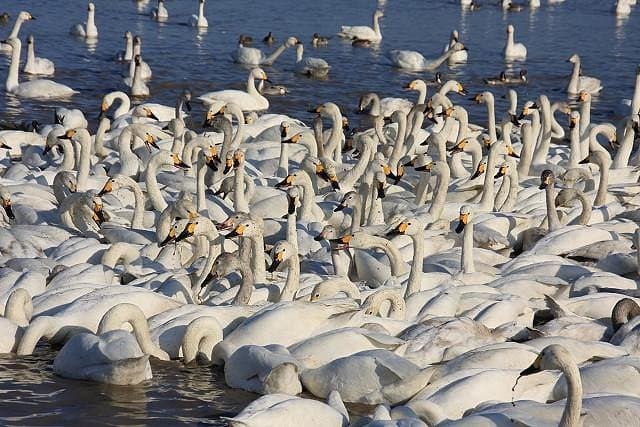
Hakuchonosato, meaning 'Swan Village,' is a significant natural attraction in Inzai, Chiba Prefecture, serving as a crucial stopover for Siberian swans during their annual migration. Established nearly two decades ago, it has grown from hosting a handful of swans to becoming one of the Kanto area's most popular sites for swan observation. The sanctuary's existence is a testament to dedicated wildlife management and strong local community support, which has ensured the birds' well-being and the preservation of their habitat.
Visitors consistently praise the opportunity to witness these majestic birds up close in a natural setting. Many reviewers highlight the peaceful and serene environment, making it an ideal spot for nature photography and quiet contemplation. The efforts of local support groups, who contribute to maintaining the water levels and feeding the swans, are often acknowledged and appreciated by those who visit. However, a common point of concern among visitors is the seasonal nature of the attraction; the presence of swans is entirely dependent on their migration patterns.
To make the most of a visit, it is crucial to plan your trip between November and March, as this is when the Siberian swans typically arrive and stay. Visiting outside this period, particularly in October, may result in disappointment, as there might be no birds present and even low water levels, as noted by some early-season visitors. There is no specific entry fee, making it an accessible outing. It is advisable to bring binoculars for better birdwatching and a camera. Dress warmly, as winter mornings can be quite cold by the water.
Information on public transport directly to Hakuchonosato is limited in visitor reviews. Given its somewhat rural location, driving might be the most convenient option for many. If using public transport, visitors would likely need to take a train to a nearby station in Inzai and then use a local bus or taxi to reach the sanctuary. It is recommended to check local bus schedules in advance, as services might be infrequent.
The primary complaint revolves around visiting outside the swan season. To mitigate this, always confirm the best viewing times, typically from late November to early March. There are no other significant complaints, indicating a generally positive experience for those who visit during the correct season.