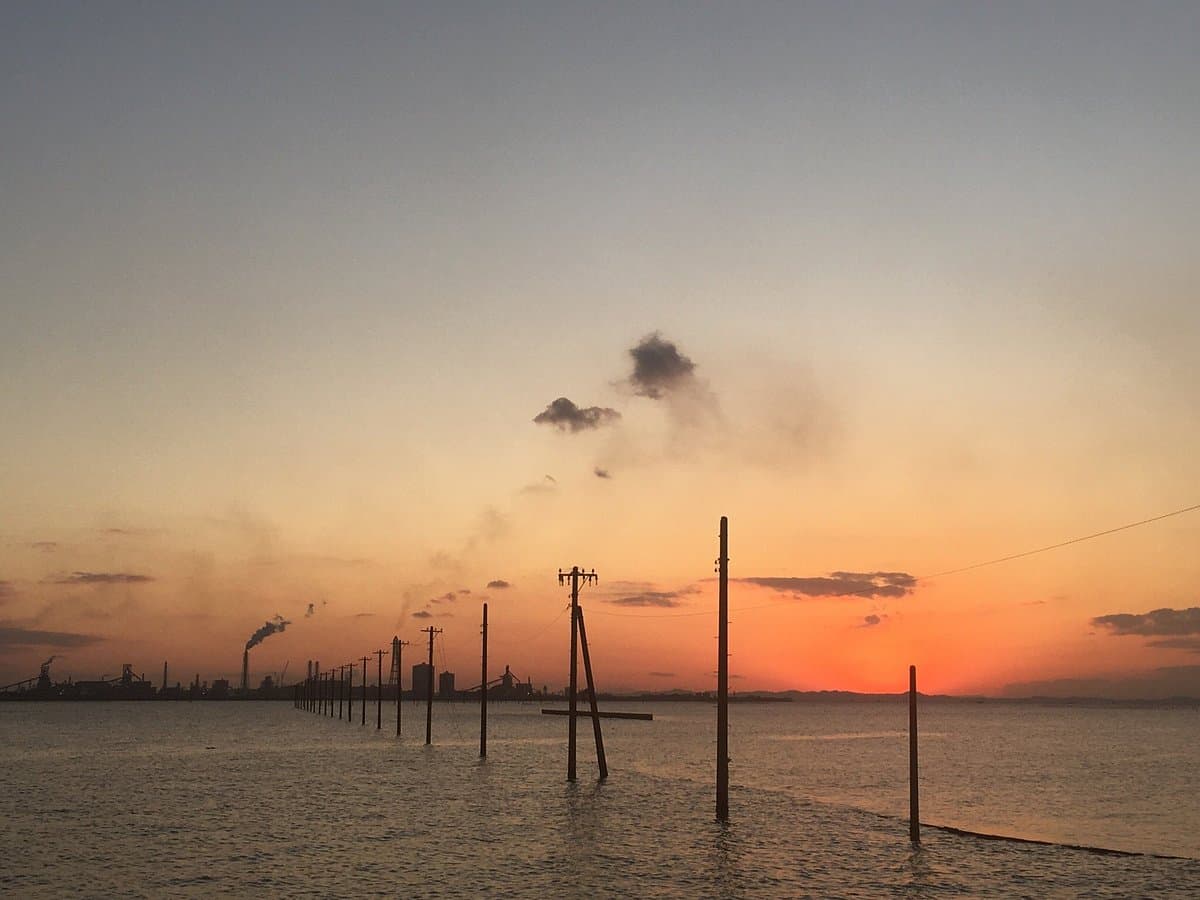
Egawa Beach, located in Kisarazu, Chiba Prefecture, is not a typical sandy beach for swimming but rather a unique coastal area characterized by marshlands and a striking visual feature: a line of wooden power poles extending directly into the sea. This distinctive landscape, especially when partially submerged at high tide, creates a surreal and photogenic scene that has made it a notable spot for photography enthusiasts.
Visitors consistently praise the unique atmosphere and photographic opportunities, particularly during sunset when the light casts dramatic reflections on the water and the poles. The sense of tranquility and the unusual scenery are frequently highlighted as major draws. However, some visitors note that the area can feel somewhat isolated and might not appeal to those seeking traditional beach activities or bustling tourist spots. The beauty is often described as subtle, requiring an appreciation for natural, somewhat desolate landscapes.
To make the most of a visit, it is highly recommended to check the tide schedule and aim for high tide, as this is when the wooden poles appear to emerge from the water, creating the most iconic views. Sunset is also considered the prime time for photography due to the dramatic lighting. Visitors should bring appropriate footwear, as the terrain can be muddy or wet, especially near the marshlands. A tripod for long-exposure photography is also advisable for those looking to capture the best shots. Allow at least 1-2 hours to explore the area and wait for optimal lighting conditions.
Egawa Beach is accessible from JR Kisarazu Station on the Uchibo Line. From the station, visitors can take a local bus towards Egawa. After disembarking the bus, there is an approximate 20-minute walk to reach the beach area. While driving offers more flexibility, public transport is a viable option for those without a car.
A common complaint is the lack of amenities directly at the beach, such as restrooms or shops. Visitors should plan accordingly by bringing their own water and snacks. The area's beauty is also highly dependent on weather and tide conditions; a visit during low tide or on an overcast day might not offer the same striking visuals, leading to potential disappointment for those expecting the iconic submerged pole scenery.