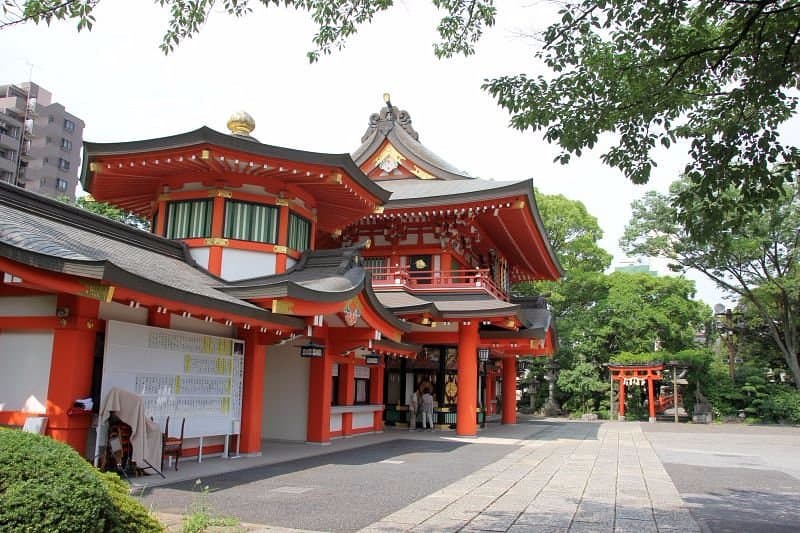
Chiba Shrine, or Chiba-dera, stands out not for ancient grandeur but for its distinctive modern architecture. Unlike many traditional shrines, its main hall features a striking two-story, red-lacquered design, which visitors often describe as unique and visually appealing. It serves as a spiritual center for locals, particularly during New Year holidays, and offers a glimpse into contemporary Japanese religious practices.
Visitors consistently praise the shrine for its tranquil and peaceful atmosphere, even though it's located in the heart of the city. Many reviewers highlight the opportunity for quiet reflection and a sense of solace, making it a good place to de-stress. The modern facilities, including a well-maintained office and a comfortable rest area, are also appreciated. Some note the original shrine sitting beside the new one, offering an interesting contrast. However, some visitors mention that its modern 'concrete' feel might lack the historical ambiance expected from older Shinto shrines.
To make the most of your visit, consider going during weekdays or off-peak hours to experience the shrine's peaceful side, as it can get very crowded during festivals like "Mayo-ken Taisai" or the New Year. A visit of 1-2 hours is generally sufficient to explore the grounds and main hall. Reviewers suggest observing local customs, such as learning how to pray like a Japanese person, to enhance the cultural experience. While some mention construction in the surrounding area, the shrine itself remains a serene spot. Don't forget to look for 'Omamori' (charms) or 'Omikuji' (fortunes) as souvenirs.
The shrine is conveniently located about a 10-15 minute walk from Chiba Station. Reviewers confirm that it's easily accessible on foot, making it a practical stop if you're exploring Chiba City. If you're coming from Inage Station, you can also walk to Chiba Station and then proceed to the shrine. Its central location means it's often within walking distance of hotels in the area, and on a clear day, some claim you can even see Mount Fuji from its elevated position.
A common complaint is the shrine's popularity during major holidays, leading to significant crowds and a less intimate experience. To mitigate this, plan your visit during quieter times. One reviewer also noted a free newsletter containing content perceived as negative towards LGBT individuals; visitors sensitive to such issues might want to be aware of this. While some find the modern aesthetic less traditional, those seeking a unique architectural experience will likely appreciate it.