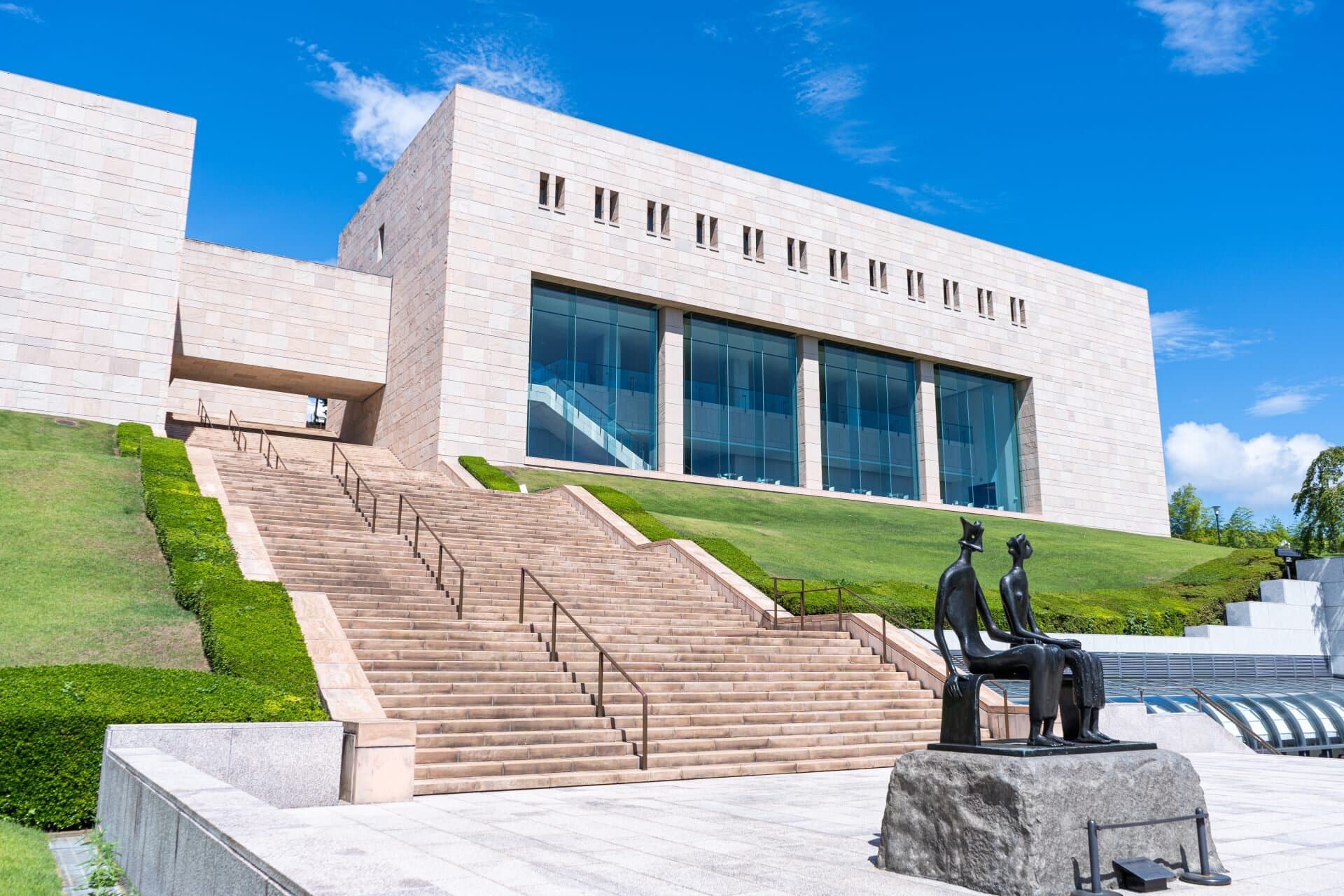
The MOA Museum of Art, established by the World Messianic Church founder Mokichi Okada, is a private museum in Atami, Shizuoka Prefecture. It houses an extensive collection of approximately 3,500 works, primarily focusing on Eastern art, including significant Japanese national treasures like Ogata Kōrin's "Red and White Plum Blossoms" screen. Beyond its artistic holdings, the museum is renowned for its striking modern architecture, designed by Hiroshi Sugimoto and Tomoyuki Sakakida, and its dramatic hillside location offering panoramic views of Sagami Bay.
Visitors frequently highlight the museum's unique entrance experience, involving multiple long escalators that ascend through illuminated tunnels, often described as artistic or even 'kaleidoscopic.' This journey culminates in a spacious, modern exhibition space. Many reviewers emphasize that the museum's architecture, the stunning ocean vistas, and the beautifully maintained gardens are as compelling as the art itself. The serene atmosphere and the sense of 'Zen' are consistently praised, with several suggesting it's a place for relaxation and contemplation. The on-site restaurants and cafes, particularly those with views, also receive positive mentions for enhancing the overall experience.
To make the most of your visit, allocate at least 2-3 hours, though some suggest more if you wish to fully explore the gardens and enjoy a meal. The museum's exhibits change, so checking their official website for current exhibitions, especially for national treasures like the "Red and White Plum Blossoms" screen, is advisable. Reviewers recommend visiting on a clear day to fully appreciate the spectacular sea views. Consider dining at one of the museum's restaurants to enjoy the scenery, as prices are comparable to downtown Atami. Bringing a camera is recommended for the architecture and views, but be mindful of photography restrictions for certain artworks.
The MOA Museum of Art is situated on a hillside, making direct walking from Atami Station challenging due to the steep incline. Most visitors recommend taking a bus from Atami Station, which is a short 10-minute ride. Look for clear instructions at the bus stop, and ensure you have small change (up to 1000 yen) for the fare. For those driving, parking is available, though some note the winding roads leading up to the museum. The multi-generational appeal is noted, with facilities accommodating families with babies and seniors.
While the overall sentiment is overwhelmingly positive, some visitors note that the permanent collection, while significant, might not appeal to everyone's specific artistic tastes. A few reviewers also mentioned a perceived lack of extensive English commentary for some exhibits. To mitigate this, consider researching current exhibitions beforehand or utilizing any available audio guides. The museum's focus on the overall aesthetic experience, including architecture and views, generally compensates for any perceived gaps in specific exhibit interest.