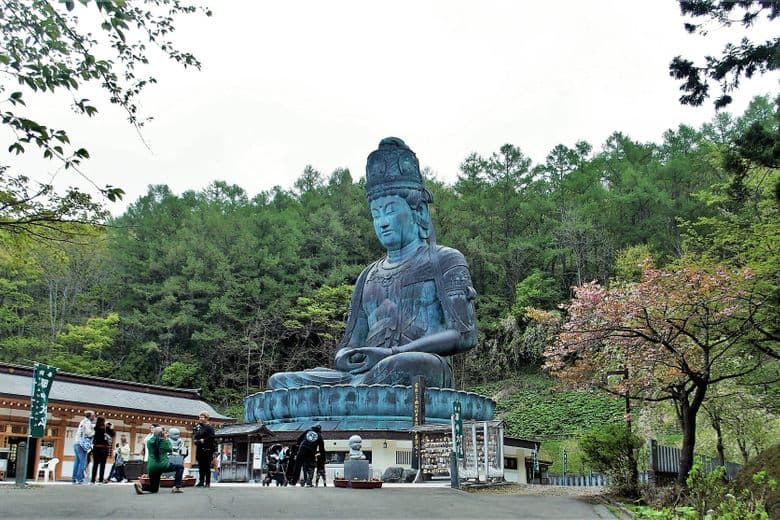
The Showa Daibutsu is a colossal bronze seated statue of Dainichi Nyorai, the principal deity of the Shingon sect of Buddhism, located within the serene grounds of Seiryū-ji Temple in Aomori. Completed in 1984, it holds the distinction of being the tallest bronze seated Buddha in Japan, making it a significant site for both religious pilgrims and tourists interested in monumental religious art.
Visitors consistently praise the statue's impressive scale and the peaceful atmosphere of the temple grounds. Many describe a sense of tranquility and awe upon seeing the Daibutsu, noting its imposing presence amidst the natural surroundings. The temple complex itself, with its traditional architecture and well-maintained gardens, contributes to a contemplative experience. Some reviewers highlight the opportunity to explore the temple's interior and other smaller structures, which offer additional insights into Japanese Buddhist practices.
To make the most of your visit, allocate approximately 1 to 2 hours to fully appreciate the Daibutsu and explore the temple grounds. It is advisable to wear comfortable shoes as there is some walking involved. While the temple is generally quiet, visiting during the Bon Festival in mid-August offers a unique experience with special light ceremonies, though it may also be more crowded. Bringing a camera is recommended, as the statue and temple offer excellent photographic opportunities. There are no specific warnings about what to skip, as most visitors find the entire experience worthwhile.
Seiryū-ji Temple is accessible by public transport, though it requires a combination of train and bus. From Aomori Station, take a local train to a nearby station, then transfer to a bus that serves the temple area. Alternatively, driving is a convenient option, and parking is typically available on-site. The temple is located somewhat outside the main city center, so planning your transportation in advance is recommended. Taxis are also an option from Aomori Station, offering a direct route.
Common complaints are few, but some visitors note the temple's somewhat remote location, which can make access challenging without a car. To mitigate this, consider combining your visit with other attractions in the Aomori area or utilizing a taxi for convenience, especially if traveling with limited time or mobility.