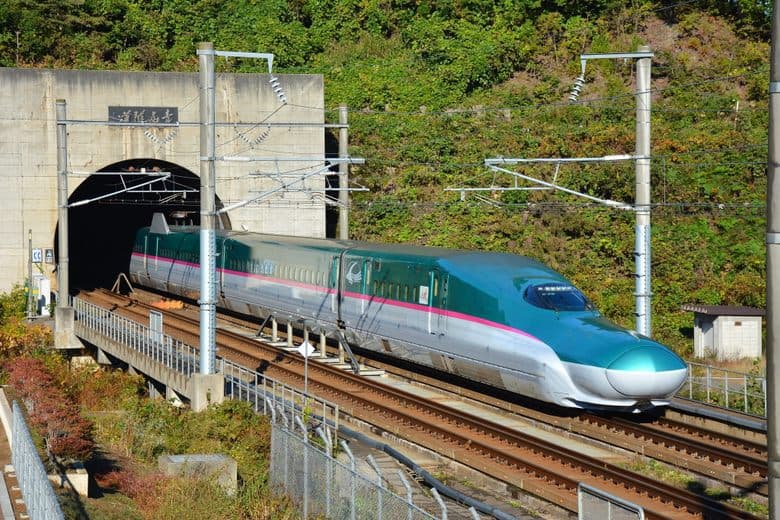
The Seikan Tunnel is a monumental feat of engineering, connecting Japan's main island of Honshu with Hokkaido. Completed in 1988, it was the world's longest railway tunnel until 2016 and remains the longest with a significant undersea section. Its construction was prompted by a tragic ferry disaster in 1954, leading to decades of surveying and challenging excavation through the seabed. The tunnel's design accommodates Japan's Shinkansen (bullet train) network, making it a crucial artery for both freight and high-speed passenger transport.
Visitors primarily experience the Seikan Tunnel as a segment of their Shinkansen journey between Aomori and Hakodate. Unlike some other famous tunnels, there are no dedicated observation points or visitor centers within the tunnel itself. Reviewers often describe the experience as simply passing through a dark tunnel, with little to distinguish it from any other tunnel on the route. The historical significance and engineering achievement are best appreciated through prior research, as the journey itself offers limited visual cues.
For those interested in the engineering aspect, it's advisable to read about the tunnel's construction before your trip. There's no specific equipment needed for the journey through the tunnel, as you will be on a train. The best time to 'visit' is simply when you are traveling between Honshu and Hokkaido by Shinkansen. There are no specific money-saving tips related to the tunnel itself, as its passage is included in the train ticket price.
The Seikan Tunnel is integrated into Japan's extensive rail network. To experience it, travelers must take a Shinkansen train (specifically the Hokkaido Shinkansen line) between Honshu and Hokkaido. The closest major stations are Shin-Aomori Station on Honshu and Shin-Hakodate-Hokuto Station on Hokkaido. From these stations, the tunnel is a direct part of the train route. Public transport is the only way to traverse the tunnel for passengers; driving through it is not an option.
A common complaint from visitors is the lack of a distinct experience or any visual indication that they are passing through such a significant structure. To mitigate this, manage expectations: understand that the tunnel is a functional part of the railway, not a tourist attraction with special features. Focusing on the historical context and the engineering marvel before your journey can enhance appreciation.