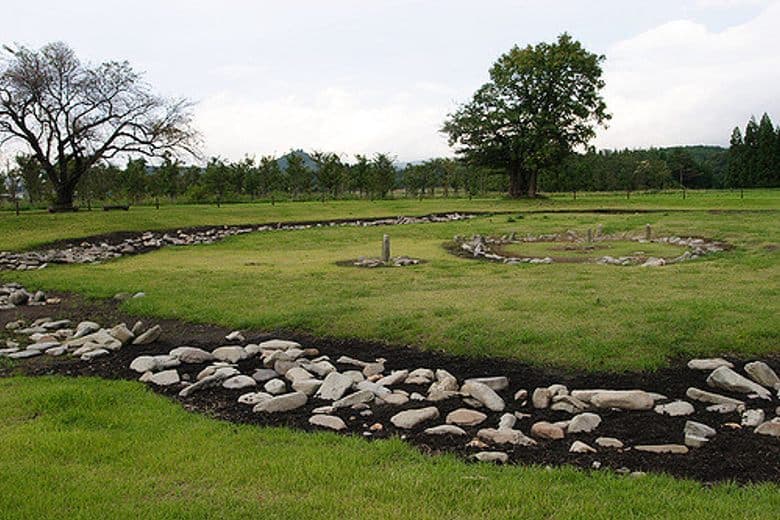
The Ōyu Stone Circles are a significant archaeological site in Kazuno, Akita Prefecture, offering a rare window into Japan's Late Jomon period (2,000 to 1,500 BCE). Comprising two large, concentric stone circles known as "Manza" and "Nonakado," these structures are believed to have served as ancient sundials, tracking celestial movements like the solstices and equinoxes. Their sophisticated construction on a man-made plateau, using stones from the nearby Ōyu River, highlights the advanced astronomical understanding and communal effort of the Jomon people. Designated a Special National Historic Site, the circles are surrounded by reconstructed pit dwellings and storage huts, providing context to the daily lives of their ancient builders.
Visitors consistently praise the serene atmosphere and the opportunity to connect with ancient history. Many find the accompanying museum, which displays artifacts like stone swords and everyday objects found at the site, to be highly informative and essential for understanding the circles' significance. The reconstructed Jomon-era dwellings also receive positive remarks for helping to visualize the prehistoric settlement. Reviewers often highlight the peaceful setting, making it a good spot for quiet contemplation and learning.
To make the most of your visit, allocate approximately 1.5 to 2 hours to explore the circles, the museum, and the reconstructed village. The site is best visited during daylight hours, particularly from April to October when the weather is milder and the opening hours are extended. Bringing comfortable walking shoes is advisable, as you will be walking across grassy fields. While the site itself is not overly strenuous, the experience is enhanced by taking your time to absorb the historical context. Consider visiting in the morning or late afternoon for fewer crowds and more pleasant light.
The Ōyu Stone Circles are accessible by car via the Tohoku Jukan Expressway. For those using public transport, the site can be reached by bus from the nearby Hawana Line station. The site is located south of the town on Akita Prefectural Route 66. Parking is available on-site for those driving. Given its somewhat remote location, planning your transportation in advance is recommended.
A common point for visitors is the relatively remote location, which can make access challenging without a car. To mitigate this, ensure you have a clear understanding of bus schedules if relying on public transport, or consider combining your visit with other attractions in the Akita Prefecture to make the journey more worthwhile. Some visitors also note that without visiting the museum, the stone circles themselves might seem less impressive; therefore, dedicating time to the interpretive center is crucial for a fulfilling experience.