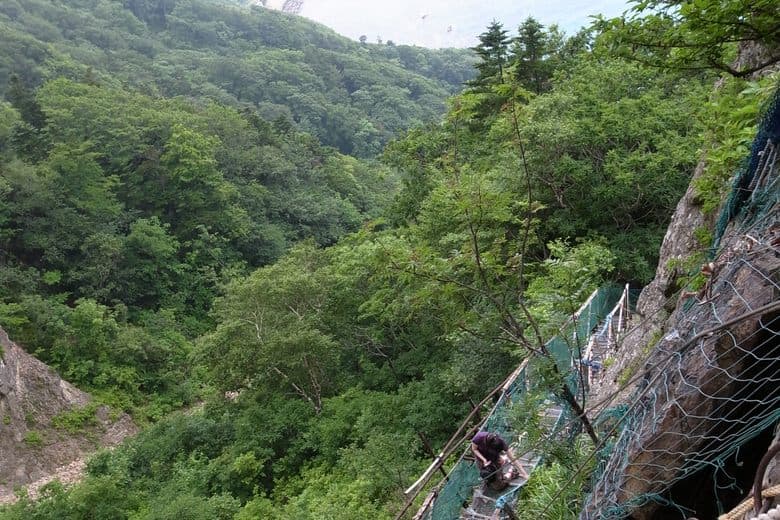
Ota Shrine, located in Setana, Hokkaido, holds the distinction of being one of Japan's most challenging and potentially dangerous sacred sites. Dedicated to Sarutahiko Ōkami, the leader of the earthly kami, it is believed to be the oldest Shinto shrine in Hokkaido, with origins dating back to the 15th century. Its significance lies not only in its age and dedication but also in the extreme physical pilgrimage required to reach its diminutive main shrine, nestled within a cave overlooking the ocean.
Visitors consistently highlight the extreme physical demands and inherent dangers of the ascent. The journey begins with a steep 45-degree staircase, followed by a trek through dense forest where vipers, bears, and insects are noted hazards. The most intimidating section is the 7-meter-high Kitajinbo Cliff, which can only be scaled using chains. Reviewers emphasize that this is not a casual hike; it requires prior rock climbing experience and a strong commitment, as climbing up means you must also climb down. The sense of accomplishment and the unique spiritual connection felt at the summit are frequently praised by those who successfully complete the pilgrimage.
For those considering the ascent, it is crucial to be well-prepared. Bring appropriate hiking gear, including sturdy shoes with good grip, gloves for the chains, and water. Given the presence of wildlife, consider carrying bear bells or other deterrents. Allow ample time for the climb and descent, as rushing can increase the risk of accidents. It is advisable to go with an experienced companion and to inform someone of your plans before starting. The best time to visit would likely be during drier seasons to avoid slippery conditions, though specific seasonal recommendations are not widely available in reviews.
Information regarding public transport directly to Ota Shrine is limited, suggesting that personal vehicle or taxi may be the most practical options. The shrine is located in a remote area of Setana, Hokkaido. Travelers should plan their route carefully and consider the significant travel time required to reach this secluded location. Parking availability near the trailhead is not explicitly detailed in reviews, but given its remote nature, some form of parking is likely available.
The primary complaint and warning from those who have attempted the climb revolve around the extreme difficulty and danger of the Kitajinbo Cliff. The footholds are described as small, and a fall could be fatal. To mitigate these risks, do not underestimate the climb. If you lack rock climbing experience or are uncomfortable with heights and strenuous physical exertion, it is safer to admire the shrine from a distance or choose a less demanding pilgrimage site. Always prioritize safety over reaching the summit.