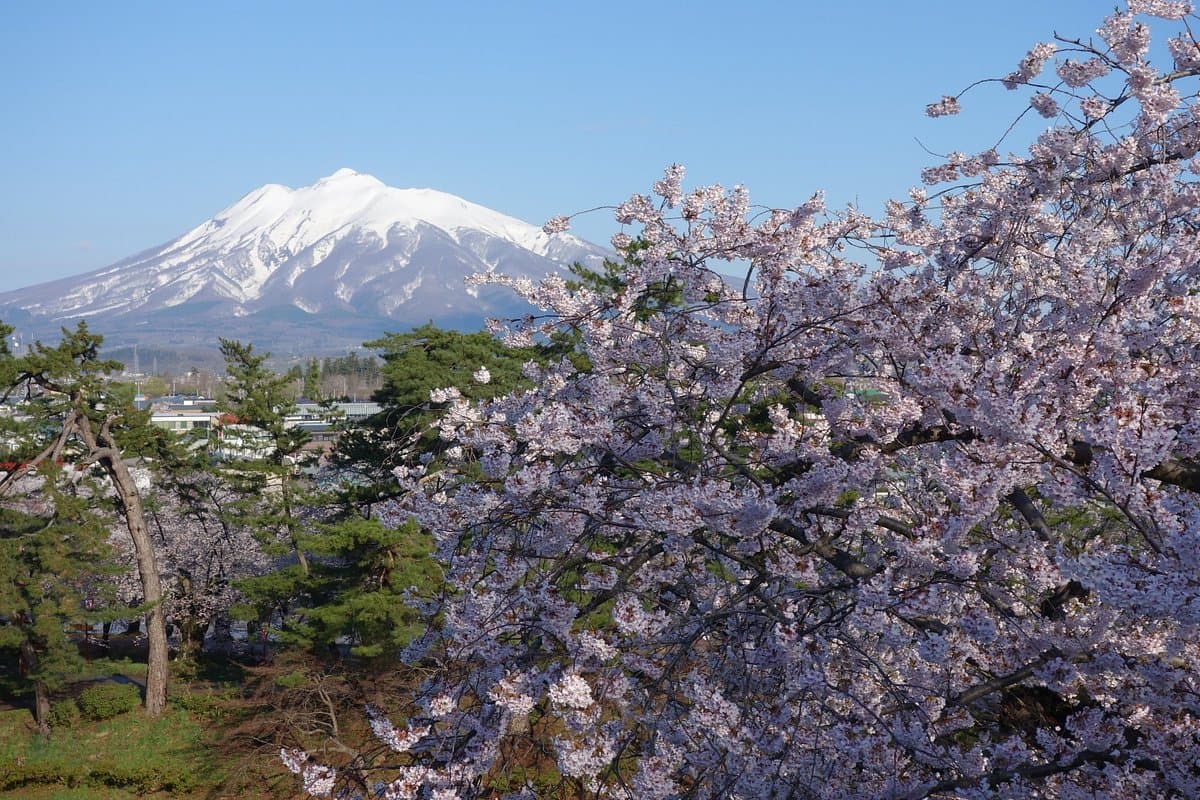
Mt. Iwaki, affectionately known as "Tsugaru Fuji," is a prominent stratovolcano that stands as a natural icon of the Aomori Prefecture. Its solitary rise from the Tsugaru Plain and symmetrical, often snow-capped peak make it a captivating sight, frequently compared to the more famous Mt. Fuji. The mountain is not just a scenic backdrop but also a hub for various outdoor activities, from driving scenic routes to hiking and skiing.
Visitors consistently praise the mountain's striking beauty and its dominance over the surrounding landscape. Many reviewers highlight the spectacular views, particularly when the summit is clear. The autumn foliage and snow-capped appearance in late autumn/early winter are frequently mentioned as particularly beautiful. Reviewers often recommend viewing the mountain from Hirosaki Castle Park, especially during the cherry blossom season, as the mountain perfectly complements the historic scenery. The drive up the Tsugaru-Iwaki Skyline toll road is also a popular activity, offering stunning panoramic views from higher elevations. Some adventurous visitors describe the climb to the peak as challenging but rewarding, with breathtaking vistas from the top.
For the best experience, aim for a clear day, as clouds can obscure the summit, diminishing the visual impact. Many visitors suggest spending 2-3 hours if driving the skyline and taking the ski lift, or a full day for a hike to the summit. If you plan to hike, be prepared for varying conditions; some parts can be steep. Bringing layers of clothing is advisable, as temperatures can change significantly with altitude. Consider visiting during late April for cherry blossoms with a snow-capped peak, or in autumn for vibrant foliage. The Tsugaru-Iwaki Skyline is a toll road, costing around 1,600 to 1,800 yen, which is a common expense mentioned by those who drive up.
To reach Mt. Iwaki, many visitors approach from Hirosaki. While there isn't a direct public bus from town to the Tsugaru-Iwaki Skyline entrance, taxis or private cars are common. The Skyline itself is a winding road with 69 turns, leading to the eighth station (Hachigome), where a ski lift can take you further up to the ninth station (Kugome). From there, it's about a 30-minute walk to the peak. If relying on public transport, consider taking the Resort Shirakami train line, which offers views of the mountain from the window. Be aware that roads to higher elevations can close due to snow, especially in early winter, so check conditions beforehand.
A common complaint is the difficulty in seeing the peak on cloudy days. To mitigate this, check weather forecasts before planning your visit. Another point of confusion for some visitors is that the Iwaki Yama Jinja (shrine) is separate from the Skyline entrance, located about 6 kilometers apart, and there's no direct bus connecting them. Plan your itinerary accordingly if you wish to visit both.