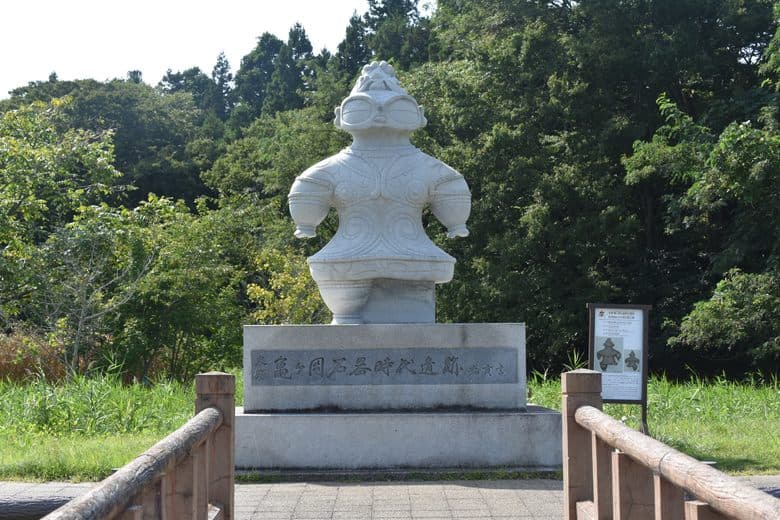
The Kamegaoka Stone Age Site is a pivotal archaeological complex in Japan, recognized as a UNESCO World Heritage site for its profound contributions to understanding the Jomon period. It is most famous as the discovery location of the Shakōki-dogū, the distinctive "goggle-eyed clay idol" that has become a symbol of ancient Japan. The site's historical importance dates back to 1622, with its archaeological value fully acknowledged in the late 19th century, revealing evidence of a large prehistoric settlement and extensive pottery production.
Visitors consistently highlight the site's significance for those with a keen interest in Jomon culture and archaeology. While the original Shakōki-dogū is housed in the Tokyo National Museum, the site features a larger-than-life replica and a small museum that provides context. Reviewers note that the site itself, beyond these key features, offers a more understated experience compared to other Jomon sites with reconstructed dwellings. The primary draw is the historical weight and the opportunity to stand where such crucial discoveries were made.
For a meaningful visit, allocate approximately 1-2 hours to explore the replica and the museum. It is advisable to visit during daylight hours, as the site is less developed for evening viewing. Given its remote nature, bringing your own snacks and water is recommended, as on-site amenities are limited. There are no specific money-saving tips beyond planning your transportation efficiently, as entry fees are typically minimal or free.
Reaching the Kamegaoka site requires some planning due to its remote location. The closest train station is Kizukuri Station, which is about a 20-minute drive away. Public bus access is available from Goshogawara Station, though services are infrequent, typically running only twice a day. Visitors are advised to check bus schedules in advance. Driving is often the most convenient option for those with access to a car, offering greater flexibility. Parking facilities are available on-site.
A common point raised by visitors is the site's lack of extensive visual reconstructions or interactive exhibits, which might disappoint those expecting a more immersive experience akin to other archaeological parks. To mitigate this, it's best to arrive with a clear understanding that the value lies in its historical authenticity and the significance of the discoveries, rather than elaborate modern displays. Reading up on the Jomon period and the Shakōki-dogū beforehand can greatly enhance appreciation for the site.