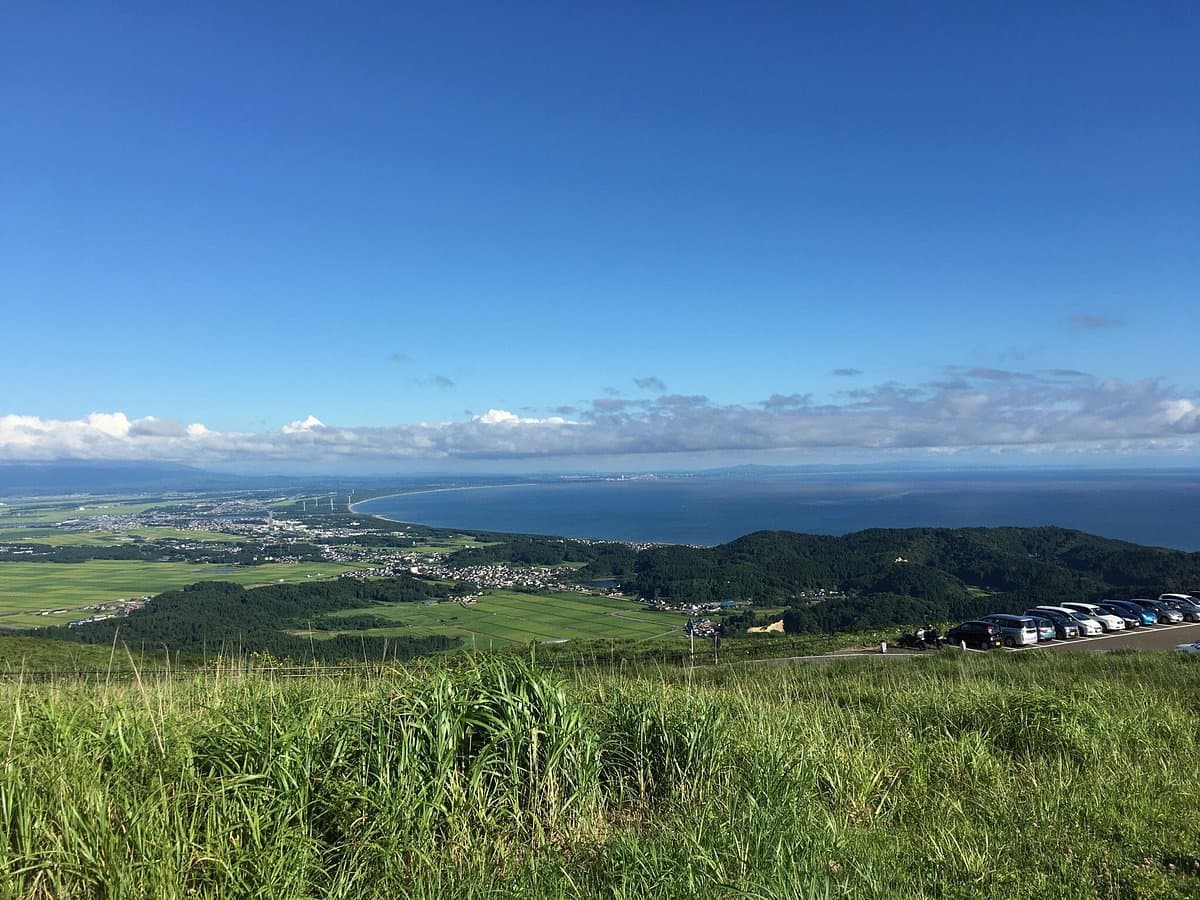
Mt. Kampu, a 355-meter volcanic mountain, stands as a central landmark on the Oga Peninsula, offering unparalleled panoramic views. Historically an island formed by volcanic activity, it is now connected to the mainland, providing a unique geological perspective of the region's formation. Its significance lies in its commanding position, allowing visitors to grasp the vastness and beauty of the surrounding landscape, including the Sea of Japan, Lake Hachirogata, and the caldera mountains.
Visitors consistently highlight the stunning 360-degree views as the main draw, often describing them as 'wonderful' and 'breathtaking.' The ability to see the blue sky, grasslands, volcanic craters, and distant waters simultaneously is a recurring theme in positive feedback. Many recommend visiting during sunset for an especially magnificent experience. While there is a revolving deck at the summit, some reviewers note that its windows can cause reflections, making it less ideal for photography, though still good for viewing. The presence of three distinct volcanic peaks visible from the top adds to the geological interest.
For a comfortable visit, allocate approximately 1-2 hours to fully enjoy the views and explore the summit area. The best time to visit is generally when skies are clear, which reviewers suggest is often the case due to the 'cold wind' (Kanpu) that keeps the air crisp. While the revolving deck has a small entrance fee, the overall experience of driving up and enjoying the panoramic vistas is considered well worth it. Consider bringing a polarizing filter for your camera if you plan to photograph from inside the observatory to minimize reflections.
Access to Mt. Kampu is primarily by car, with two main roads, known as the 'Mount Kankaze Panorama Line,' leading to the summit from the south and west. Reviewers emphasize the ease of driving up, making it a convenient stop for those exploring the Oga Peninsula by vehicle. There is ample parking at the top. Public transport options are not widely mentioned in visitor reviews, suggesting that a personal vehicle is the most practical way to reach the mountain.
A common minor complaint is the reflection issue when trying to photograph from inside the revolving observatory. To mitigate this, visitors are advised to enjoy the views from the outdoor areas or to use specific camera equipment like polarizing filters if photography from indoors is desired. Otherwise, the outdoor viewing platforms offer unobstructed opportunities for capturing the scenery.