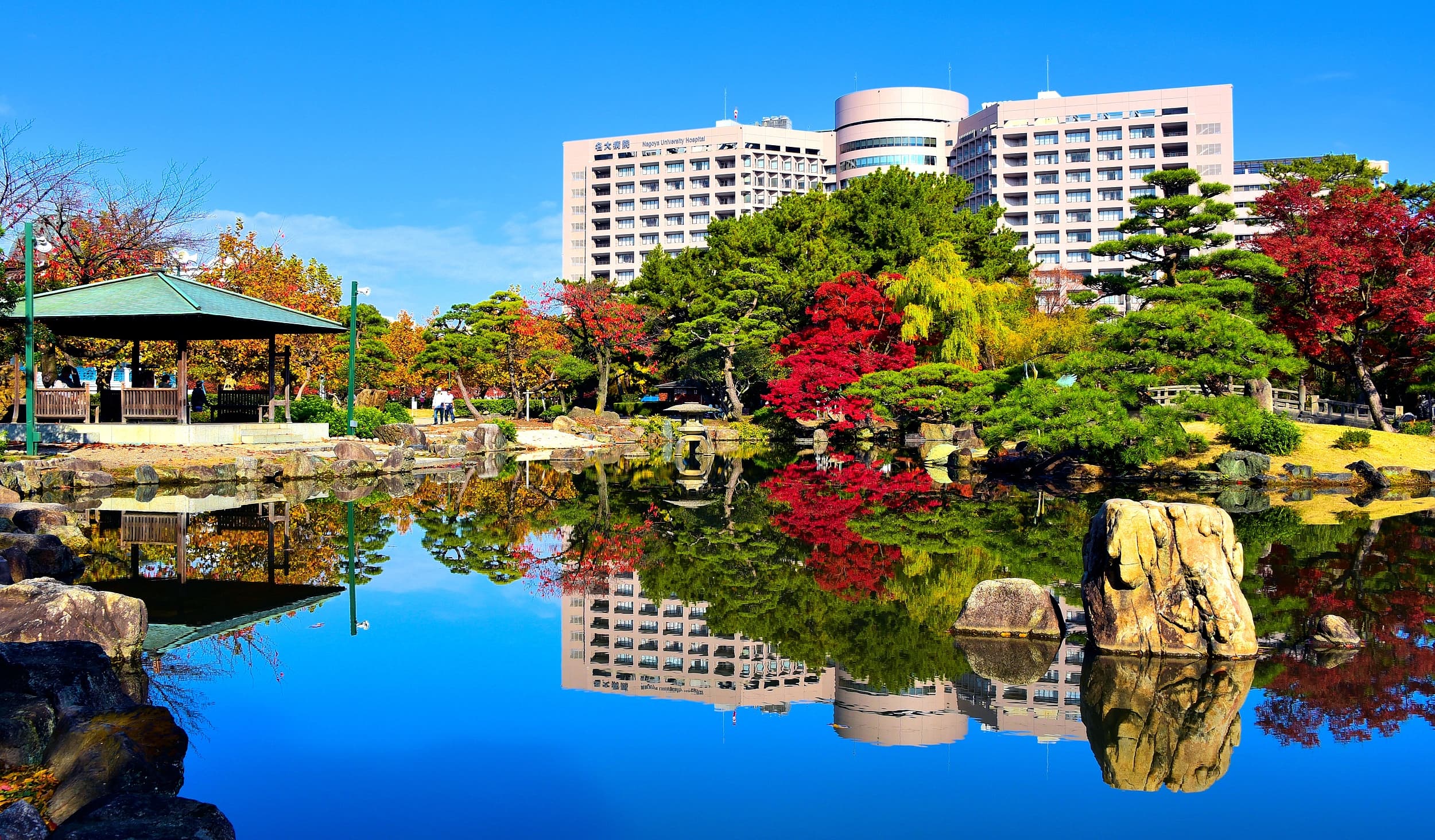
Tsuruma Park, established in 1909, holds historical significance as Nagoya's first city park and is celebrated as one of Japan's top 100 cherry blossom viewing spots. It uniquely blends Western-style gardens, featuring a central fountain and rose bushes, with traditional Japanese elements like a calamus garden and butterfly pond. This fusion creates a diverse landscape that appeals to a wide range of visitors.
Visitors consistently praise the park's beauty, especially during the cherry blossom season (typically April). Reviewers describe an unforgettable experience with "sakuras everywhere" and a lively atmosphere where locals picnic under the trees, often with food stalls and performances. Many note the park's charm extends beyond spring, with summer roses and autumn leaves also contributing to its appeal. The blend of Western and Japanese design is frequently highlighted as a creative and beautiful aspect, offering picturesque scenes with small bridges and flowing water.
For the best experience, plan your visit during spring to witness the cherry blossoms, when the park is most vibrant and offers a unique cultural experience with local festivals and picnics. Even outside of spring, the park is suitable for a pleasant stroll, with many flowers blooming throughout the year. Visitors suggest spending 1-2 hours to explore the different sections. The park is free to enter, making it an accessible option for budget-conscious travelers. Consider bringing a mat and some food if you plan to enjoy a picnic, especially during peak seasons.
Getting to Tsuruma Park is very convenient. Several reviewers emphasize its proximity to public transport, stating it's "right outside Tsuruma Station." To reach the park, take the train to Tsurumai Station. Upon exiting the subway, turn left, and you will immediately find both the Japanese and Western sections of the park. This ease of access makes it a hassle-free destination for those relying on Nagoya's efficient public transportation system.
A common complaint, particularly from those visiting outside of spring, is that the park can appear less spectacular or even "boring" in winter, with some areas undergoing maintenance or fountains not operating. To mitigate this, manage your expectations if visiting off-season. While still a pleasant green space for a walk, the vibrant atmosphere and floral displays are significantly reduced. Checking local event calendars for seasonal flower blooms or festivals can help ensure a more engaging visit.