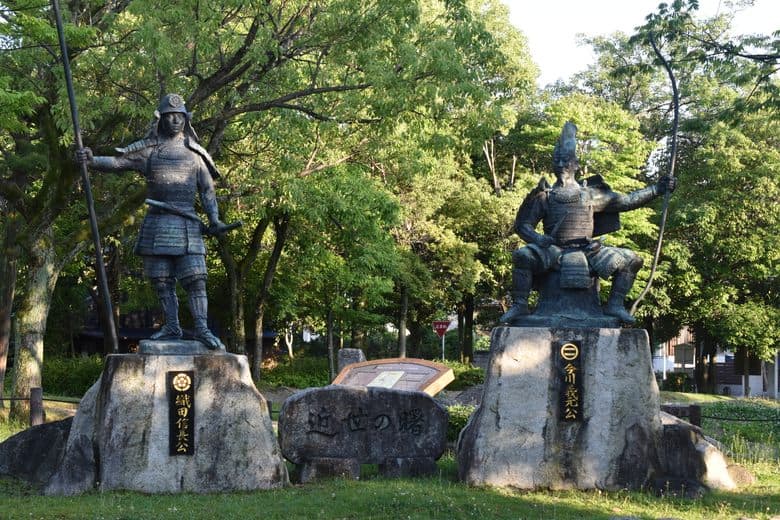
The Okehazama Battlefield is a site of immense historical significance in Japan, marking the location of one of the most defining battles of the Sengoku period. In 1560, Oda Nobunaga, a rising daimyo, achieved a stunning victory against the much larger forces of Imagawa Yoshimoto, a triumph that dramatically altered the course of Japanese history and paved the way for Nobunaga's eventual unification efforts. While the exact center of the battle is still debated between the neighboring cities of Nagoya and Toyoake, both areas offer monuments and parks dedicated to this pivotal event.
Visitors consistently praise the historical atmosphere and the opportunity to walk on ground where such a significant event occurred. Many appreciate the bronze statues of Nobunaga and Yoshimoto in the Nagoya park, which help visualize the figures involved. Reviewers often highlight the quiet, contemplative nature of the sites, making it a good escape from bustling city life. However, some visitors note that without prior knowledge of the battle, the sites might seem less impactful, as interpretive signage can be limited. It's recommended to do some research beforehand to fully appreciate the historical context.
To make the most of your visit, allocate at least 2-3 hours to explore both the Nagoya and Toyoake sites. Bringing a good walking map or using a navigation app is advisable, as the sites are spread out. Comfortable shoes are essential for walking between the different monuments. There are no specific entry fees, making it an accessible historical experience. The best time to visit is during pleasant weather, such as spring or autumn, to enjoy the outdoor walks. Consider visiting in the morning to avoid potential crowds, though the sites are generally not overly busy.
To reach the Okehazama Battlefield sites efficiently, head to Chūkyō-Keibajō-mae Station in Toyoake. This station is approximately 25 minutes by train from Nagoya Station. From Chūkyō-Keibajō-mae Station, the nationally-designated “Legendary Site of the Battle of Okehazama” in Toyoake is a short walk away. The Okehazama Battlefield Park on the Nagoya side is within a 20-minute walk from the Toyoake site. Public transportation is the most recommended method, as parking can be limited and navigating by car between the specific historical points might be less straightforward.
A common complaint from visitors is the lack of extensive English signage, which can make it challenging to understand the full historical narrative without a guide or prior research. To mitigate this, it is highly recommended to read up on the Battle of Okehazama before your visit. Bringing a portable Wi-Fi device or having mobile data can also help with on-the-spot research and translation apps.