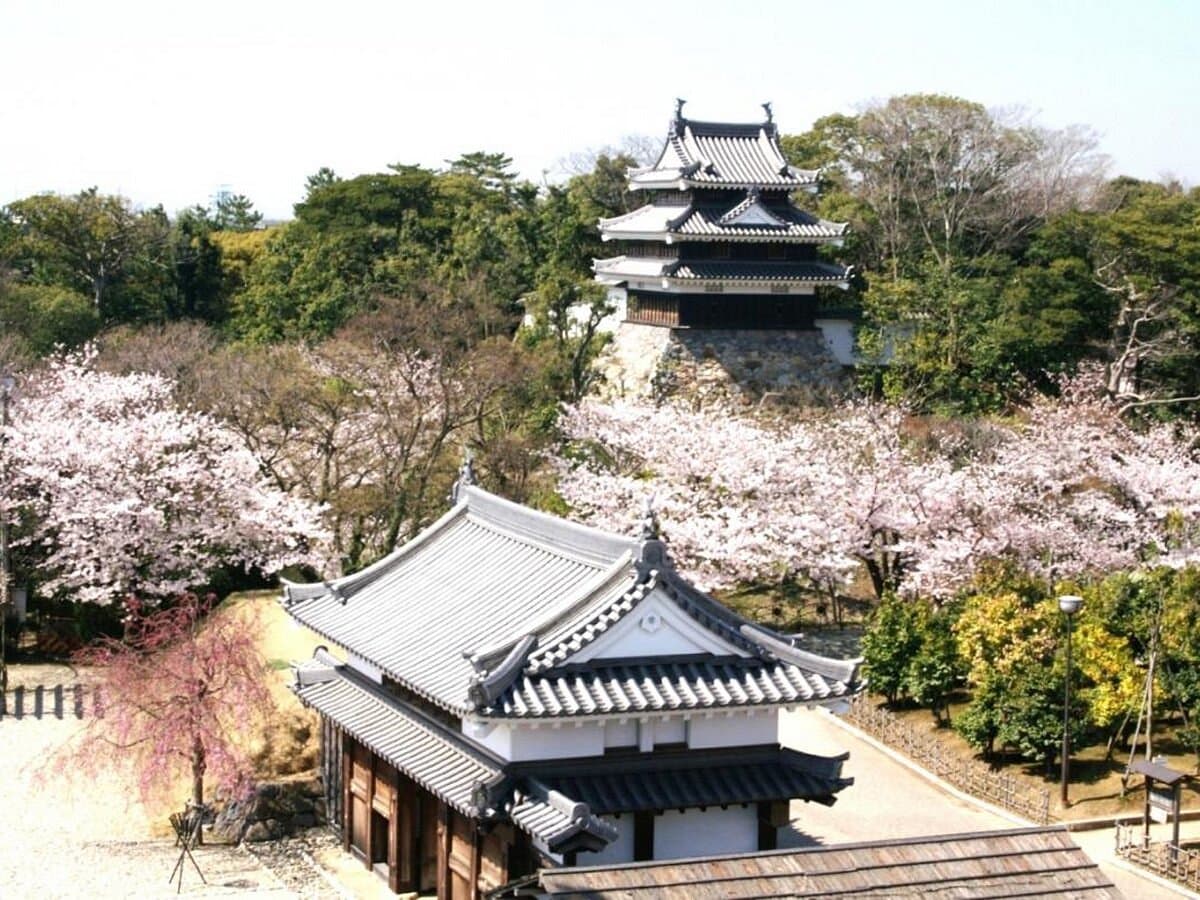
Nishio City Historical Park is a significant site that reconstructs elements of the former Nishiojō castle, which was largely dismantled in 1871. The park features a reconstructed gatehouse, the stone base of the donjon (tenshudai), and a notable three-tier turret known as Honmaru Ushitora Yagura. These reconstructions offer visitors an opportunity to visualize the castle's former grandeur and understand its historical importance within the region.
Visitors generally appreciate the effort put into recreating these historical structures, noting that they provide a tangible connection to Japan's feudal past. The park itself is often described as a pleasant and tranquil space, suitable for a leisurely stroll. While the reconstructions are not original, they are considered well-executed and informative for those interested in Japanese castle architecture.
To make the most of your visit, allocate approximately 1 to 2 hours to explore the reconstructed buildings and the park grounds. The best time to visit is during daylight hours, particularly in spring or autumn when the weather is mild and the park's natural beauty can be fully appreciated. There are no specific items to bring beyond comfortable walking shoes, as the park is easily navigable. Visitors should be aware that the park's appeal lies primarily in its historical reconstructions rather than extensive original artifacts.
The Nishio City Historical Park is located at 231-1 Kinjocho, Nishio, Aichi Prefecture. While specific public transport details are not consistently highlighted in reviews, Nishio City is accessible by train. From Nishio Station, the park is likely within walking distance or a short local bus ride. For those driving, local parking options should be available, though it's advisable to check in advance, especially during peak seasons.
A common point to consider is that the park primarily consists of reconstructions. Visitors expecting extensive original castle structures might find it less impactful. To mitigate this, approach the visit with an understanding that it's a historical recreation designed to educate and evoke the past, rather than a fully preserved ancient site.